


Nigeria’s 2027 Elections: Experts Warn Misinformation Could Fuel Violence and Undermine Democracy
As Nigeria accelerates toward its January 2027 general elections, a coalition of peacebuilders, security experts, and digital communication specialists is raising urgent alarms about a silent but deadly threat: misinformation. The convergence of a deeply polarized political landscape, ethno-religious fault lines, and a population heavily dependent on social media for news has created a volatile environment where false claims could spark real-world violence. Experts warn that manipulated videos, fabricated election results, and malicious rumours targeting candidates, polling units, and entire communities could spread within minutes through WhatsApp, Facebook, TikTok, and other platforms, potentially destabilizing the electoral process before a single ballot is cast. The danger, they emphasize, extends far beyond misleading voters; in a country already grappling with widespread insecurity and communal tensions, misinformation could transform suspicion into confrontation and online rumours into street-level bloodshed. With campaigns formally scheduled to commence on August 19, the window for building protective measures is narrow, and the stakes could not be higher for Africa’s most populous democracy and its fragile social fabric.
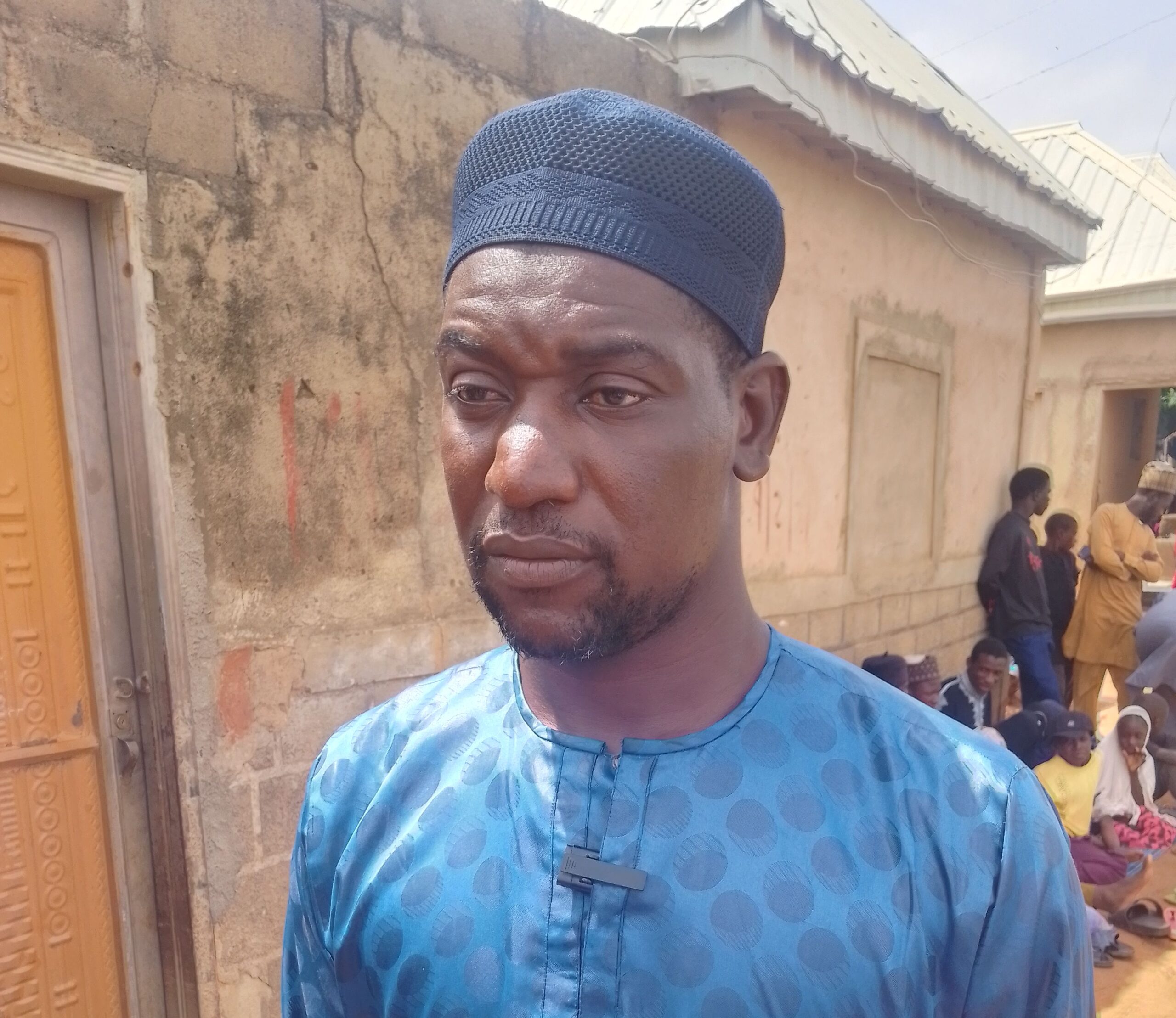
The gravity of this threat was tragically illustrated in Kaduna State in June 2026, when a female Islamic teacher and mother of four, Ummulkhairi Muhammad, was lynched by a mob after being falsely accused of stealing a child. The incident, which occurred in her own community in Kaduna North-Western Nigeria, has become a harrowing case study of how quickly unverified allegations can escalate into fatal violence. Her grieving husband, Aliyu Mohammed, told Peace News Network that the family remains devastated by the loss, describing his wife as innocent and devoted to her faith. “I am confused and heartbroken because she did nothing wrong. She was an Islamic teacher and was simply on her way to attend a religious lecture when people stopped her and accused her of stealing a child,” he said. The killing has sent shockwaves through peacebuilding circles, renewing fears about what could happen when similar false allegations are injected into an already tense political environment during an election cycle. Community leader and Chairman of the Council of Imams in Maraban Jos, Imam Umar Yusuf, has since urged residents to exercise extreme caution and avoid acting on unverified information, warning that mob mentality driven by rumours can destroy innocent lives and fracture community trust for generations.
Digital communication expert Aminu Ilyasu Kajuru argues that Nigeria’s structural reliance on social media platforms has rendered the country uniquely vulnerable to the weaponization of misinformation, particularly during electoral periods. “In Nigeria, misinformation spreads faster than ever because of our heavy reliance on WhatsApp and Facebook for daily news. People often forward messages without checking if they are true, especially when the news touches on sensitive areas like fuel prices, politics, religion, food shortages, or election results,” he explained. Kajuru recalled that during the 2023 general elections, false information about polling units and electoral activities caused significant confusion and fear in some communities, disrupting voting in certain areas and heightening tensions. “This makes Nigerian social media a powerful but dangerous tool, because once a false story starts, it reaches millions within hours and forces people to make quick, often unwise, decisions,” he said. Looking ahead to 2027, experts are particularly concerned about fabricated election results, false claims of deliberate voting disruption, manipulated videos depicting alleged attacks, and divisive narratives targeting ethnic or religious groups. A single manipulated video showing an attack on a community could provoke retaliatory violence before authorities have time to establish whether the incident actually occurred, while fabricated results could undermine public confidence in the electoral process and encourage confrontation at polling stations or in the streets.
Peace advocate Samson Auta of the Interfaith Media Centre in Kaduna warns that misinformation could be deliberately weaponised by political actors seeking to exploit Nigeria’s deep ethnic and religious divisions for electoral gain. He argues that the problem cannot be viewed merely as a technological issue but must be treated as a fundamental peace and security challenge requiring urgent intervention from those at the highest levels of political influence. Auta has called on candidates and political parties to explicitly reject hate speech, honour their commitments to peace agreements, and actively discourage supporters from circulating malicious information against their opponents. “Our stakeholders can build a robust, well-intended societal resilience by establishing multi-diverse early-warning and fact-checking networks, deploying rapid-response messaging to debunk viral rumours before they trigger localised unrest, and partnering with trusted community and faith leaders to champion verified narratives of peace,” he said. His recommendations reflect a growing consensus among conflict-resolution specialists that preventing election-related violence requires a proactive, community-centred approach that engages traditional institutions, religious authorities, and grassroots networks as first responders in the battle against destructive falsehoods, rather than relying solely on reactive fact-checking after damage has already occurred.
Kajuru advocates a paradigm shift from reactive fact-checking to what he calls “pre-bunking” — the practice of educating citizens in advance about common misinformation tactics and equipping them with simple tools to verify information before sharing it. “The best defence is not just fact-checking after the damage is done, but ‘pre-bunking’ teaching Nigerians simple skills to verify news before they share it,” he emphasised. He has proposed the creation of short audio messages in local languages and Pidgin English, distributed primarily through WhatsApp, to teach citizens how to identify fabricated information, spot manipulated media, and recognise emotionally charged content designed to provoke immediate reactions. “The goal is to slow down the rush to react, so that when Nigerians see shocking news, their first action is to pause and ask, ‘Is this really true?’ before taking any steps,” he said. Complementing this approach, Auta stressed that journalists and media organisations have a critical responsibility to prioritise conflict-sensitive reporting and rigorous verification, particularly when reporting allegations involving political candidates, ethnic or religious communities, and security incidents. Traditional media outlets, he cautioned, must resist the temptation to reproduce unverified social media claims simply because they are trending, and should instead publish fact-checks, explain how misinformation operates, and direct citizens towards verified information from the Independent National Electoral Commission, security agencies, and other credible sources.
Ultimately, experts insist that preventing election-related misinformation cannot be left to government institutions alone; it requires a whole-of-society response. INEC, security agencies, political parties, journalists, fact-checkers, civil society organisations, technology companies, traditional rulers, religious leaders, and communities all have distinct but interconnected roles to play in safeguarding the integrity of the 2027 electoral process and protecting citizens from the dangers of unchecked falsehoods. For ordinary Nigerians, the responsibility begins with individual discipline — resisting the temptation to forward shocking messages simply because they appear urgent or align with existing biases. Before sharing any allegation, citizens can ask critical questions: Who produced the information? Where did it originate? Is there independent evidence? Have credible media organisations or official authorities confirmed it? Such simple steps, experts argue, could mean the difference between a manageable rumour and a trigger for violence. As Auta powerfully concluded, political competition must never become a justification for sacrificing human lives. “Prior to, during, and long after election speeches are delivered at campaign grounds and across digital spaces, we must individually and collectively choose restraint over rhetoric, facts over falsehoods, and unity over tribal, faith, or partisan polarization,” he said. Nigeria’s recent experience with mob violence demonstrates that misinformation can move from a phone screen to the street with fatal consequences in a matter of hours. If the nation is to protect peace in 2027, Kajuru and Auta agree that building resilience against misinformation must begin now — before election day, before tensions escalate, and before another false story has the opportunity to become a real-world tragedy.