






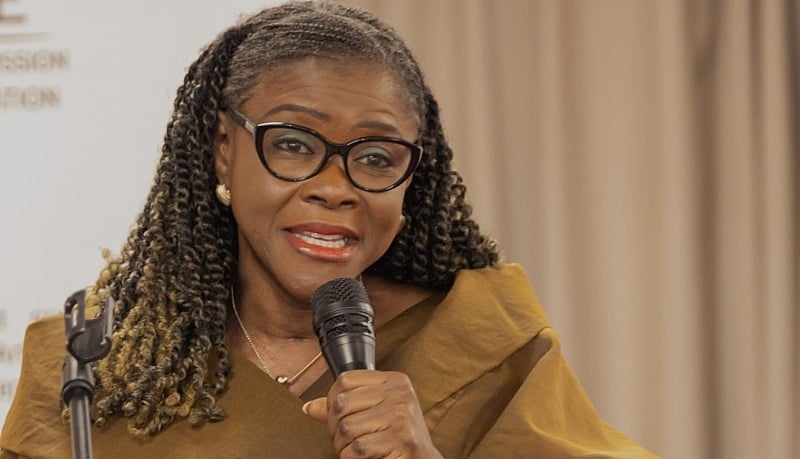
Accra — The National Commission for Civic Education (NCCE) has raised urgent concerns that misinformation, disinformation, hate speech and deepfakes now pose serious threats to Ghana’s democratic stability and social cohesion. Speaking at a Press Soirée organised by the NCCE in Accra under the theme, “Strengthening Civic Education through Strategic Partnerships,” the Chairperson of the Commission, Ms Kathleen Addy, said the rapid evolution of digital communication had expanded opportunities for civic participation but had also made it increasingly difficult for citizens to distinguish facts from falsehoods. She warned that the ability to create convincing but fabricated images, videos and audio recordings means that citizens can no longer rely solely on what they see or hear as evidence. “We have entered an age in which seeing and hearing can no longer on their own be treated as proof,” she said. The event brought together senior media practitioners, stakeholders and civic education advocates to strengthen collaboration between the NCCE and the media in promoting civic consciousness, constitutional democracy and national cohesion. Ms Addy said the media remained a critical partner of the Commission because its reach and influence were essential to amplifying civic education initiatives and helping citizens engage meaningfully with national issues. She stressed that journalists and media organisations must uphold accuracy, fairness, independence and professional ethics, particularly in an environment where information can reach thousands of people within seconds.
Ms Addy’s remarks came against the backdrop of an increasingly crowded and unregulated digital information ecosystem, where false narratives can easily outpace factual reporting. She pointed to the particular dangers of deepfakes, which use artificial intelligence to produce manipulated images, videos and audio that look and sound authentic. Such technology, she said, threatens the very foundation of democratic discourse by making it possible to fabricate statements, actions and events involving public figures, political leaders and ordinary citizens. In such conditions, social trust erodes and citizens become vulnerable to manipulation, especially during electoral cycles and periods of political tension. The NCCE Chairperson therefore urged journalists to be vigilant and to treat information verification as a core professional duty rather than an optional exercise. She also expressed concern about hate speech, which can be amplified through digital platforms and inflame ethnic, religious or political divisions. Her message was clear: the same tools that give citizens a voice can also be weaponised to destabilise the country. Ms Addy emphasized that a free media not guided by accuracy and fairness cannot sustain democracy, noting, “A free media that is not guided by accuracy and fairness, ethics can damage the very democracy that makes its freedom possible.” She called on editors, reporters and social media content creators to recognise the consequences of their work, and to prioritise ethical considerations even when sensational or misleading content might attract greater public attention.
The NCCE Chairperson also highlighted Ghana’s legal framework for media freedom, which she said provides strong protections but also imposes important responsibilities. She noted that the 1992 Constitution, under Chapter 12, guarantees media freedom and independence, while Article 162 places an obligation on the media to uphold constitutional principles and hold governments accountable. Ms Addy observed that the repeal of criminal libel and seditious laws in 2001 had significantly strengthened Ghana’s democratic development, allowing investigative and public-interest journalism to thrive. That legal reform, she said, has enabled journalists to expose corruption, administrative failures and human rights violations, while giving vulnerable communities a platform to be heard. However, she cautioned that freedom from criminal sanctions should not be mistaken for freedom from professional responsibility. The public interest, she argued, is best served when the media operate with integrity and a commitment to truth. Ms Addy also acknowledged the serious economic pressures facing media organisations in Ghana. Responsible journalism, she said, requires substantial resources, including trained reporters, robust editorial systems and the time needed to carry out thorough investigations. She therefore urged practitioners to balance commercial sustainability with their democratic responsibilities, and encouraged media owners, advertising regulators and development partners to support independent journalism as a public good. Without that support, she warned, quality journalism could be crowded out by cheaper, faster and less reliable forms of content, leaving citizens poorly informed and more susceptible to disinformation.
Turning to the theme of collaboration, Ms Addy stressed that civic education is a shared responsibility and that the media are indispensable to its success. She called on media organisations to promote truth, tolerance and responsible communication, and to help citizens understand their rights, duties and the importance of peaceful coexistence. Her remarks reflected the NCCE’s broader mission to embed civic knowledge in everyday public life, rather than only during election campaigns. “The work that you do does matter. The questions you ask matter. The stories you choose to tell and how you tell them, it matters,” she told the journalists present. “You are not simply recording Ghana’s democratic journey, you are shaping it.” This powerful message underscored the agenda-setting role of the media in a democracy. By deciding which issues to investigate, which voices to amplify and which stories to lead, journalists help determine the quality of national debate. Ms Addy encouraged media professionals to approach the NCCE for accurate and timely information, and to see the Commission as a partner in the fight against ignorance and falsehood. She said media literacy should be promoted among the public so that citizens, too, can become more critical consumers of information. Through such partnerships, she argued, the NCCE can reach far beyond the towns and cities, using radio, television, digital platforms and community networks to engage Ghanaians in every corner of the country.
The need for deeper institutional collaboration was reinforced by the Speaker of Parliament, Mr Alban Sumana Kingsford Bagbin, in a speech read on his behalf at the event. Mr Bagbin urged the NCCE and the media to deepen their joint efforts in promoting civic awareness, strengthening constitutional democracy and fostering national cohesion. He stressed that sustained partnerships among Parliament, the NCCE, the media, civil society organisations, religious and traditional leaders, educational institutions, development partners and the private sector are essential to building an informed and responsible citizenry. The Speaker made it clear that democracy cannot be sustained through elections alone. Citizens, he said, must understand both their rights and their responsibilities, and they must participate actively in decisions affecting their lives. “Elections are important, but democracy is much more than the periodic act of casting a ballot,” he said. The Speaker’s message reflected a growing consensus among Ghanaian leaders that civic education must be a constant and deliberate enterprise. Democracy, he noted, requires ongoing civic engagement, including public accountability, peaceful dialogue, respect for lawful institutions and active involvement in community decision-making. He also underscored the importance of Parliament’s relationship with the public, and the role of the media in explaining legislative work, policy decisions and the use of public resources. According to Mr Bagbin, a Parliament that is disconnected from an informed citizenry cannot effectively represent the people. Therefore, an active civic culture is not an optional complement to Ghana’s constitutional system but a foundational condition for good governance and national stability.
The European Union, a key partner of Ghana’s democratic institutions, also expressed strong support for the NCCE’s work and for efforts to counter disinformation. Mr Jonas Claes, Deputy European Union (EU) Ambassador to Ghana, reaffirmed the EU’s commitment to Ghana’s democracy, the rule of law and a free press. He said the media have an important responsibility to provide accurate information and to serve as a watchdog, particularly during elections and other critical national processes. “We should not take that for granted,” he cautioned, warning that disinformation could undermine public trust and poison democratic debate. Mr Claes announced that the EU is supporting a new African Media Integrity and Resilience Programme, which is designed to strengthen journalistic skills in information verification and investigative reporting. The programme reflects the EU’s recognition that independent media in Africa require not only legal protection but also practical capacity to meet the challenges of the digital age. He also assured the NCCE of continued EU support through GIZ, the German development agency, to strengthen the rule of law and combat corruption in Ghana. His remarks added an international dimension to the discussions, highlighting the global nature of the threats posed by misinformation and deepfakes. The Press Soirée ended with a renewed sense of purpose among participants. While the challenges are serious, the meeting underscored that Ghana has both the constitutional framework and the institutional will necessary to defend the integrity of its democratic space. By uniting the media, the NCCE, Parliament, civil society and international partners around the shared values of truth, tolerance and accountability, the event offered a roadmap for strengthening the country’s civic culture. The responsibility now lies in sustained cooperation, continuous media literacy education and a collective commitment to ensuring that Ghana’s democracy remains resilient, informed and inclusive.


