








Paragraph 1: The Core Discrepancy and Immediate Context
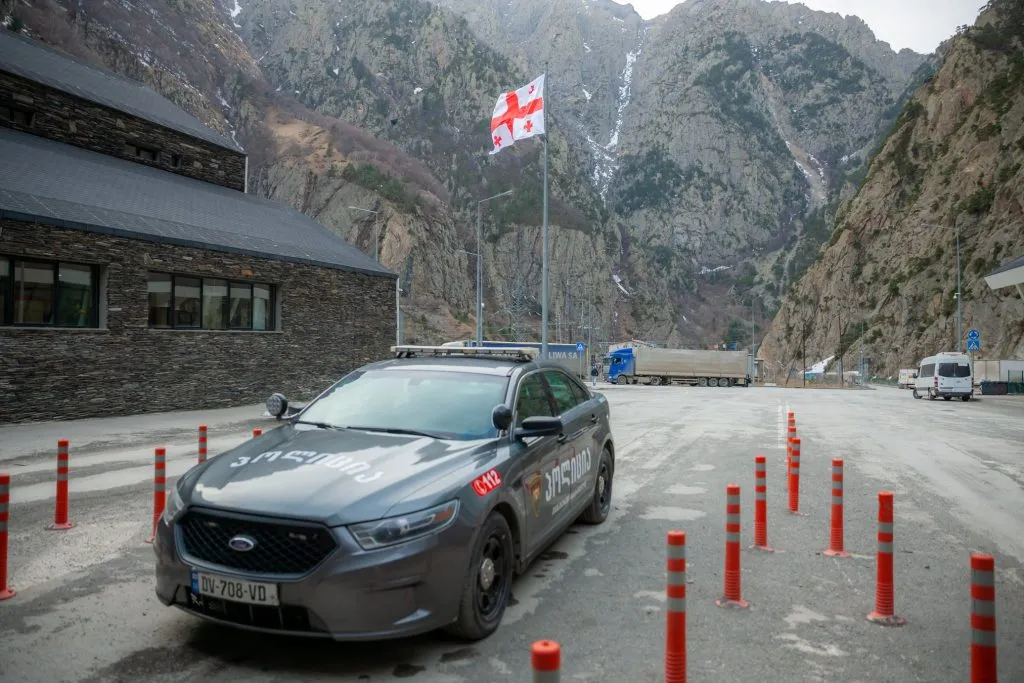
A dramatic and highly publicized numerical clash has erupted along the remote and strategically sensitive Russian-Georgian border, exposing deep fissures in the official narratives of both nations. At the heart of this dispute is the Verkhny Lars checkpoint, the sole legal land crossing connecting the Russian Federation to the South Caucasus, nestled within the treacherous Darial Gorge. On August 18, the Russian Federal Customs Service (FTS) announced that passenger traffic through this crossing had shattered all previous records, claiming that over 20,000 individuals traversed the border in a single twenty-four-hour period. This figure, reported with an air of administrative triumph, immediately set off alarm bells in Tbilisi, prompting a swift and unusually blunt rebuttal from the Georgian Ministry of Internal Affairs. In an official statement released shortly after, the Georgian ministry categorically denied the Russian claim, labeling it false and strategically misleading. The Georgian authorities asserted that the presented data “does not correspond to reality” and insinuated that it serves a nefarious purpose—the “deliberate spread of disinformation by certain interested parties.” This immediate and direct contradiction of Moscow’s data by Tbilisi is not merely a bureaucratic squabble over statistical accuracy; it is a microcosm of the intensely strained, historically fraught, and militarily tense relationship that has existed between the two nations ever since the Russo-Georgian War of 2008, which resulted in the occupation of Georgia’s breakaway territories of Abkhazia and South Ossetia.
Paragraph 2: The Official Georgian Rebuttal and Contradictory Data
To substantiate their accusation of deliberate misinformation, the Georgian Ministry of Internal Affairs provided its own granular breakdown of border traffic, offering an alternative statistical reality that contradicts the Kremlin’s narrative. According to their meticulous data, during the exact same 24-hour window referenced by the Russian FTS, a total of 7,880 citizens of various nationalities legally entered the territory of Georgia through the Lars checkpoint. Furthermore, the ministry disclosed that during this parallel timeframe, an even larger exodus took place, with 8,406 citizens of various countries crossing the border in the opposite direction, leaving Georgian territory via the same crossing. This net outflow—meaning more people departed Georgia than arrived—is a crucial data point that directly challenges the Russian narrative of a massive, unprecedented influx. The Georgian ministry’s statement did not merely stop at correcting the numbers; it urgently appealed to all media outlets, international observers, and interested parties to exercise caution, urging them to “refrain from disseminating unverified information, as well as from spreading data in a distorted form and with incorrect interpretation.” This cautious language highlights a growing concern within Tbilisi regarding the weaponization of migration statistics. By presenting these precise figures, the Georgian government aims to project an image of stability and control, asserting that it has a firm command of its borders and is not facing a refugee crisis or an unmanageable surge in migration, which could have severe domestic political consequences given the widespread anti-Russian sentiment within Georgian society and the ongoing pressure from Western allies to maintain border security integrity.
Paragraph 3: The Geostrategic and Logistical Significance of Verkhny Lars
Understanding the significance of this statistical row requires a deep appreciation for the unique logistical and geopolitical characteristics of the Verkhny Lars crossing itself. The checkpoint is not merely another border post; it is the only functioning land artery between Russia and Georgia, following the closure or blockade of other routes due to the unresolved status conflicts in the Caucasus. Situated high in the Caucasus Mountains along the Georgian Military Road, the checkpoint is highly susceptible to extreme weather, including avalanches and landslides, which frequently cause severe congestion, sometimes backing up lines of vehicles for days. Despite these infrastructural vulnerabilities, Verkhny Lars has historically served as the primary escape valve for the movement of people, goods, and capital between Russia and the wider South Caucasus, Armenia, and Turkey. However, since the onset of Russia’s full-scale invasion of Ukraine in February 2022, the checkpoint has taken on an entirely new dimension of strategic importance. It has become the primary route for a massive, unprecedented wave of Russian citizens seeking to flee their homeland for a variety of reasons—ranging from a principled opposition to the war, a visceral fear of being conscripted into the military, professional and economic implosion due to international sanctions, to simply a desire to maintain a semblance of normalcy away from a crumbling socio-economic environment. The physical and administrative capacity of this crossing is profoundly limited, designed to handle light commercial and passenger traffic, not the sudden exodus of tens of thousands. Therefore, when the Russian FTS claimed 20,000 traversed in one day, it implicitly suggested a breakdown of operational capacity or a belligerent flood of people, which Tbilisi is eager to refute.
Paragraph 4: The Migration Wave and Its Socio-Economic Impact on Georgia
The specific numbers reported on August 18 are part of a much larger and more sustained demographic shift that has fundamentally altered Georgian society over the past two years. Georgia, alongside countries like Kazakhstan, Armenia, and Kyrgyzstan, has become a primary destination for Russian relocants, despite the fact that the two nations technically do not have formal diplomatic relations. While initial waves following the February 2022 invasion were substantial, subsequent waves have been triggered by specific events, such as the announcement of partial military mobilization in September 2022, which caused gridlock at Verkhny Lars for hundreds of kilometers, and more recently, by fears of further escalations or internal political crackdowns. The Georgian government, led by the increasingly polarizing Georgian Dream party, has adopted a complicated, pragmatic stance, allowing Russian citizens entry without visas and encouraging them to spend money in the struggling local economy. However, this influx has generated significant local friction and social tension. The sudden arrival of tens of thousands of tech workers, IT professionals, and entrepreneurs has driven up real estate prices and rents exponentially in Tbilisi and Batumi, causing genuine hardship for average Georgian citizens who find themselves priced out of their own neighborhoods. Additionally, there is a deep-seated cultural and historical animosity; memories of the 2008 war, the occupation of Georgian territories, and decades of Russian hegemony remain vivid. The Georgian MIA’s insistence on minimizing the influx numbers could be interpreted as an attempt to downplay the visible social changes happening in cities, potentially aiming to alleviate fears among the population that Georgia is being overrun, while also managing the expectations of the European Union, which is scrutinizing Tbilisi’s handling of its borders, migration, and potential sanctions circumvention.
Paragraph 5: The Information Warfare and Kremlin Narratives
The extreme divergence between the Russian FTS claim of over 20,000 crossings and the Georgian MIA’s figure of approximately 16,000 total movements in both directions (with a net outflow) raises serious questions about the motivations behind Moscow’s data. Why would the Russian customs agency fabricate or exaggerate such a figure? Experts on Caucasian geopolitics suggest several deliberate motivations. Firstly, an inflated number could be designed to sow discord and panic within Georgian civic society, amplifying social tensions and potentially provoking anti-Russian incidents that could be used as state propaganda domestically in Russia. If the narrative in Russia is that its citizens are being mistreated in Georgia, or that Georgia is overwhelmed, it justifies a harsher stance from the Kremlin. Secondly, it could be a psychological operation aimed at the broader international community, suggesting that the sanctions and mobilization efforts are so catastrophic that Russians are fleeing in droves, effectively highlighting the success of the opposition’s strategies or conversely, painting Russians as victims of a chaotic Western proxy war. Thirdly, it could be a domestic distraction tactic to divert attention from internal Russian border security failures or to inflate the perceived workload and importance of the FTS as an institution. The Georgian MIA’s sharp rebuke—using the term “deliberate spread of disinformation”—reflects a sophisticated understanding of these tactics. Tbilisi is acutely aware that in the post-Soviet space, data regarding human movement is a tool of hybrid warfare. By refusing to accept the Russian numbers and asserting its own official statistics, Georgia is attempting to reclaim the upper hand in defining its own national reality, pushing back against a neighbor that has historically used demographic arguments and “protecting compatriots” as justifications for military and political intervention.
Paragraph 6: The Broader Implications and the Fragile Equilibrium
In the final analysis, the dispute over the Verkhny Lars checkpoint numbers is a stark illustration of the fragile equilibrium that defines Russo-Georgian relations in the current international climate. While official diplomatic ties remain severed, practical economic and human connectivity persists through the narrow corridor of the Darial Gorge. The Georgian government finds itself walking a tortuous tightrope. On one side, there is the immense public pressure to align unequivocally with the West, including support for Ukraine and resistance to Russian colonial legacies. On the other side, there are pragmatic economic necessities, as Russia remains a major trading partner, and notably, the influx of relatively wealthy Russian relocants provides a cushion for Georgia’s tourism-dependent economy. The MIA’s correction of the figures is likely designed to maintain the illusion of full control and sovereignty, avoiding the dangerous status of being labeled a “failed state” or “uncontrolled corridor.” For the international observer, this incident serves as a critical reminder of the unreliability of official statistics in authoritarian and semi-authoritarian contexts, especially regarding contentious geopolitical boundaries. The actual number of people crossing is likely somewhere between the two claims, but the verifiable truth is that thousands are crossing daily, driven by severe geopolitical consequences. As the war in Ukraine continues and the likelihood of further domestic instability in Russia persists, the Verkhny Lars checkpoint will remain a geopolitical pressure valve, a place where human suffering, international politics, and nationalistic narratives converge. The ongoing battle over the counting of these souls highlights that in the Caucasus, even the most mundane administrative statistics carry the heavy weight of history, conflict, and the relentless pursuit of narrative dominance.


