









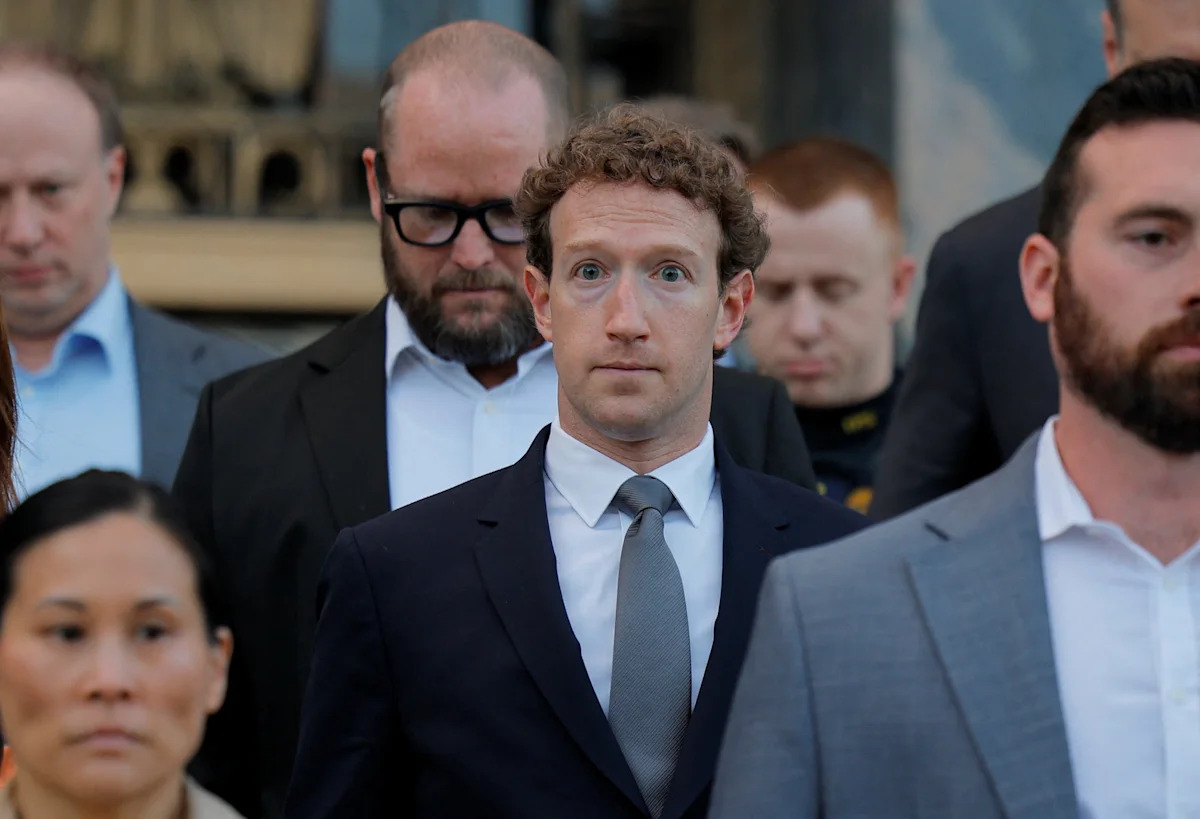
Meta Platforms is set to face state attorneys general in an Oakland, California, courtroom Tuesday for the start of a landmark trial over allegations that the company violated child safety and consumer protection laws, exploited young users with addictive design features, and misled the public about the risks its platforms pose to children’s mental health. The case, filed in 2023 by a coalition of 29 states, is being heard by U.S. District Judge Yvonne Gonzalez Rogers in the Northern District of California. Four states—California, Colorado, Kentucky, and New Jersey—are participating in this bellwether proceeding, which is expected to help establish a factual and legal framework for the broader litigation. The trial is one of the most closely watched legal confrontations in the social media industry, as it will place Meta’s executive leadership, including Chief Executive Mark Zuckerberg and Instagram chief Adam Mosseri, in the witness box to answer for decisions made over years of product development. The states’ lawsuit contends that Meta deliberately engineered its platforms to maximize the time young people spend on them, using psychologically manipulative tools that drive compulsive engagement and, in many cases, serious emotional harm.
The plaintiffs’ case is built on an extensive internal record and a detailed account of Meta’s product decisions. According to the complaint, Meta “developed and refined a set of psychologically manipulative platform features designed to maximize young users’ time spent on its social media platforms,” including infinite scroll, autoplay, likes, notifications, and algorithmic recommendations. These features, the states argue, exploit the vulnerabilities of children and adolescents, who are particularly susceptible to social validation and FOMO, or fear of missing out. The attorneys general also allege that Meta knew for years that its apps were linked to rising rates of anxiety, depression, and suicidal ideation among young users, yet consistently told parents, policymakers, and the public that its products were safe. The states further accuse Meta of running afoul of the Children’s Online Privacy Protection Act, or COPPA, by knowingly allowing children under the age of 13 to create accounts and by collecting their personal data without the verified consent of a parent. Those allegations, if proven, could carry significant civil penalties and open the door to court-ordered changes in how Meta designs and supervises its services. The trial is expected to feature testimony from top executives and possibly internal communications showing what Meta’s own researchers and product teams knew about the impact of Instagram and Facebook on teenage mental health.
Meta has denied the allegations and is contesting the case aggressively, framing the states’ lawsuit as an overreach driven by politics and an unrealistic thirst for punishment. In a statement, a Meta spokesperson said: “The State AGs may call this a landmark case, but their limited claims are unsubstantiated, and their financial demands are vastly disproportionate.” The spokesperson added: “The AGs offer no proof anyone in their states was misled, claim benign features like having an additional Instagram account somehow harmed their residents, and attempt to penalize Meta for industry-wide challenges like age verification. Rather than sticking to the facts or the law, the states have instead decided to chase an outlandish payout. We stand by our record of creating strong protections for teens, and look forward to making our case in court.” The company has also tried to highlight the extraordinary scale of the financial exposure it says the states are seeking: Meta has argued that potential damages in the case could reach $1.4 trillion, an amount nearly equal to its entire market capitalization of roughly $1.5 trillion. The company says such a figure is absurd, disproportionate to any actual harm shown, and a sign that the states are aiming for headlines rather than justice. Meta also points to its extensive investments in teen safety, including parental controls, age verification tools, content restrictions, and default privacy settings for minors, as proof that it takes the issue seriously.
The legal stakes in the Oakland trial extend far beyond the four states seated at the plaintiff’s table. This case is part of a much larger wave of litigation against Meta and other social media companies over harms to young users, including lawsuits brought by school districts, private plaintiffs, and other states. The trial before Judge Gonzalez Rogers, who previously presided over the high-profile Epic Games v. Apple antitrust case, will function as a bellwether: the first case to go to trial with a full evidentiary record, offering a preview of how juries or judges may receive the social science, internal documents, and company defenses that are likely to recur in later cases. A strong verdict for the states could spur additional complaints and pressure other platforms to change their practices; a decisive win for Meta could make it harder for claimants to prove causation and harm in future proceedings. The timing is especially significant because earlier this month, a New Mexico District Court ordered Meta to pay $567 million to address teen mental health in that state, on top of $375 million in civil penalties. That decision, while not binding on the California trial, signals that courts are increasingly willing to impose substantial financial remedies on social media giants, particularly in cases where evidence of deliberate design choices is presented. It also raises the political temperature around the Oakland trial, as state attorneys general from across the country watch to see whether their own cases will be validated or undermined.
The broader context of the trial includes a deep national debate over the role of social media in the adolescent mental health crisis. In recent years, the U.S. Surgeon General has warned about the risks of excessive social media use among young people, and state legislatures have scrambled to respond with new laws governing children’s online access, age verification, and algorithmic transparency. Meta, for its part, has argued that many of the challenges raised by the states are not unique to its platforms and should not be singled out for punishment. The company has frequently invoked federal law, including Section 230 of the Communications Decency Act, which protects platforms from liability for much of the content posted by third parties, and has argued that its design choices are protected by the First Amendment. The states, however, insist that their case is not about content but about unfair and deceptive business practices—alleging that Meta made promises about safety that it knew were false and used manipulative design to keep children hooked against their best interests. The plaintiffs are asking the court to impose injunctive relief, financial penalties, and other remedies that would effectively compel Meta to redesign Instagram and Facebook around the developmental needs of young users rather than around engagement metrics. That demand sets up a conflict between the judiciary and the technology sector over how much courts can or should dictate product design, and the outcome of this trial may define the boundaries of that oversight for years to come.
As opening statements get underway, all eyes will be on Judge Gonzalez Rogers and the witnesses who follow. The expectation that Zuckerberg and Mosseri will testify gives the trial an unusually high-profile cast, and their statements under oath could have implications not only for this case but for the dozens of other proceedings still pending around the country. The trial is unlikely to reach a quick conclusion; both sides have prepared extensive expert testimony, internal documents, and epidemiological evidence, and the legal battle will likely continue long after the trial court issues its ruling. A judgment for the states could lead to a sweeping injunction that reshapes Meta’s products and potentially forces the company to implement stricter age-verification systems, stricter default settings for minors, and more transparent accounting of what its research shows about harm. If Meta prevails, the company could claim vindication of its safety practices and in doing so create a major obstacle for plaintiffs in other cases who are seeking to hold platforms liable for the mental health effects of social media. Regardless of the outcome, the trial marks a turning point in the relationship between government and the tech industry, as courts become the arena where the most consequential public health questions of the digital age are being debated. The proceedings in Oakland are expected to last for weeks, with testimony from researchers, former employees, and executives, and the verdict is being watched not only by regulators and legal experts but by millions of parents who have grown increasingly worried about what social media is doing to their children.


