








Former Chief Defends License-Plate Readers, Urges Safeguards and Stiffer Penalties for Abuse
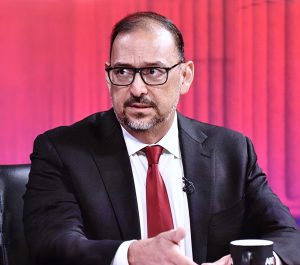
Former Riverside Police Chief Tom Weitzel, a 37-year law-enforcement veteran, is wading into the debate over Flock cameras and license-plate-reader systems with a message aimed at both critics and supporters: the technology should remain in use, but it must be governed by strong policies, independent audits, community input and serious criminal consequences for officers who abuse it. In a law-enforcement column, Weitzel says there is a great deal of misinformation circulating about LPR systems and that some concerns are legitimate. Any technology used by police must have safeguards, accountability, transparency and clear operating rules, he acknowledges, but legitimate concerns should not be used as an excuse to spread misinformation about tools that can help solve serious crimes. He argues that police need every legitimate investigative tool available to solve violent crimes, locate missing people, recover stolen vehicles, identify dangerous offenders and prevent repeat victimization. Weitzel also seeks to clear up a common misconception: Flock is not the same thing as license-plate-reader technology. Numerous LPR and street-camera systems operate across the country, and Flock is simply one company providing such systems. The technology itself, he stresses, is not a police officer or an investigator. It does not decide guilt or innocence. It is an informational tool that gives investigators leads and context. The broader danger, in his view, is that misinformation can crowd out an honest conversation about public safety, and communities may turn away from technology that can make a meaningful difference in sensitive investigations. He supports continued deployment, but he also wants to see far more rigorous oversight than many agencies currently provide. His central argument is that the answer to potential abuse is not eliminating a useful tool but ensuring that only trained and accountable officers use it, and that any misuse brings real consequences.
Weitzel’s support for LPR systems is longstanding, and his views are shaped by firsthand experience. He notes that when he was police chief in Riverside, Flock did not exist, and the department used a system from Griffin Systems Inc. He still remembers the first day the street-camera system went live: the department made an arrest. That did not happen because a camera replaced an officer, he says, but because the technology provided information that helped officers identify a suspect. Before the system was implemented, Weitzel spoke with every officer at roll call about its proper use. The department established policies and procedures that were reviewed and approved by the village attorney. Officers were trained not only in how to operate the technology but also in their responsibilities and potential liability. That, he believes, is how these systems should be implemented. LPR systems are not intended to operate in a vacuum. They do not replace traditional investigative work; rather, they supplement it, giving detectives the kind of information that can produce a break in a case. A camera may capture a vehicle leaving a crime scene or present near a victim’s last known location, and that small detail can become the foundation of a larger investigation. Weitzel argues that police work is rarely simple and that investigators must piece together many forms of evidence. Sometimes LPR data is only one piece; sometimes it is the piece that makes everything else fall into place. That is why he rejects the argument that the technology is too risky to use at all. Instead, he wants to see a framework that allows its benefits while preventing the kinds of abuses that rightly worry civil-liberties advocates and members of the public. In his telling, strong leadership must set the tone from the top, and every agency using LPR technology should treat privacy and accountability as central operational concerns rather than afterthoughts.
To illustrate the value of LPR technology, Weitzel points to a case in Pingree Grove, Illinois, involving a 9-year-old girl who was forcibly taken from her bicycle and sexually assaulted. Investigators in that case used multiple sources of evidence, including neighborhood canvassing, surveillance footage, forensic evidence and Flock license-plate-reader data, according to the column. That data helped investigators identify both the vehicle and a suspect. Four days after the abduction, police arrested a suspect who was charged with aggravated kidnapping, predatory criminal sexual assault, aggravated criminal sexual abuse and sexual exploitation of a child. Weitzel describes the case as proof that LPR systems can have a real impact in horrific crimes, calling it an actual Illinois criminal investigation in which the technology helped identify and arrest a suspect. He is careful not to overstate the role of the cameras. He notes that nobody is suggesting the camera solved the case on its own, and police work is rarely that simple. Investigators must pull together evidence from many sources, including witnesses, physical evidence and forensic analysis. But in that case, LPR data was one of the critical pieces that gave detectives a break. The point, he argues, is not that every investigation will be cracked open by a camera; it is that sometimes a license-plate hit can provide the lead that allows other evidence to become meaningful. Without that information, a case may grow cold while an offender remains free. With it, investigators can identify a vehicle, connect it to a suspect, and make an arrest before further harm can occur. That kind of result, he says, is why law-enforcement leaders should not abandon the technology simply because it must be operated carefully.
Another example Weitzel cites is the mass shooting at Brown University, where a gunman entered a building on Dec. 13, 2025, killed two students and wounded nine others. Investigators were searching for the shooter when a critical tip identified the suspect’s vehicle as a gray Nissan with Florida license plates. That tip allowed Providence investigators to search their network of Flock cameras, and the system repeatedly detected the vehicle, according to the column. Investigators used the information to establish the vehicle’s movements, link it to a rental car, identify the renter and ultimately track the suspect across state lines. Even after the suspect covered the rental vehicle’s original Florida plate with a different one, investigators were still able to track the vehicle using other identifying characteristics. The investigation eventually led authorities to a storage facility in Salem, New Hampshire, where the suspect, Claudio Manuel Neves Valente, was found dead from a self-inflicted gunshot wound before police could take him into custody. Weitzel is precise about what the case shows: Flock did not arrest the shooter, and saying the LPR system was unimportant would be equally misleading. Rather, it was a critical investigative tool that helped police identify, track and locate the suspect. He uses the case to make a broader point about the trade-offs involved in using automated license-plate readers. The systems do not always produce an immediate arrest, and they do not operate alone. But in a large-scale emergency or a dynamic investigation, seconds and minutes matter. Having a searchable record of vehicles seen in a particular area can make the difference between following a strong lead and starting from scratch. That capability, he argues, is exactly why law enforcement should retain the technology and why agencies should invest in clear policies and training to ensure it is never used for unauthorized purposes.
At the same time, Weitzel does not dismiss the legitimate concerns that have been raised about LPR systems, and he says law-enforcement leaders have an obligation to address them aggressively. He notes that no device used in police work is completely misuse-proof, and pretending otherwise would be dishonest. The answer, he says, is not to eliminate the technology; it is to pair it with strong leadership, policies, training, accountability and independent auditing. Every agency operating an LPR system should have written policies that clearly establish who may access the system, when searches are permitted, what justification is required, how searches are documented, who supervises use, how long data is retained, under what circumstances information may be shared, and what happens when an officer violates the rules. He goes further by calling for every agency to have its LPR system independently audited by an outside organization at least once a year. There should be an electronic audit trail, and every search should be attributable to a specific user. If an officer improperly accesses the system, leadership should be notified. If an officer intentionally misuses the system, there should be serious consequences. He also believes communities should be involved before cameras are installed. Instead of deciding behind closed doors, a city or village should create a public committee that includes police leadership, elected officials or trustees, legal counsel and residents. That committee should explain how the technology works, what information is collected and what is not collected, how searches are conducted, what the retention policy is, who has access and how the system will be audited. Residents should be allowed to ask questions before installation, because transparency builds trust. Weitzel additionally supports an even stronger deterrent: an officer who intentionally abuses an LPR system should face serious criminal consequences. He says Illinois should consider adding a strongly worded statute to its official-misconduct laws that establishes severe penalties for an officer convicted of intentionally misusing an LPR system, and he says he would support a minimum five-year prison sentence for serious intentional misuse. In his words, use the system lawfully and you have nothing to fear, but abuse it to stalk, harass, intimidate or improperly investigate someone, and the officer should lose the badge and potentially freedom.
Weitzel says his career in law enforcement has shown him why accountability matters and also what can happen when officers lack the information they need. He asks readers to imagine a child abduction, a violent offender fleeing a crime scene, a stolen vehicle used in a carjacking, or a homicide suspect leaving one community and entering another. In those moments, time matters, information matters, and technology can matter as well. LPR systems, he emphasizes, do not replace good police work; they enhance it. That is why he rejects the idea that because a technology can be misused, it should be eliminated. He acknowledges there is room for debate about privacy, retention periods, data sharing, community oversight and whether certain searches should require additional authorization. He welcomes that debate, but he says misinformation has no place in it. When misinformation replaces facts, the public cannot have an honest conversation about public safety, and good policy becomes harder to create. He points again to the examples of Pingree Grove and Brown University as demonstrations that LPR technology can provide investigators with critical information when seconds, minutes and hours matter. His final recommendation is straightforward: keep the technology, strengthen safeguards, involve the public, audit the system and punish abuse. Communities, he concludes, are not made safer by eliminating tools that work. They are made safer by ensuring that those tools are used responsibly. Weitzel is the former chief of the Riverside Police Department, spent 37 years in law enforcement, and publishes a law-enforcement column on issues of policing and public safety.


