





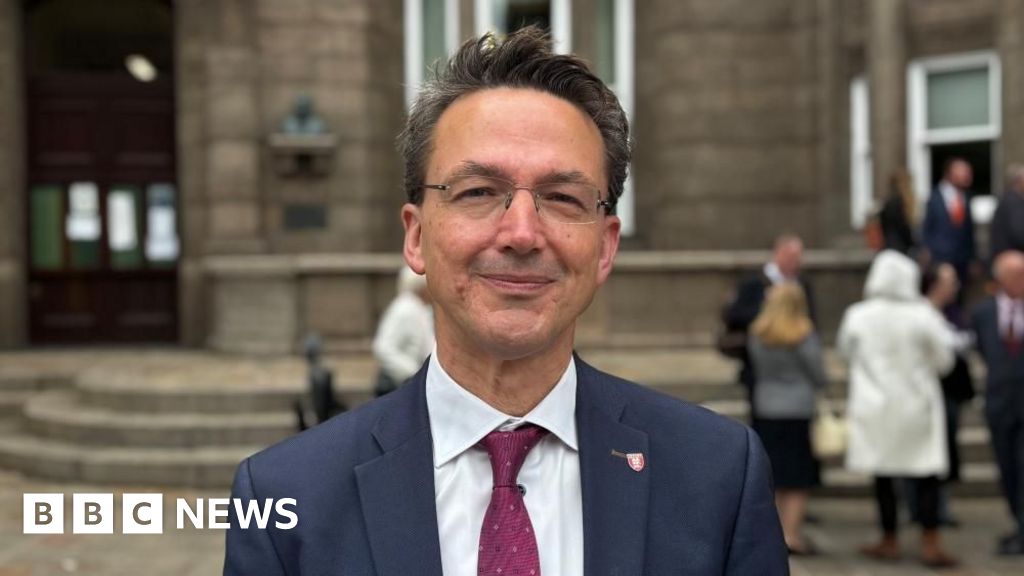
Kirsten Morel reflects on Jersey ferry decision’s personal impact
Jersey’s Economic Development Minister, Deputy Kirsten Morel, has spoken in a BBC interview about the profound personal impact of the controversial decision to replace Condor Ferries with Danish operator DFDS. Morel, who oversaw the tender process, described the decision as one of the most difficult of his political career, revealing that the fallout has intruded into every aspect of his life. He said he had expected criticism, given Condor’s long history and the emotional attachment many islanders feel towards the ferry company, but he had not expected the intensity and personal nature of the abuse. The minister told the BBC that he had received threatening messages, been confronted in public, and had to consider the safety of his family. He said the decision to award the contract to DFDS was made in the best interests of Jersey’s long-term connectivity and economic resilience, but acknowledged that it came at a significant personal cost. The interview offers a rare glimpse into the human side of a political choice that has divided the island, triggered legal action, and raised questions about the treatment of public figures. Morel’s reflections are likely to resonate beyond Jersey, as politicians across the UK and Europe face increasing levels of online hostility and abuse. The ferry decision itself remains a defining issue for the island, with implications for passengers, freight, tourism, and the local workforce. By speaking openly about the personal toll, Morel has placed a human face on a story that is often told in terms of contracts, ships, and legal challenges. His words also serve as a reminder that ministers are not immune to the emotional weight of their decisions, and that the consequences of governance extend far beyond the States chamber. As the island continues to navigate the transition from Condor to DFDS, Morel’s testimony adds a new dimension to the public debate, encouraging islanders to consider the pressures faced by those who make difficult choices on their behalf.
The background to Morel’s reflections lies in one of the most significant transport decisions in Jersey’s recent history. For decades, Condor Ferries had provided passenger and freight services between Jersey, Guernsey, and the UK, becoming a familiar and trusted part of island life. However, concerns had been growing for years about the reliability of Condor’s fleet, the age of its vessels, and its financial stability. The Government of Jersey decided to run a competitive tender process, inviting bids from companies interested in operating the island’s ferry services. In January 2025, it announced that DFDS, a major Danish shipping and logistics company, had been selected as the preferred bidder. The decision was presented as a bold step towards a more modern, resilient, and sustainable ferry service, with DFDS promising new ships and improved connections. But the announcement was met with shock and anger in some quarters. Condor had deep roots in the Channel Islands, employing hundreds of local people and supporting businesses across the region. Many islanders felt that the government had undervalued Condor’s local knowledge and commitment, and had chosen a multinational corporation over a familiar local operator. Trade unions expressed concern about the future of Condor’s workforce, while passengers worried about disruption to bookings and schedules. The political fallout was immediate, with opposition politicians demanding more transparency and some calling for the decision to be reversed. Condor itself launched a legal challenge, arguing that the tender process had been flawed. The uncertainty created a difficult atmosphere for everyone involved, and Morel found himself at the centre of the storm. As the minister responsible for economic development, he had to defend the decision in public, answer questions in the States, and face the anger of islanders who felt their voices had been ignored. It was in this context that the personal impact began to take its toll, as Morel found himself the target of frustration that went far beyond legitimate political debate.
In his BBC interview, Morel described in detail how the ferry decision had affected him personally. He said he had always understood that the role of a minister involves making unpopular choices, and that he was prepared to defend his decisions in public. But he admitted that the level of hostility had been difficult to handle. The minister revealed that he had received abusive emails and social media messages, some of which contained threats of violence. He said he had been shouted at in the street and confronted by strangers who blamed him for the loss of Condor. Morel told the BBC that the abuse had not only affected him, but also his family. He described how his children had become aware of the hostility, and how his wife had worried about his safety. He said that at times he had felt isolated and under enormous pressure, and that the decision had weighed heavily on his mental health. Morel said he had sought support from colleagues and loved ones, and had tried to maintain a sense of perspective, but acknowledged that there were moments when the burden felt overwhelming. He also spoke about the difficulty of maintaining a normal life while being the focus of public anger. Simple activities, such as going to the supermarket or walking down the street, had become sources of anxiety. He said he had been advised to vary his routines and to take precautions to protect himself and his family. Despite all this, Morel insisted that he still believed the decision to appoint DFDS was the right one for Jersey. He said he had not been motivated by personal gain or ideology, but by a genuine desire to secure the island’s future. He also expressed sympathy for those who were upset by the decision, saying he understood why people felt a deep attachment to Condor. However, he drew a clear distinction between legitimate criticism and abuse, and called for a more respectful public discourse. His comments have been praised by some as honest and courageous, while others have argued that he must accept the consequences of his decisions. Either way, his reflections have opened a broader conversation about the emotional demands of public office.
The ferry decision has also highlighted wider tensions in Jersey’s economy and society. Supporters of the tender argued that the island needed a ferry operator with the financial strength and modern fleet to provide reliable services for the long term. DFDS, as one of Europe’s largest shipping companies, offered a sense of security and ambition. The company promised to invest in new vessels, improve frequency, and strengthen freight capacity, which are vital for an island economy that depends heavily on imports and tourism. From this perspective, the decision was not about rejecting Condor, but about embracing a more sustainable future. Opponents, however, saw the decision as a betrayal of a local institution. Condor had weathered storms, both literal and metaphorical, for more than half a century. It had provided jobs, supported local charities, and built relationships with customers and communities across the Channel Islands. Many feared that DFDS, as a large international corporation, would not have the same commitment to Jersey. There were also concerns about the tender process itself, with some questioning whether the criteria had been weighted fairly and whether the government had fully considered the social and economic impact on Condor’s workforce. The legal challenge brought by Condor added to the uncertainty, leaving passengers and businesses in limbo. Morel’s reflections on the personal impact of the decision cannot be separated from this wider context. He was the public face of a policy that affected livelihoods, travel plans, and community identity. In a small island like Jersey, where many people know each other personally, the lines between political debate and personal animosity can easily become blurred. Morel acknowledged that he had made mistakes in the way the decision was communicated, and said he wished he had done more to prepare islanders for the change. But he also argued that the government had a duty to make decisions based on evidence and long-term planning, rather than sentiment or nostalgia. The tension between these two perspectives lies at the heart of the controversy, and it is unlikely to be resolved quickly. For now, the island must wait to see how the transition unfolds, and whether the promises made by DFDS are fulfilled.
Morel’s decision to speak publicly about the personal impact of the ferry decision may have significant political implications. It comes at a time when trust in politicians is low, and when public officials across the democratic world are facing increasing levels of abuse and intimidation. By sharing his own experience, Morel has drawn attention to the human cost of public service and the need for better support systems for elected representatives. He has also raised questions about the way political decisions are made and communicated. Some observers believe that the ferry controversy could affect Morel’s political future, and that voters may remember the disruption and uncertainty when they go to the polls. Others argue that his willingness to admit the personal toll could actually enhance his reputation, by showing that he is not a detached bureaucrat but a human being who cares about the island. Morel himself said he had no regrets about the decision-making process, but acknowledged that the experience had changed him. He said he had learned valuable lessons about resilience, empathy, and the importance of listening to people who disagree with you. He also called for a wider debate about the treatment of politicians, arguing that abuse and threats undermine democracy and discourage good people from entering public life. The interview has prompted reactions from across the political spectrum. Some have expressed sympathy for Morel, while others have used his comments to criticise the government’s handling of the ferry issue. The wider implications for Jersey are still unfolding. The legal challenge, the transition arrangements, and the future of Condor’s workforce all remain unresolved. The government has insisted that it will continue to work with all parties to ensure a smooth handover, but the atmosphere remains tense. Morel’s personal testimony adds a new layer to the story, reminding islanders that behind every political decision there is a person who must live with the consequences. It also serves as a warning about the dangers of dehumanising those who hold public office. In an age of social media outrage and instant judgement, his words are a timely reminder of the need for civility and compassion.
In conclusion, Kirsten Morel’s reflections on the personal impact of Jersey’s ferry decision offer a powerful and sobering insight into the realities of political leadership. The decision to replace Condor Ferries with DFDS was always going to be controversial, but the intensity of the backlash appears to have taken a heavy toll on the minister and his family. By speaking openly about the abuse he has received, Morel has highlighted a growing problem in public life: the line between robust debate and personal harassment is becoming increasingly blurred. His testimony is not just about one decision or one island; it is about the wider pressures faced by elected officials everywhere. It is also a reminder that decisions made in the name of progress and efficiency can have profound emotional consequences for those who make them. Morel’s insistence that he still believes the decision was right, despite the personal cost, is a testament to his conviction. But his admission that the experience has been difficult, and that he has needed support, is equally important. It challenges the stereotype of the unflappable politician and encourages a more honest conversation about mental health and resilience. As Jersey moves forward, the ferry decision will ultimately be judged by its outcomes. Will DFDS provide the reliable, modern service that was promised? Will the island’s economy benefit from improved connections? Will the transition be managed without lasting damage to the community? These are the questions that will matter in the long run. But for now, Morel’s words have added a human dimension to the debate, one that should not be forgotten. His experience serves as a reminder that public service is not just a job; it is a vocation that carries heavy responsibilities and, sometimes, heavy costs. The hope is that his honesty will encourage greater empathy, both in Jersey and beyond. In the end, the ferry decision is not just about ships and contracts. It is about people, relationships, and the difficult choices that leaders must make. Kirsten Morel’s reflections have ensured that this human element remains at the centre of the story.