








First CICA Media Forum in Baku Warns of Disinformation as Global Threat
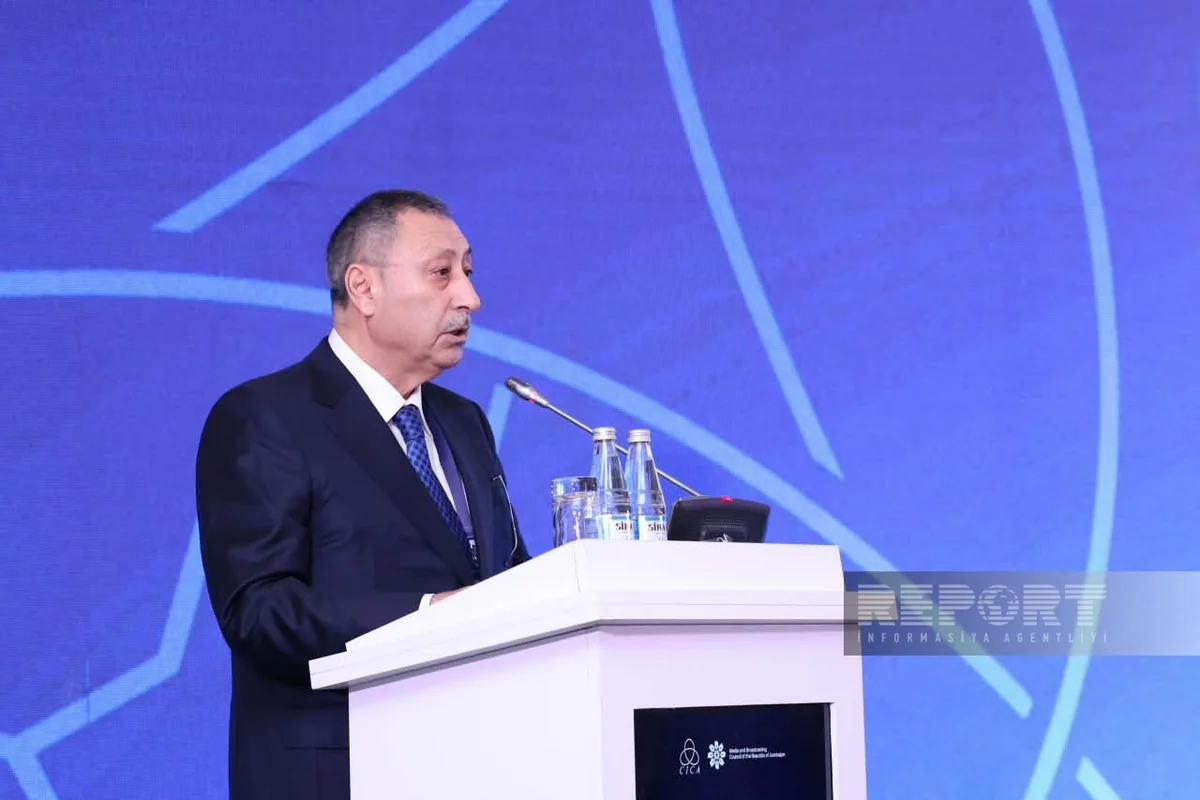
BAKU — The First CICA Media Forum opened here with a stark warning from a senior Azerbaijani official that the world is entering an era in which disinformation, hate speech, and aggressive policies are increasingly weaponized as political tools, making objective, responsible, and professional journalism more essential than ever. Khalaf Khalafov, Representative of the President of Azerbaijan on Special Assignments, said the modern information environment demands a collective and principled response, particularly within the framework of the Conference on Interaction and Confidence Building Measures in Asia (CICA). He told the gathering that expanding media cooperation among CICA member states, exchanging professional experience, and strengthening joint efforts against disinformation are of particular importance. The forum, the first of its kind under the CICA umbrella, brings together journalists, media executives, government officials, and experts from across the Asian continent to discuss shared challenges and opportunities in the information space. Khalafov’s remarks set the tone for a meeting expected to focus on building resilience against fake news, propaganda, and other information warfare tactics that have become pervasive in international relations. He emphasized that media freedom and responsibility are not contradictory but complementary, and that professional journalism can serve as a crucial instrument for peace, stability, and mutual understanding among nations. The official also called for greater cooperation in countering disinformation, which he identified as a serious threat to the principles of sovereignty, territorial integrity, and non-interference in the internal affairs of states. By hosting the forum, Azerbaijan and its CICA partners are signaling a commitment to fostering a healthier and more constructive global media ecosystem—one strong enough to withstand political manipulation and to help build confidence between nations. The gathering is being held as part of CICA’s broader effort to adapt its confidence-building agenda to new global realities, including the rise of digital threats and the growing weaponization of information. At the end of the deliberations, participants are expected to outline recommendations for strengthening regional media cooperation and for creating mechanisms that can quickly correct the record when falsehoods threaten to inflame tensions. “There is a growing need for objective, responsible, and professional media at a time when disinformation, hate speech, and aggressive policies are increasingly being used as political tools,” Khalafov said, according to Report.
The CICA process, launched in 1992 at the initiative of Kazakhstan, has grown into one of Asia’s most inclusive multilateral platforms, bringing together dozens of member states with vastly different political systems, religious traditions, and security concerns. That diversity makes the task of reaching common ground on such a sensitive issue as media freedom and disinformation extremely difficult, but it also makes the dialogue especially valuable. Khalafov’s call for expanding media cooperation within the CICA framework reflects a broader recognition that no single country can defend itself against the onslaught of false narratives. In an age when fabricated stories can cross borders in seconds, manipulate millions of people, and influence elections or even wars, a coordinated media strategy is an essential part of the organization’s larger confidence-building mission. The First CICA Media Forum is intended to serve as a practical platform for journalists and media organizations to share best practices, develop common ethical standards, and build networks for verification and fact-checking. By exchanging professional experiences, participants can learn how different countries have coped with disinformation campaigns, hate speech, and other forms of information manipulation that have eroded public trust in institutions. Khalafov noted that the media has a dual responsibility: to inform the public objectively and to contribute to conflict prevention by promoting dialogue and mutual understanding. In that sense, the forum is not merely a technical meeting but a political statement about the importance of truth and accountability in international relations. The official expressed confidence that the deliberations in Baku would produce practical recommendations for countering disinformation while respecting the legal and cultural traditions of each member state. As host, Azerbaijan is expected to play a leading role in these discussions and in promoting the idea that responsible media is a cornerstone of a stable and peaceful Asia. The forum also gives representatives of smaller and less influential media outlets a rare opportunity to be heard alongside major international news organizations, helping to ensure that the global information landscape does not remain limited to a few dominant voices.
Khalafov’s address placed the media challenge within a broader analysis of the changing international order. “The modern system of international relations is undergoing a period of profound transformation,” he said, according to Report. This transformation, he argued, is characterized by rising geopolitical tensions and by increasingly frequent violations of the fundamental principles of international law, including the sovereignty and territorial integrity of states. Such violations are placing the global security system under serious strain and undermining the foundations of peaceful coexistence. In this environment, the official continued, the role of information and the media becomes even more critical, because the way conflicts are framed and reported can have a direct impact on their trajectory. When media outlets are captured by partisan interests or become vehicles for state propaganda, they can escalate tensions and make peaceful resolution more difficult. Conversely, objective and responsible journalism can help de-escalate crises by presenting facts accurately, giving voice to all parties, and exposing the falsehoods that fuel hatred and aggression. Khalafov’s remarks echoed a growing concern among many countries about the erosion of international law and the weakening of multilateral institutions that were designed to maintain global order. The crisis in the global security system, as he described it, is not only a matter of military confrontation but also a battle over narratives and perceptions. In such circumstances, the need for media cooperation within CICA is not a matter of convenience but of urgent necessity. The forum is therefore seen as an important step toward building a shared understanding among Asian nations about the threats they face and the role that media can play in addressing them. By reaffirming the importance of sovereignty and territorial integrity as the basis of international relations, Khalafov also indirectly highlighted the responsibility of the media to respect these principles in reporting, and to refrain from amplifying separatist or extremist narratives. The ongoing transformation of the international system, he suggested, demands a transformation of the media as well—toward greater professionalism, objectivity, and resistance to manipulation, even when governments and powerful interest groups apply pressure to bend the truth for short-term political advantage.
Continuing his assessment of the contemporary threat landscape, Khalafov identified a range of emerging global challenges that transcend national borders and require collective action. He listed terrorism, separatism, extremism, cyber threats, and disinformation as immediate and interconnected dangers, alongside longer-term risks related to food, energy, water, and climate security. These challenges, he argued, are becoming global in scope and cannot be effectively addressed by individual states or through narrow geopolitical alliances. The emergence of non-traditional security threats has blurred the dividing line between domestic and international affairs, making cooperation among states and societies more essential than ever. In particular, the link between disinformation and other security threats is a growing concern for many governments. False narratives can be used to incite violence, justify aggression, destabilize legitimate governments, and undermine public confidence in institutions. They can also exacerbate the impact of food, energy, and water crises by spreading panic, distorting markets, or denying the reality of climate change. The media, as the primary source of information for most citizens, is both a victim and a potential remedy in this context. When media organizations are subjected to disinformation campaigns, their credibility suffers; when they respond by embracing rigorous fact-checking and transparent reporting, they can become powerful instruments of resilience. Khalafov’s inclusion of food, energy, water, and climate security in his remarks is significant, because these issues are often treated as technical or humanitarian concerns rather than as security matters. By placing them in the same category as terrorism and extremism, he was making the point that the international community must adopt a comprehensive and holistic approach to security—one that includes not only military and political dimensions but also human and environmental dimensions. The media has a crucial role to play in raising awareness of these issues and in holding governments accountable for their commitments. The First CICA Media Forum is expected to take up these themes in its sessions, exploring how journalists can better report on complex security issues without becoming tools of propaganda or falling victim to their own biases.
Khalafov went on to stress that in the current environment, exceptional importance must be attached to joint efforts aimed at strengthening mutual trust among states, resolving conflicts peacefully on the basis of international law, and ending ongoing wars in different parts of the world. These goals, he suggested, are closely linked to the work of the media and the need for a more responsible information environment. Trust among states is difficult to build when the public discourse is poisoned by disinformation and hate speech. Conflicts are harder to resolve when the media is used to dehumanize the enemy or to spread false narratives about the causes and prospects of a dispute. Wars are more likely to continue when the parties believe they can win the information war even if they cannot win on the battlefield. Thus, the professionalization of the media is not a side issue in international diplomacy but a core component of conflict prevention and peacebuilding. Khalafov’s remarks implied that CICA, with its emphasis on confidence-building measures, is a natural venue for promoting media responsibility as a tool of peace. The organization’s founding principles include respect for sovereignty, territorial integrity, and political independence of states, as well as non-interference in internal affairs—values that are directly relevant to the fight against disinformation and separatist propaganda. By bringing together media professionals from across Asia, the Baku forum creates an opportunity to develop a shared vocabulary and set of standards for reporting on conflicts, peace processes, and regional security issues. It also provides a platform for discussing the ethical dilemmas faced by journalists in conflict zones, where the line between information and influence is often blurred. Khalafov’s call for peaceful conflict resolution based on international law is particularly resonant for many CICA member states that have faced separatism, foreign interference, or attempts to redraw borders by force. Although the official did not refer to any specific conflict in his address, the broader message was clear: the media must not be allowed to become an instrument of aggression or territorial expansion, but should instead support diplomatic efforts and the peaceful settlement of disputes. This perspective is likely to attract broad support in a forum where many countries share similar fears and grievances about external attempts to manipulate their internal affairs.
As the First CICA Media Forum continues in Baku, participants are expected to work toward concrete outcomes, including possible recommendations for strengthening media cooperation, enhancing the capacities of journalists to counter disinformation, and promoting ethical standards that respect both national sovereignty and the public’s right to know. The forum represents a significant milestone for CICA, which has historically focused on political and military confidence-building but is now expanding its agenda to include the information space. This expansion reflects a recognition that in the 21st century, security is not only about tanks, missiles, and borders, but also about narratives, data, and trust. Khalafov’s speech, with its emphasis on the growing need for objective, responsible, and professional media, served as a reminder that the battle against disinformation is ultimately a battle for the integrity of human communication. In a world where aggressive policies are increasingly advanced through media manipulation, the journalist’s mission to report the truth is itself an act of political courage. The Baku forum offers an opportunity for media professionals from across Asia to commit themselves to that mission, to learn from one another, and to build partnerships that will enable them to resist pressure and manipulation. It also sends a clear signal to governments and other stakeholders that censorship and propaganda are not acceptable substitutes for the free exchange of ideas. While the challenges are formidable, the fact that CICA member states are willing to engage in this dialogue is a positive sign. It shows that even in an era of rising tensions, there is still room for cooperation, dialogue, and mutual learning. The outcome of the forum may well determine whether CICA can become a model for other regional organizations seeking to address the information dimension of security. In the end, as Khalafov emphasized, the key is not merely to talk about responsible media but to create the conditions in which it can flourish. That will require sustained political will, financial investment, and a commitment to protecting journalists and their work. For now, Baku has taken an important first step. The extent to which the promises made at the forum are kept will be measured not in resolutions, but in the quality and reliability of the information that reaches millions of people across the Asian continent in the years to come.


