








Paragraph 1: Introduction and Context of the Dual Launch
In a decisive move to fortify the Kenyan media landscape ahead of the nation’s next electoral cycle, the Media Council of Kenya (MCK) has officially launched the Guidelines for Election Coverage 2027 alongside its comprehensive Strategic Plan for the fiscal years 2026–2030. The dual launch, held in the bustling town of Nakuru, represents a proactive and forward-thinking approach by the regulatory body to ensure that the media operates with the highest standards of professionalism, independence, and responsibility during the high-stakes political period leading up to the General Election. Nakuru, strategically situated in the Rift Valley—a region historically recognized as a political battleground and a flashpoint for electoral violence—serves as a symbolic and practical venue for this significant announcement. The event brought together key stakeholders from the government, media regulatory bodies, editorial leadership, and journalists, underscoring the collaborative effort required to safeguard the integrity of information dissemination. By unveiling these two critical documents well in advance of the campaigns, the MCK is signaling that preparation, rather than reaction, will define Kenya’s approach to electoral reporting. The launch is not merely a ceremonial formality but an urgent call to action for media houses to recalibrate their editorial workflows, training programs, and ethical frameworks to meet the evolving challenges of the digital age. This initiative acknowledges that the media’s role as a watchdog and a conduit for public discourse is more critical than ever, especially in an environment where the public’s trust in institutions fluctuates. The simultaneous release of the electoral guidelines and the strategic roadmap represents a holistic intervention, aiming to align short-term operational rules with long-term institutional growth, ensuring that the media sector remains resilient, credible, and capable of serving the democratic needs of Kenyans.
Paragraph 2: Government’s Emphatic Call for Early Preparedness and the AI Threat
Central to the launch was a powerful address by Cabinet Secretary for Information, Communications and the Digital Economy, William Kabogo, who used the occasion to issue a stern warning and a clear directive to media organizations across the country. Kabogo emphasized that the time for preparation is now, long before the cacophony of campaigns begins, urging media houses to move beyond passive acceptance of the guidelines and instead actively integrate these principles into their core editorial processes and newsroom cultures. He argued that early adoption is essential to guarantee that coverage remains accurate, fair, and balanced—qualities that are often the first casualties in the frenzy of political reporting. The Cabinet Secretary painted a stark picture of the new information battlefield, highlighting the dual threats of rapidly advancing Artificial Intelligence (AI) and the proliferation of misinformation and disinformation. He articulated a disturbing scenario where AI technologies can generate convincing false text, manipulated images, and synthetic deepfake videos within minutes, effectively outpacing the ability of traditional fact-checking mechanisms to catch up. This speed of deception, he warned, means that falsehoods can saturate the public consciousness and shape perceptions before accurate information has a chance to circulate and correct the record. Kabogo’s warning underscores a paradigm shift in electoral interference; the greatest threat to election integrity is no longer solely physical violence or ballot stuffing, but rather the weaponization of information. For journalists, this means that verification protocols must be more robust than ever, requiring a combination of traditional editorial diligence and new digital forensic skills. The government’s perspective, as articulated by Kabogo, positions the media as the first line of defense against this digital onslaught, emphasizing that the credibility of the 2027 election outcome will depend heavily on the media’s ability to sift through the noise and present the public with reliable, verifiable facts, thereby preserving the sanctity of the democratic process.
Paragraph 3: The MCK Leadership’s Vision for Institutional Strength and Public Trust
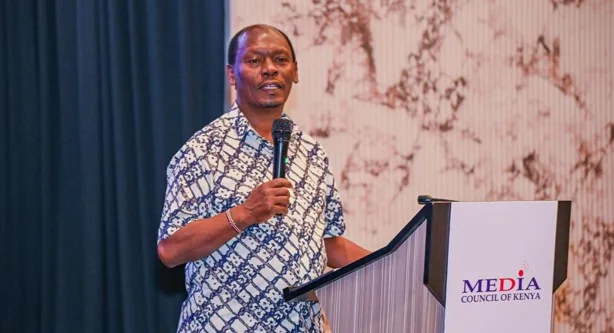
Following the Cabinet Secretary’s remarks, MCK Chairman Maina Muiruri articulated the strategic significance of the launch, framing it as a landmark step toward reinforcing the institutional backbone of Kenya’s media sector. Muiruri drew a direct line between the quality and credibility of the information available to citizens and the overall integrity of the 2027 General Election. He confidently asserted that the ultimate success of the Council’s efforts would be measured not by the number of documents published, but by tangible outcomes: the calibre of the environment created for journalists to work safely, the scope of freedoms protected from undue interference, and the corresponding level of public trust reposed in the media as a source of truth. This perspective shifts the focus from mere regulatory compliance to a broader mission of upholding democratic values. Adding further depth, MCK Chief Executive Officer David Omwoyo described the Strategic Plan 2026–2030 as the Council’s institutional roadmap—a dynamic blueprint that will guide the organization’s priorities, resource allocation, and developmental initiatives over the next half-decade. In parallel, he characterized the Election Coverage Guidelines as the professional compass that will direct journalists through the treacherous terrain of the electoral period. Omwoyo’s remarks carried a distinctly cautionary tone, particularly when he addressed the pressures endemic to modern journalism. He cautioned journalists against the dangerous trap of allowing the relentless pressure to break news first—often dubbed “the scoop mentality”—to compromise their sacred duty to provide verified and credible information. He emphasized that in the rush to publish, speed must never supersede accuracy, as a single unverified report can ignite tensions and irreparably damage the media’s reputation. The leadership’s combined message was clear: strategic planning provides the framework, electoral guidelines provide the rules, but ultimately, the character and discipline of the individual journalist will determine the industry’s collective integrity.
Paragraph 4: The Editors’ Guild and the Fundamentals of Ethical Journalism
Adding a crucial editorial perspective to the launch, Kenya Editors Guild President Zubeida Kananu addressed the assembled journalists, shifting the discussion toward the enduring fundamentals of the profession amidst the clamour for clicks and ratings. Kananu’s message was a powerful reinforcement of the classic tenets of journalism—verification, accuracy, and public interest—which she argued must remain non-negotiable even as technology evolves and newsroom pressures mount. She admonished journalists to resist the temptation of sensationalism and partisan alignment, reminding them that their ultimate allegiance lies with the citizenry, not with any political candidate or party. Her emphasis on verifying information before publication serves as a direct countermeasure to the viral spread of fake news, imploring journalists to act as rigorous gatekeepers rather than unchecked conduits of rumors. Kananu’s presence at the launch signified a robust partnership between the regulatory body (MCK) and the editorial leadership (Guild), indicating a unified front in setting and enforcing standards. She highlighted the critical role of editors in this ecosystem, viewing them as the last line of defense against low-quality or malicious content slipping through to the public. By putting the public interest first, as Kananu explicitly demanded, journalists can navigate the often-blurred lines between reporting, analysis, and activism, ensuring that their work facilitates informed decision-making rather than inciting division. Her speech served as a moral compass for the gathering, reminding all present that while guidelines and strategic plans provide the structure, it is the ethical fibre of the newsroom—cultivated by strong editors and principled reporters—that ultimately ensures the media fulfills its democratic mandate.
Paragraph 5: The Commissioning of the Nakuru Media Hub and Regional Decentralization
A highlight of the event, and a tangible symbol of the MCK’s operational evolution, was the official commissioning of the MCK Nakuru Media Hub. This new facility represents a significant investment in regional media development, designed to bring the Council’s services directly to journalists and media practitioners outside the capital city of Nairobi. The Hub is expected to serve as a one-stop centre for media development, providing access to professional training, content development workshops, and essential regulatory services such as accreditation and dispute resolution. By decentralizing these critical functions, the MCK aims to bridge the gap between the center and the periphery, recognizing that a vibrant democracy requires a media ecosystem that is not solely tethered to the capital. The Nakuru Hub will specifically empower journalists operating in the Rift Valley, a region that often bears the brunt of electoral tensions and where local-level reporting is crucial for peace and accurate representation. The facility is poised to become a nexus for capacity building, equipping regional journalists with the latest skills in multimedia storytelling, fact-checking, and digital safety. Furthermore, the Hub will enable journalists to engage directly with the Council, fostering a more collaborative relationship between regulators and practitioners rather than a purely adversarial one. This move signifies a broader strategy by the MCK to cultivate a nationwide network of media excellence, ensuring that journalists from marginalized communities have equal access to the tools and knowledge required to report effectively. The commissioning in Nakuru is not just about brick-and-mortar infrastructure; it is about investing in human capital and ensuring that the benefits of media development are equitably distributed across all 47 counties, thereby enhancing the quality and diversity of voices in the 2027 electoral discourse.
Paragraph 6: Synthesis, Outlook, and the Future of Kenyan Electoral Journalism
In summation, the launch of the Election Coverage Guidelines 2027 and the Strategic Plan 2026–2030, coupled with the inauguration of the Nakuru Media Hub, marks a watershed moment in Kenya’s journey toward electoral maturity. This comprehensive package of tools, infrastructure, and strategic vision signals that the MCK and its partners are acutely aware of the existential threats and profound opportunities facing journalism in the coming years. The guidelines offer a practical legal and ethical framework to keep journalists on track, while the strategic plan outlines a resilient future for the media industry as a whole. However, as the speakers clearly articulated, the success of these initiatives will hinge on the collective will of media owners, editors, journalists, and the public to embrace responsibility over convenience and integrity over virality. The challenge of Artificial Intelligence and disinformation is a monumental one, requiring a shift from reactive fact-checking to proactive digital literacy campaigns that involve the public as active participants in truth-seeking. Kenya stands at a crossroads; it can either allow technology and political propaganda to fragment its social fabric, or it can harness the enduring power of ethical journalism to knit it together. The road to August 2027 will undoubtedly be turbulent, filled with attempts to manipulate, coerce, and mislead. Yet, with the frameworks now in place, the onus falls upon the media houses to adapt their workflows immediately, investing in AI forensics and verification training for their staff. The welfare of the nation’s democracy depends on a media that is not only free but also fiercely accurate. As the country looks ahead, the measures unveiled in Nakuru offer a beacon of hope, affirming that through strategic preparation and unwavering commitment to professional standards, the Kenyan media can navigate the complex digital frontier, safeguard the electoral process, and ultimately strengthen public confidence in the institutions that underpin the nation’s stability and progress.


