


Paragraph 1: An Institutional Response to an Informational Crossroads
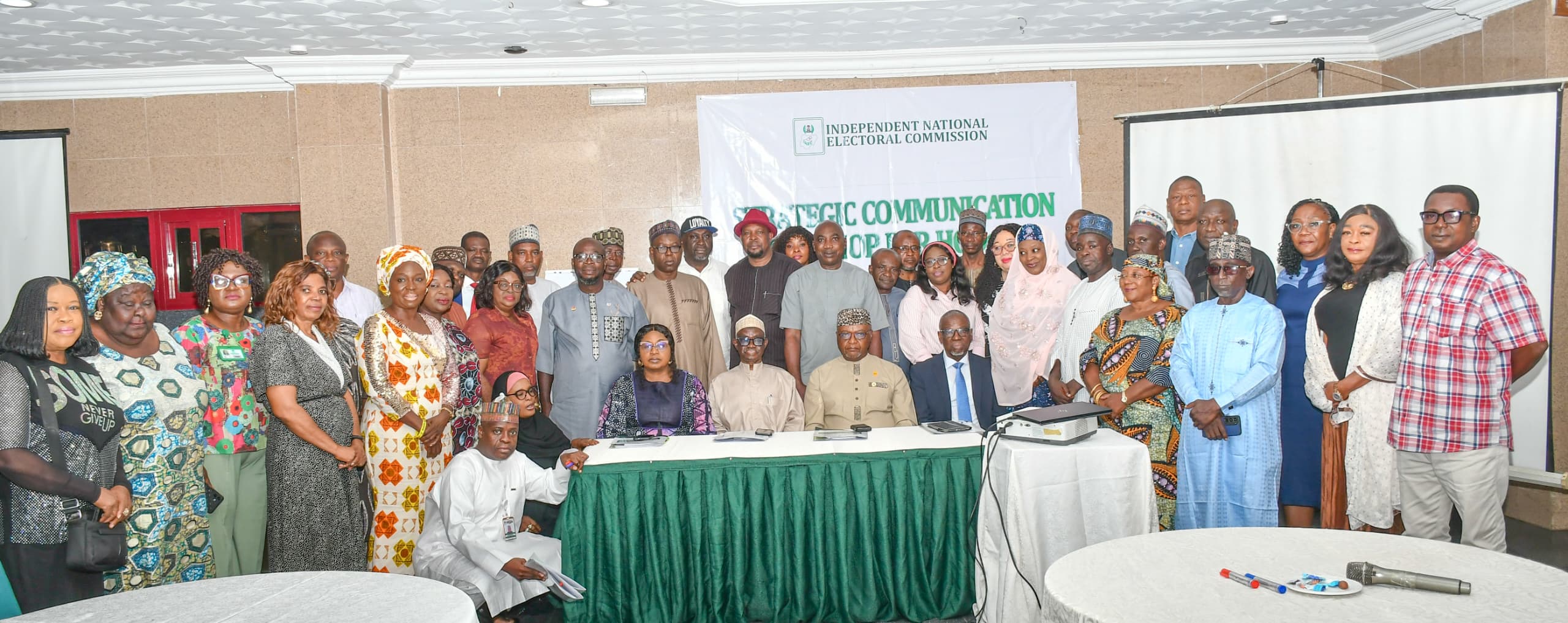
The Independent National Electoral Commission (INEC) has taken a decisive and strategic step toward fortifying the integrity of Nigeria’s electoral future by convening a comprehensive two-day communication workshop in Abuja for its state-level Voter Education and Publicity (VEP) officers. This high-level gathering, which began on Wednesday, is a deliberate pre-emptive move designed to strengthen the capacity of these frontline officers as the nation gears up for the 2027 General Election. In an era where the information ecosystem is increasingly volatile and susceptible to manipulation, the Commission recognizes that the battle for electoral credibility is no longer confined to the physical polling units but is fiercely contested in the digital and traditional media landscape. The workshop serves as a critical intervention aimed at tackling the twin scourges of misinformation and disinformation, which have the potential to undermine public confidence in the electoral process before a single ballot is cast. By focusing on strategic communication, INEC is signaling a paradigm shift from reactive crisis management to proactive narrative control, ensuring that its officers are not merely messengers but trusted guardians of factual information. The participants, drawn from every state of the federation, are expected to become the primary conduits through which accurate, timely, and universally accessible information will flow to millions of Nigerian voters. This initiative underscores the profound understanding within the electoral body that communication is the bedrock upon which voter trust, participation, and the overall acceptance of election outcomes are built in any functioning democracy.
Paragraph 2: Navigating Financial Constraints and Demographic Expansion
The opening address by National Commissioner and Chairman of the Information and Voter Education Committee, Mohammed Kudu Haruna, laid bare the operational realities and monumental challenges that will define the road to 2027. He candidly acknowledged the severe funding constraints imposed by the envelope budgeting system, a fiscal framework that limits INEC’s operational flexibility and forces the Commission to prioritize its expenditures meticulously. This financial austerity arrives at a paradoxical time when the Commission’s responsibilities are expanding exponentially. Haruna revealed a staggering statistic—the recently suspended Nationwide Continuous Voter Registration (CVR) exercise is expected to culminate in a consolidated voter register that exceeds 100 million individuals. This figure represents not just a number but a massive logistical and communicative undertaking. With a larger electorate, the margin for error narrows, and the need for clear, concise, and widely disseminated information becomes paramount. The funding situation means that INEC cannot rely solely on expensive, mass-media campaigns; it must optimize its communication strategies, leveraging the skills of local officers who understand the nuances of their specific regions. This workshop is therefore a cost-effective investment in human capital, designed to bridge the identified capacity gaps among the Heads of Department for Voter Education and Publicity. Haruna emphasized that in this climate of scarcity, effective communication is not a luxury but a vital operational tool, capable of preventing electoral conflicts, reducing procedural confusion, and enhancing overall transparency without requiring exorbitant financial outlays. The challenge, therefore, is to do more with less, and the Commission sees its state-level officers as the key to achieving this delicate balance.
Paragraph 3: Redefining the Narrative on Voter Apathy and Party Responsibility
In a pointed and nuanced intervention, Commissioner Haruna addressed the persistent issue of voter apathy, cautioning against the simplistic narrative that places the blame solely on INEC’s shoulders. He argued that voter participation is a collective democratic responsibility, one that extends far beyond the regulatory purview of the electoral commission to the political parties themselves. Haruna asserted that parties hold a substantial share of the obligation in mobilizing their supporters; however, their internal weaknesses—specifically regarding candidate selection processes—often result in profound voter disengagement. When party primaries are marred by allegations of corruption, imposition of candidates, or a lack of internal democracy, the resulting electorate becomes disillusioned, viewing electoral participation as a preordained exercise rather than a meaningful act of choice. This emphasizes that INEC can provide a pristine, secure, and transparent voting environment, but it cannot manufacture public enthusiasm if the political class fails to offer compelling, credible, and diverse options to the voters. He pointed to the recent off-cycle governorship elections as evidence of progressive improvement, noting that these contests have become progressively more credible, receiving commendations from domestic observers, civil society organizations, and international media. These successes, he argued, are foundational to rebuilding trust. Consequently, the communication officers are tasked with a delicate dual mandate: not only to disseminate information about the electoral process, but also to actively manage expectations and foster a sophisticated understanding of how democracy functions among the citizenry, thereby mitigating the cynicism that drives apathy and ultimately improving participation rates by holding all stakeholders accountable.
Paragraph 4: Bridging the Professional Capacity Gap in Voter Education
Addressing the specific professional deficits that have historically hampered effective public outreach, the Director of Voter Education and Publicity, Victoria Eta-Messi, outlined the intricate rationale behind the workshop’s curriculum. She acknowledged a longstanding shortage of professional communication training among state-level VEP officers, a gap that has been dangerously exacerbated by recent administrative redeployments within the Commission. These redeployments have occasionally placed personnel with backgrounds outside of journalism, public relations, or mass communication into roles that demand acute media sensitivity, crisis management, and strategic messaging. These officers now find themselves navigating politically sensitive environments with the critical mandate to manage disinformation campaigns and coordinate complex voter education programmes under immense pressure. The meticulously structured curriculum, as Eta-Messi elaborated, is designed to address these deficiencies head-on. It encompasses not only the fundamentals of strategic voter education but also delves into the complexities of legal literacy, ensuring officers understand the electoral act and the legal frameworks governing elections. A significant module is devoted to the deliberate weaponization of misinformation in electoral contexts, equipping officers with the analytical skills to rapidly debunk false narratives, identify encrypted hate speech, and maintain professionalism in volatile digital spaces. Furthermore, participants are being drilled on the precise internal and external communication policies of INEC, alongside the appropriate procedures for releasing official information. This ensures that unauthorized leaks, inconsistent messaging, or premature announcements do not undermine public trust. The ultimate goal is to transform these officers into agile communicators capable of handling the fast-paced, digital-first information landscape where rumors and manipulated content can spread at the speed of light, threatening to destabilize the electoral atmosphere before the electoral commission has a chance to clarify the facts.
Paragraph 5: A Concrete Timeline and the Scaling of Outreach for 2027
The timing of this workshop is intrinsically linked to the intricate and fast-approaching electoral calendar outlined by the Commission. The 2027 General Election is scheduled to kick off with the Presidential and National Assembly elections on January 16, 2027, followed precisely three weeks later by the Governorship and State Assembly polls. These dates are now firm, creating a high-stakes countdown for all stakeholders. With political parties already gearing up for pre-election campaigns, the demand for accurate, clear, and unbiased electoral information will spike exponentially in the months ahead. This training ensures that communication officers are ahead of the curve, ready to roll out massive voter awareness campaigns that clarify polling unit reconfigurations, voting procedures, and security measures. The consolidated voter register of over 100 million presents an immense logistical headache, but it also provides a golden opportunity for highly targeted communication. Officers are being instructed to draft messages that cater to diverse demographics—from tech-savvy urban youth who consume content on social media platforms to rural dwellers with limited digital access who rely on traditional town halls and local radio. The workshop emphasizes a hybrid communication approach, blending traditional media outreach with sophisticated social media engagement to ensure that no voter is left uninformed or disenfranchised due to a lack of information. As the election draws nearer, the frequency and intensity of communication will increase dramatically, and these state-level officers will be the linchpins ensuring that the massive scale of the process does not result in administrative chaos, spatial confusion at polling booths, or widespread public confusion regarding the electoral calendar. Their preparedness now is critical to mitigating the inevitable challenges of the election season.
Paragraph 6: Toward a Legacy of Transparency, Accessibility, and Accountability
Ultimately, this strategic communication workshop represents a microcosm of INEC’s broader vision for the 2027 elections—a vision firmly grounded in the principles of transparency, accessibility, and unyielding accountability. Through this proactive investment in human capital, the Commission is sending a clear and unequivocal signal that it understands the modern electoral battlefield is as much informational as it is physical. By training its state-level officers to be persuasive communicators, effective educators, and vigilant guardians of the truth, INEC is actively fortifying the very pillars of democratic trust upon which the nation’s future rests. The expected outcomes of this gathering extend far beyond the technicalities of drafting press releases or managing X (formerly Twitter) accounts; they encompass the cultivation of an informed and engaged citizenry capable of making free, fair, and credible choices at the ballot box. The Commission reiterated a steadfast commitment that election-related communication must remain visible, accessible, accurate, and accountable to all Nigerians and international stakeholders. This commitment, if consistently upheld throughout the grueling election cycle, could set a new benchmark for electoral integrity not just in Nigeria, but across the entire West African region. As the officers prepare to return to their respective states, they carry with them not just training manuals and operational guidelines, but a renewed and solemn mandate—to demystify the electoral process, counter falsehoods with verifiable facts, and actively invite every eligible citizen to participate in shaping the nation’s democratic trajectory. The road to 2027 is undeniably long and fraught with political, economic, and security challenges, but with a fortified communication architecture underpinning its operations, INEC appears resolutely determined to ensure that the integrity of the path is never obscured by the fog of misinformation, and that the final outcome reflects the true will of the Nigerian people.