


Volcano Misinformation: How False Claims Spread During Eruptions and Why It Matters
Volcanoes have long captured human imagination, inspiring both awe and fear through their dramatic displays of nature’s power. Whether erupting violently or sitting dormant, these geological features fascinate people across the globe. However, as volcanologists Janine Krippner and Heather Handley explain, this fascination often collides with rolling news coverage and social media in ways that amplify false claims, misleading images, and long-standing misconceptions about volcanic behavior. The consequences extend far beyond simply getting the science wrong. Misinformation can distort public perceptions of hazards and risk, potentially influencing how people respond during actual volcanic crises. In their newly published research, the authors draw on their experiences as science communicators and analyze hundreds of international media articles published during volcanic events to better understand which misconceptions are most common and how they spread. By identifying these patterns, they hope to help journalists communicate volcanic hazards more accurately while enabling people from all backgrounds to recognize misleading information when they encounter it.
The international research team involved in this study included experts from universities, volcano observatories, and government agencies, with their media analysis covering 375 articles published between 2017 and 2022. Through this comprehensive examination, they identified 18 common misconceptions spanning various aspects of volcanology, including seismology, hazards, climate impacts, eruption timescales, and the use of misleading imagery. Some misconceptions involved attention-grabbing terms that capture public imagination, such as the Pacific Ring of Fire, supervolcanoes, and mega-tsunamis. Others reflected more fundamental misunderstandings about how volcanoes actually work. For instance, volcanic ash is frequently described as “smoke” in media reports, but in reality, it consists of tiny fragments of rock, crystals, and volcanic glass mixed with gases and water vapor within an eruption plume. This distinction matters because describing ash as smoke can lead people to underestimate its hazards. Similarly, the term magma “chamber” suggests a vast underground tank of liquid magma, but the reality beneath most volcanoes involves complex networks of molten rock, crystals, and gas that behave very differently than a simple chamber would.
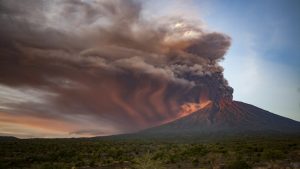
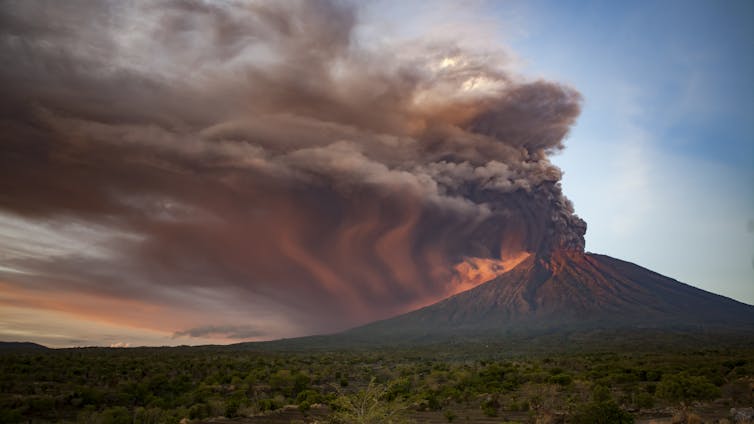
The research also examined how misinformation spreads during volcanic events around the world, revealing troubling patterns in media coverage. During Mount Agung’s 2017 unrest and eruption in Bali, old footage of other volcanoes was presented as current activity at Agung, while clouds and gas emissions were wrongly reported as actual eruptions. Some reports suggested the eruption could affect the entire island of Bali, contributing to widespread tourist cancellations and forcing volcanologists to spend considerable time countering false information. A more recent example occurred during a 2025 eruption of Mount Etna in Sicily, which produced a pyroclastic flow within an area already closed to the public. Videos showing tourists outside the affected area moving away were shared widely as people “fleeing for their lives,” creating the false impression that all of Sicily was unsafe. This coverage fueled public anxiety and tourism concerns while significantly exaggerating the actual danger posed by the eruption.
The researchers also examined misinformation surrounding Yellowstone volcano in the United States, which has frequently been portrayed as an “overdue” supervolcano capable of destroying humanity. Documentaries, disaster films, and tabloid media have consistently exaggerated both the likelihood and potential impacts of a future Yellowstone eruption. Earthquakes in the region have been portrayed as signs that an eruption is imminent, despite geological evidence suggesting otherwise. In reality, Yellowstone’s last approximately 50 eruptions were lava flows with only local impacts, not catastrophic supereruptions that would threaten civilization. This dramatic example illustrates how sensationalized coverage can create persistent misconceptions that shape public understanding for years. The portrayal of volcanoes as ticking time bombs waiting to destroy everything in their path does a disservice to accurate scientific understanding and can lead to inappropriate responses during actual volcanic crises.
Given the prevalence of misinformation, the researchers offer practical guidance for navigating the flood of information online during a volcanic crisis. They recommend first checking the source of information, starting with organizations responsible for monitoring and managing the volcano, including volcano observatories, geological agencies, and emergency management authorities. Scientists and other experts can provide valuable context, but it is important to consider whether they are speaking within their area of expertise. When evaluating reporting about what a volcano might do next, it is crucial to distinguish between what is possible and what is likely. Volcano science involves inherent uncertainty, and scientists and emergency managers may discuss multiple scenarios because they need to prepare for various possibilities. However, an alarming headline stating that a volcano “could” produce a massive eruption or tsunami can easily be misread as suggesting that it “will” do so. Before sharing images and videos encountered online, people should verify their credibility, particularly as AI-generated content becomes more common. Questions to ask include whether the image actually shows the volcano being discussed and whether the same image has appeared elsewhere online with a different location or date.
The implications of effectively communicating volcano science extend beyond mere accuracy. Even with intensive monitoring, volcanologists cannot always forecast precisely what a volcano will do next. Good communication can, however, help people understand what is happening, what could happen, and what is most likely to occur. That distinction between possibility and probability is more important than people might realize. Describing volcanic ash as “just smoke” can cause people to underestimate its hazards, while calling a volcano “overdue” can make an eruption seem inevitable and doom impending. The guide produced from this research is intended to help journalists and individuals recognize misconceptions, assess the evidence behind claims, and make better-informed decisions during volcanic events. For journalists in particular, the message is simple: there is no need to exaggerate the science. Volcanoes are inherently interesting phenomena that can capture public attention without embellishment. By reporting accurately and avoiding sensationalism, media professionals can help build public understanding and resilience rather than contributing to confusion and fear during volcanic crises.