









Hong Kong National Security Police Arrest Two Including Media Founder Over August 31 Disinformation Charges
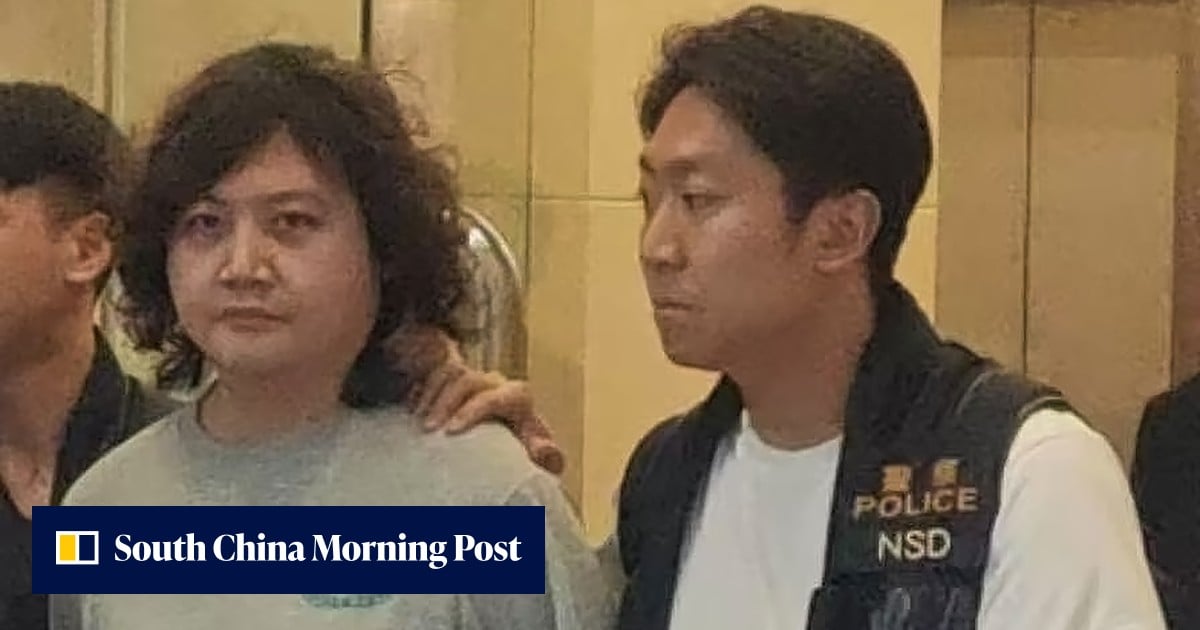
Hong Kong’s national security police have heightened their scrutiny of media and activism with the arrest of two individuals, including the founder of the online outlet Boom News, on allegations of inciting public disorder through the dissemination of false information. The South China Morning Post confirmed the arrests on Wednesday morning, citing a source familiar with the operation. The suspects were identified as Tang Ho-wing, the 37-year-old journalist and founder of Boom News, and Lee Ying-chi, a dentist known for his involvement in social movements. Both were taken into custody at approximately 7 a.m. in a coordinated operation by the National Security Department, which has jurisdiction over cases involving threats to the city’s stability under the 2020 National Security Law (NSL). The charge specified was “incitement by spreading disinformation,” a legal provision that has rarely been invoked publicly but carries significant penalties, including imprisonment for up to seven years. The arrests are directly linked to events that took place outside Prince Edward MTR station on August 31, a date that has become a flashpoint for pro-democracy protests in Hong Kong, particularly the violent clashes between police and demonstrators in 2019.
The August 31 date holds deep symbolic weight in Hong Kong’s recent history. On that day in 2019, hundreds of police officers stormed the Prince Edward MTR station to clear protesters who had occupied the underground premises following a night of widespread unrest in the Kowloon district. The operation resulted in dozens of injuries, with many protesters reporting being beaten by police with batons and shields during the chaotic sweep. Footage of bloodied individuals emerged in the following days, sparking allegations of excessive force and outright police brutality, which authorities consistently denied. In the years since, August 31 has become an annual memorial for the pro-democracy movement, with activists gathering near the station to lay white flowers, read names of those injured, or simply stand in silent vigil, despite a strict policing regime that has often led to arrests for breaching social-distancing orders or public order laws. The new arrests suggest that the security authorities are now targeting individuals who may have spread unverified or false accounts of these past events, possibly to incite public anger or undermine confidence in the police and the government. The source clarified that the two arrested on Wednesday are the sixth and seventh individuals taken into custody in connection with this specific date, following the earlier apprehension of three others earlier this month for allegedly shouting seditious slogans and holding white flowers outside the same station on August 31.
The profiles of the two suspects highlight the broad reach of the national security apparatus. Tang Ho-wing is a seasoned journalist who founded Boom News in 2020, an online news platform that focused on investigative reporting, social matters, and commentary that often veered into criticism of the government’s policies, particularly those related to public housing, labour rights, and the implementation of the NSL. Boom News gained a niche audience among younger and more politically aware netizens, but it never achieved mainstream scale due to funding limitations and the difficult media environment under the new security legislation. Tang has a decade of experience in local media, having previously worked for several independent outlets before striking out on his own. His arrest on suspicion of spreading disinformation is particularly alarming to press freedom advocates, as it suggests that journalistic output – even analytical commentary – could be reclassified as criminal incitement if it includes interpretations of past events that diverge from official narratives. Lee Ying-chi, a dentist by profession, has a separate background. He was a vocal participant in the 2019 protests, often appearing at front-line situations to provide medical aid to injured demonstrators. His involvement in activist circles is well-documented, though he had not previously been charged with any crime. His presence in this case indicates that the police are also focusing on medical professionals who played supportive roles during the earlier unrest, possibly viewing them as colluding with protestors to spread misinformation about injuries.
The legal basis for the arrests is found in Article 29 of the Hong Kong National Security Law, which prohibits “the incitement of hatred, hostility, or violence against the government” through speech, publications, or electronic media. While the specific article on “spreading disinformation” is not explicitly numbered in the NSL, authorities have cited it under the broader provisions of subversion and collusion with foreign forces, as well as the common law offence of sedition, which was further clarified by the Court of Final Appeal in 2021. The security law allows police to detain suspects without charge for up to 48 hours, and to extend detention with judicial approval. Legal experts suggest that the prosecution would need to prove not only that the information was false, but also that the intent was to incite violence, disruption of public order, or to weaken the authority of the government. The focus on events at Prince Edward MTR station is particularly sensitive because police have maintained that their actions were lawful and proportionate, and they have repeatedly dismissed allegations of misconduct as “rumours” and “malicious fabrications” aimed at tarnishing their image. The three individuals arrested earlier this month – two men and a woman – were allegedly seen shouting slogans such as “Release the protesters” and holding white flowers, which police consider a symbolic act of mourning for those killed or injured, a narrative that contradicts the official version.
Human rights organizations and press freedom watchdogs have reacted with alarm to the arrests, warning that they could have a chilling effect on independent journalism and activism in Hong Kong. Reporters Without Borders (RSF) issued a statement calling for the immediate release of Tang and Lee, arguing that the expansion of the NSL to cover journalistic output based on “disinformation” is a violation of international standards on freedom of expression. The Committee to Protect Journalists (CPJ) similarly urged the Hong Kong government to provide specific evidence of the alleged falsehoods. However, the Hong Kong government and the mainland Chinese authorities have defended the actions, asserting that the NSL is essential for safeguarding national security, and that the arrests are based on lawful investigation and evidence. A spokesperson for the Hong Kong Police Force said that the arrests were the result of an extensive investigation into online content that had “the clear purpose of inciting public hatred” against the police and the government, and that the suspects had deliberately twisted facts about the 2019 protests to provoke social division. The case is expected to go before a magistrate court, where prosecutors will request that bail be denied, citing the severity of the charges and the risk of flight or reoffending. If convicted, the maximum penalty is seven years imprisonment, though legal analysts note that sentencing in NSL cases can be harsh, with even minor violations resulting in multi-year terms.
Beyond the legal proceedings, the arrests underscore a broader trend of intensified enforcement by the National Security Department, which has been increasingly proactive in targeting not only street activists but also digital media and professionals. Since the enactment of the NSL in June 2020, more than 250 people have been arrested, with high-profile cases involving media entrepreneurs, publishers, and former legislators. The closure of several pro-democracy outlets, including Apple Daily in 2021, has significantly shrunk the space for independent journalism. The new arrests of Tang and Lee suggest that even smaller online platforms with modest readership are not immune to scrutiny. Furthermore, the linkage of these arrests to the August 31 anniversary indicates that the authorities are determined to prevent any revival of commemoration of the 2019 clashes, viewing them as potential rallying points for dissent. As the city approaches the fifth anniversary of the NSL’s implementation, the government has emphasized stability and order, while critics argue that the law is being used to silence all forms of opposition. The fate of Tang and Lee will likely become a test case for how far the NSL can extend into the realm of commentary and historical memory, and it will be watched closely by both domestic and international observers. In the coming weeks, as more details of the investigation emerge, the case is expected to further polarize opinions in Hong Kong and abroad, reinforcing the persistent tension between security measures and civil liberties in the city.


