





South Korea’s revised Information and Communications Network Act officially took effect this Tuesday, igniting a fierce national debate regarding the balance between curbing online harm and protecting fundamental democratic freedoms. The new legislation introduces punitive damages of up to five times the actual losses for those found guilty of maliciously distributing false or manipulated information. Furthermore, it imposes strict operational requirements on major digital platforms, mandating the establishment of formal reporting systems for hate speech and defamatory content, alongside a requirement for platforms to publish regular progress reports on their enforcement efforts.
The ruling Democratic Party of Korea has championed the law as a vital intervention against the rise of “cyber wreckers”—individuals who profit from spreading sensationalist misinformation and hate speech. Proponents argue that existing legal frameworks have proven inadequate against the rapid proliferation of high-quality AI-generated deepfakes and orchestrated smear campaigns. Acting leader Han Byung-do defended the measure as a “minimum institutional tool,” asserting that the legislation is specifically designed to hold high-volume content creators accountable for damage caused by bad-faith reporting, rather than to silence legitimate political dissent.
Despite these assurances, the law has met with intense resistance from the opposition People Power Party, prominent press organizations, and various civic groups. The primary point of contention lies in the absence of a clear, objective definition of what constitutes “false” or “manipulated” information in the legal text. Critics argue that by delegating the authority to judge the veracity of content to private platforms, the law encourages an environment of over-censorship. They fear that companies will preemptively remove controversial or critical posts to avoid potential liability, effectively creating a “chilling effect” on investigative journalism and public discourse.
The institutional implementation of the law targets specific tiers of internet users, ensuring that punitive measures apply primarily to high-reach entities. Damages are limited to accounts with at least 100,000 subscribers or high monthly view counts, while administrative fines target “profit-seeking publishers” who have demonstrated a pattern of distributing falsehoods for financial gain. Additionally, large platforms with over one million daily users are now compelled to manage reporting queues. While meant to ensure systematic accountability, this framework has nonetheless heightened concerns among advocates for digital rights, who suggest that the administrative burden will disproportionately affect independent voices.
International organizations have also raised alarms regarding the potential long-term implications of these regulations. The Seoul Foreign Correspondents’ Club issued a formal statement expressing deep concern over the law’s impact on the free flow of information, noting that such broad legislation can easily be repurposed by future administrations to stifle press freedom. Locally, domestic civic organizations have echoed these sentiments, filing public petitions that garnered over 140,000 signatures. They argue that terms like “infringing on the public interest” are too nebulous to satisfy constitutional standards of clarity, potentially rendering the law unconstitutional.
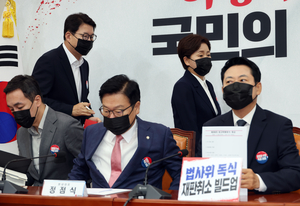
The legal and political battle is far from over, as the People Power Party has vowed to file a constitutional petition to challenge the law’s validity. Symbolic protests, such as party officials wearing black masks in the National Assembly, highlight the intensity of the standoff, with the opposition framing the legislation as a “super gag law” designed to suppress criticism. As the government begins the difficult task of enforcing these new rules, the country now faces a pivotal moment in defining how it manages the digital landscape without compromising the core principles of free speech and open debate.