


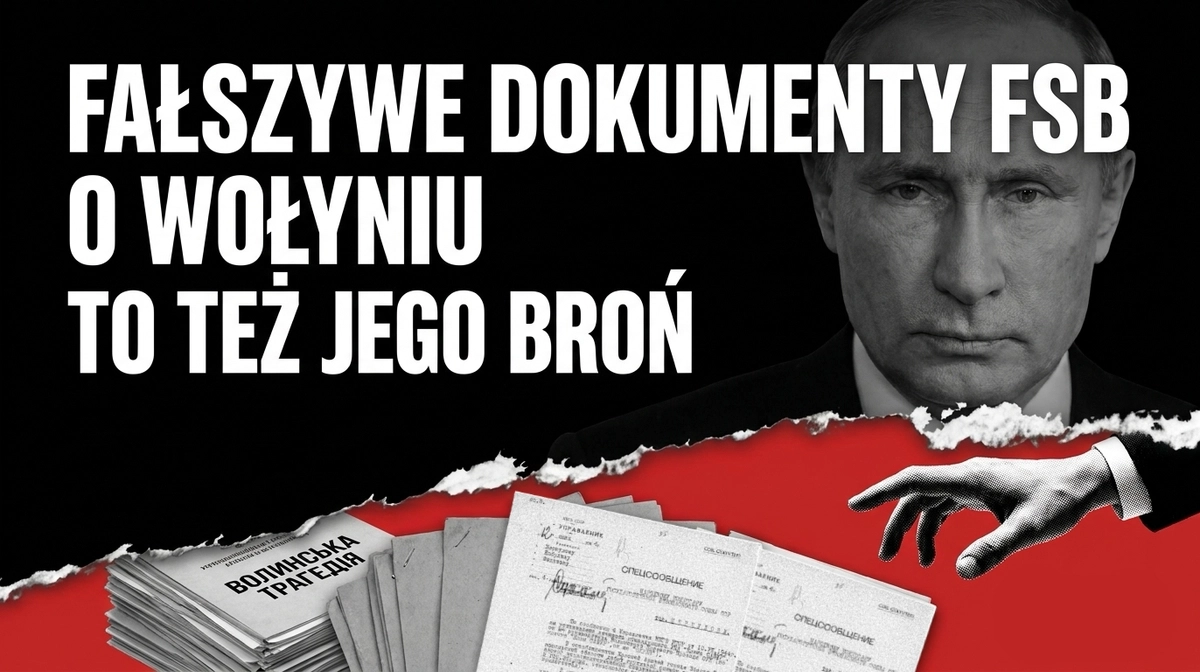
The Russian Federal Security Service (FSB) has officially commenced a sophisticated psychological operation designed to fracture the strategic alliance between Ukraine and Poland. According to Andrii Kovalenko, head of the Center for Countering Disinformation under Ukraine’s National Security and Defence Council, the Kremlin is deploying forged “archival documents” to weaponize the painful history of the Volyn (Volhynia) tragedy. By manipulating memories of the Second World War, Moscow intends to incite emotional hostility and erode diplomatic trust between the two neighboring nations at a critical juncture in the ongoing war against Russian aggression.
The operation, which is reportedly under the personal supervision of FSB Director Alexander Bortnikov, relies on a coordinated media campaign to amplify these fabricated narratives. On the night of July 4-5, the Russian state-controlled outlet Russia Today released an article claiming to feature “declassified” intelligence. The report specifically targets historical figures, alleging that Dmytro Kliachkivskyi, a commander of the Ukrainian Insurgent Army (UPA), was responsible for the systematic killing of Catholic clergy and thousands of civilians in Volodymyr-Volynskyi in 1943.
Analysts note that the terminology used in these publications is highly calculated to provoke a volatile response within Polish society. By deliberately utilizing emotive and divisive vocabulary regarding the Volyn tragedy, Russian propaganda aims to exploit collective historical trauma. The goal of this psychological warfare is not merely the dissemination of misinformation, but the deliberate destabilization of the regional security architecture by forcing Warsaw and Kyiv into a cycle of historical recrimination that distracts from their unified defense against Moscow.
This information warfare follows a wider pattern of Russian subversion directed at Poland. Earlier this week, intelligence reports confirmed that the Security Service of Ukraine, working in tandem with Polish law enforcement, dismantled a network of 11 individuals who were receiving funding from Moscow to organize anti-Ukrainian demonstrations across Poland. These physical provocations, combined with the proliferation of bot farms in the Polish digital sphere and coordinated disinformation campaigns, highlight the multi-front nature of Russia’s effort to isolate Ukraine from its European allies.
The gravity of the situation has already been acknowledged at the highest levels of government. Polish Prime Minister Donald Tusk recently disclosed that NATO allies have received credible warnings regarding Moscow’s preparations for direct armed provocations on Polish soil. This intelligence suggests that Russia is not only attempting to incite internal discord through narrative manipulation but is also actively setting the stage for more dangerous, kinetic interference to test the resolve of the NATO eastern flank and sow paranoia within the alliance.
Ultimately, the Center for Countering Disinformation warns that these forged documents are a “special operation” intended to render the Ukrainian-Polish strategic partnership untenable. By centering their efforts on the most sensitive chapters of shared history, Russian intelligence seeks to create a wedge that diplomatic efforts may struggle to remove. As the conflict intensifies, Ukraine and its partners are bracing for further attempts by the Kremlin to weaponize history, emphasizing the need for vigilance against a regime willing to exploit past tragedies to fuel future instability.