







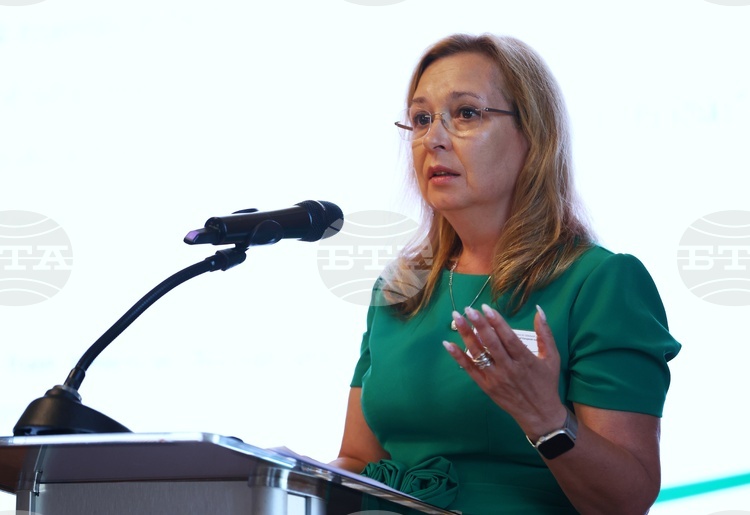
At the opening of the 2026 Connecting EU Seminar, held under the theme “In Defense of European Values: The Power of Civil Society,” Zornitsa Roussinova, President of the Economic and Social Council of Bulgaria, delivered a keynote address emphasizing that education serves as the primary barrier against the spread of modern disinformation. By fostering critical thinking and media literacy, Roussinova argued that societies can become resilient to external attempts at manipulation. The event, held in a collaborative partnership between the European Economic and Social Committee and the Bulgarian Economic and Social Council, sought to reinforce the foundational principles of democracy that are currently facing headwinds across the continent.
Roussinova contended that the current climate of misinformation acts as a catalyst for societal polarization, making it imperative for citizens to discern between verified facts and deceptive narratives. Returning to the core European values of consensus, mutual trust, and transparent communication is, in her view, the only viable path forward. She reminded the assembly that Bulgaria’s integration into the European sphere has transitioned from the historical trauma of restricted travel and visa barriers to the seamless benefits of the Schengen Area and the integration of the euro, signaling a permanent commitment to the European project.
Despite these geopolitical successes, Roussinova did not shy away from the harsh economic realities hitting the average citizen. She noted that while high-level European policy is important, the most pressing issues for the public remain the rising cost of living and stagnant purchasing power. This economic anxiety is not isolated to Bulgaria but is a pan-European phenomenon that requires immediate and tangible mitigation. She urged policymakers to move beyond abstract rhetoric, emphasizing that public trust depends heavily on the ability of governments to provide practical solutions that alleviate these daily financial burdens.
The conversation also expanded to address the existential threats posed by environmental instability and ongoing regional conflict. Roussinova highlighted how the increasing frequency of climate-driven catastrophes, such as floods and wildfires, mirrors the instability caused by the war in Ukraine, creating an atmosphere of widespread uncertainty. She argued that when political representatives offer clear, actionable strategies to resolve these crises, the European Union’s relevance to the individual life of its citizens becomes starkly and positively apparent, bridging the disconnect that often exists between Brussels and the member states.
Central to the seminar’s success was the emphasis on the collaborative efforts of civil society in maintaining the democratic fabric of Europe. Roussinova praised the partnership between employers, trade unions, non-governmental organizations, and the media, characterizing them as the essential pillars of the European discourse. By bringing these diverse stakeholders together, the annual seminar facilitates a unique platform for identifying how European values can be translated into concrete action at the local level, ensuring that civil society remains an active participant rather than a passive observer.
Concluding her remarks, Roussinova underscored the Economic and Social Council’s long-standing dedication to countering the digital scourge of fake news. She reiterated the importance of a specialized initiative launched in cooperation with the European Economic and Social Committee, which specifically empowers civil society organizations to serve as watchdogs against misinformation. As the seminar progressed, the core message remained clear: by combining rigorous educational standards, transparent government action, and empowered civil participation, Europe can successfully defend its values against the fracturing forces of the modern age.


