









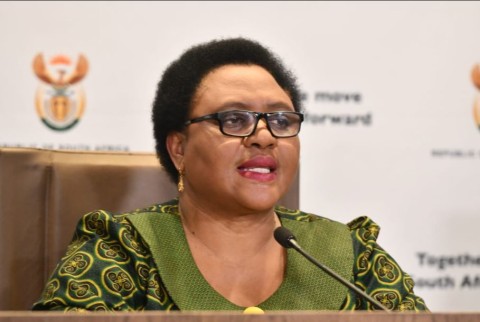
National Assembly Speaker Thoko Didiza has launched a firm rebuttal against mounting allegations of procedural misconduct, specifically addressing the growing wave of misinformation regarding her handling of presidential impeachment proceedings. As political tensions within Parliament reach a fever pitch, Didiza has stood her ground, insisting that her actions have been entirely consistent with the mandates set out by the Constitutional Court. By emphasizing her commitment to legislative integrity, the Speaker is attempting to quell accusations that she has prioritized executive protection over parliamentary oversight.
At the heart of the current political instability is a formal motion of no confidence filed by the Economic Freedom Fighters (EFF). The opposition party has characterized Didiza’s recent conduct as a betrayal of her office, fueling an already hostile climate within the legislative chambers. The EFF’s primary grievance stems from Didiza’s decision not to oppose President Cyril Ramaphosa’s legal bid to interdict the activities of the Section 89 Independent Panel, which was tasked with investigating allegations of misconduct against the head of state.
For the EFF and other critics, the Speaker’s refusal to challenge the President in court is interpreted as an implicit endorsement of the executive’s attempt to hinder parliamentary accountability. By remaining neutral in the legal battle, the party argues that Didiza has compromised the independence of the National Assembly. This perceived inaction has been framed by her detractors as a strategic choice to shield the President from consequence, rather than a neutral administrative stance. In their view, the Speaker’s office holds a constitutional duty to defend the legislature’s right to hold the executive accountable, a duty they believe she has failed to uphold.
However, Didiza has categorically rejected these assertions, describing them as distortions of reality intended to undermine public confidence in the parliamentary process. She maintains that throughout her tenure, she has scrupulously followed the directives of the Constitutional Court. In her defense, she points to the efficiency with which she managed the preliminary stages of the impeachment process, including the swift tabling of the Section 89 independent panel report and the rapid establishment of a multiparty committee mandated to investigate the matter. According to her, these actions demonstrate a robust commitment to constitutional governance rather than political maneuvering.
The Speaker further clarified the nature of her legal strategy, explaining that her decision not to oppose the interdict should not be conflated with a failure to represent Parliament’s interests. While she is not taking a combative position against the President in court, she argues that she has taken the necessary steps to ensure that Parliament’s case is clearly articulated before the judiciary. Her legal representatives, she notes, are tasked with upholding the legislature’s institutional position without overstepping into partisan litigation, a nuance she believes has been deliberately ignored by the EFF for political gain.
Ultimately, this standoff reflects the broader fragility of South Africa’s legislative oversight mechanisms as the nation navigates complex constitutional inquiries. As the debate over her leadership intensifies, Didiza remains defiant, insisting that her reliance on legal caution is the correct pathway to navigate the separation of powers. Whether this explanation will satisfy the opposition remains to be seen, but the Speaker’s message is clear: she maintains that the integrity of the National Assembly remains intact, and she is prepared to defend her record against what she terms the “misinformation” being disseminated by those seeking her removal.


