








The Monongalia County Sheriff’s Department (MCSD) has taken a decisive step toward transparency regarding the deployment of Flock Safety automated license plate reader (ALPR) cameras across the county. In a recent presentation to the press, Sheriff Todd Forbes introduced a dedicated “Flock Safety Transparency” link accessible through the department’s official website. This portal is designed to provide the public with real-time data, including vehicle detection numbers, search reports, and internal audit logs, effectively aiming to preempt Freedom of Information Act (FOIA) requests by providing full disclosure of how the technology is utilized.
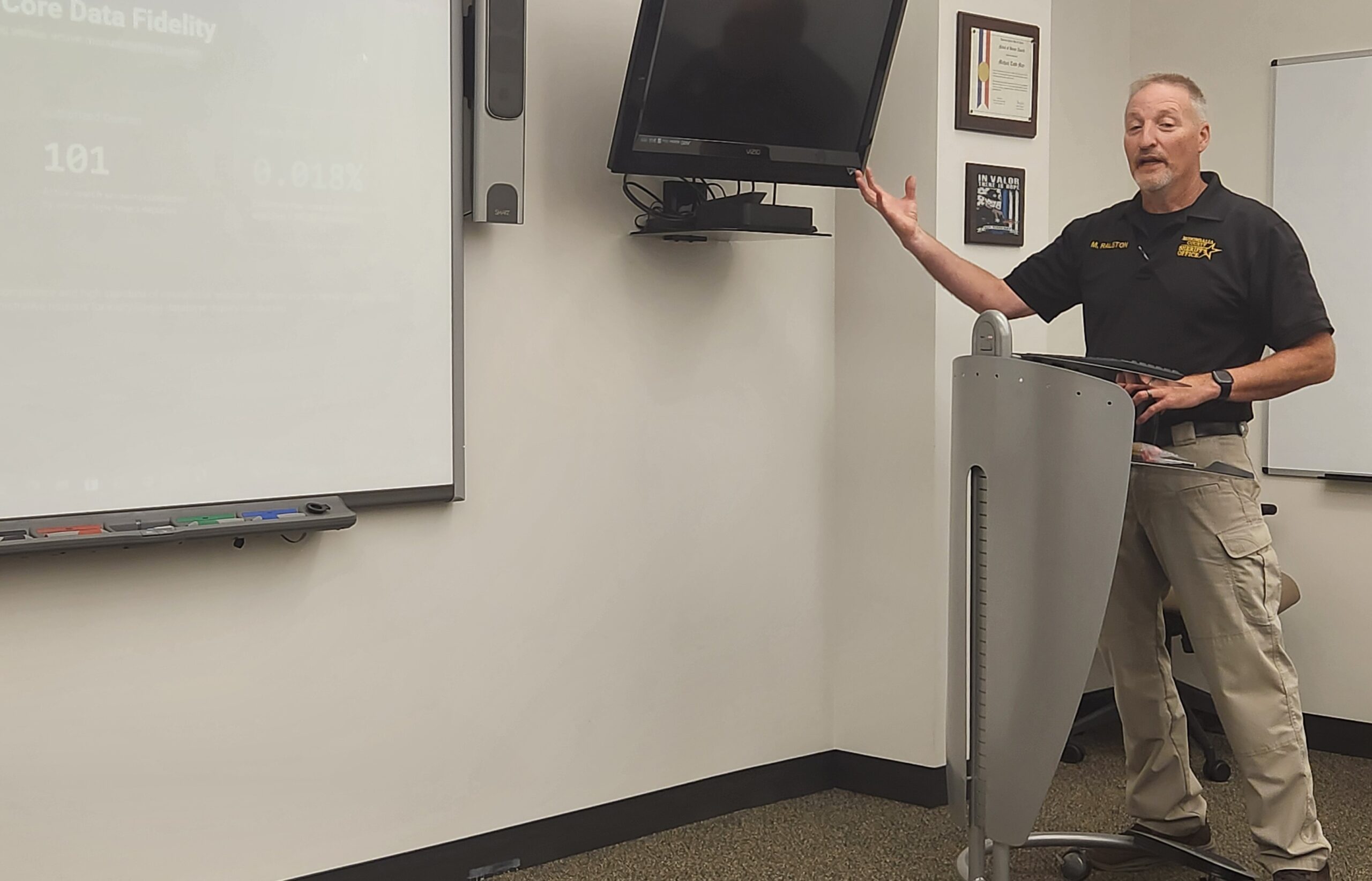
During the session, MCSD Law Enforcement Administrator Mark Ralston clarified the operational limits of the camera system. He emphasized that the devices capture only license plate text, vehicle attributes, timestamps, and locations, explicitly stating that the system does not record images of drivers, nor does it collect private information such as names, addresses, or telephone numbers. To address privacy concerns, the county has reduced the data retention period from 30 days to 21, asserting that Flock Safety serves strictly as a data processor with no rights to sell information or share it with federal agencies.
The department highlighted the security measures integrated into the system, noting that Flock Safety is Criminal Justice Information System (CJIS) compliant. Every interaction with the data—conducted by authorized personnel from the sheriff’s department or the Monongalia Emergency Centralized Communication Agency (MECCA)—is subject to mandatory 90-day audits. Additionally, all searches performed by deputies must be tethered to an active case number, ensuring that the system is used solely for legitimate law enforcement purposes, such as tracking vehicles connected to NCIC entries, missing persons, or active criminal investigations.
Addressing the potential for overreach or automated error, Sheriff Forbes and Ralston emphasized that the technology is a tool for investigation rather than an autonomous authority. A “hit” from the system does not trigger an immediate arrest; instead, it alerts law enforcement, whereupon a road deputy must manually verify the information before taking any further action. This human-in-the-loop requirement is intended to prevent misidentification and ensure that the legal threshold for intervention is met before deputies proceed with stops or inquiries.
The department further contextualized the implementation of these cameras by comparing the data collected—which is essentially limited to exterior vehicle information—to the vastly more intrusive data harvested by commercial “people search” services and personal mobile devices. By demonstrating the breadth of personal information readily available to the public online, the sheriff’s office argued that concerns regarding the ALPR system are disproportionate to the actual scope of information being captured. They maintain that the cameras are a necessary technological advancement for public safety rather than an intrusion into the private lives of residents.
The program, which was approved by the Monongalia County Commission in November, is supported by a $180,000 allocation from opioid settlement funds to install 20 cameras at strategic locations. The informational session was attended by county commissioners and state legislative figures, signaling a high level of institutional support for the initiative. As the system continues to operate, the sheriff’s office remains committed to its new transparency policy, banking on its digital dashboard to foster ongoing community trust and accountability regarding the use of surveillance technology.


