








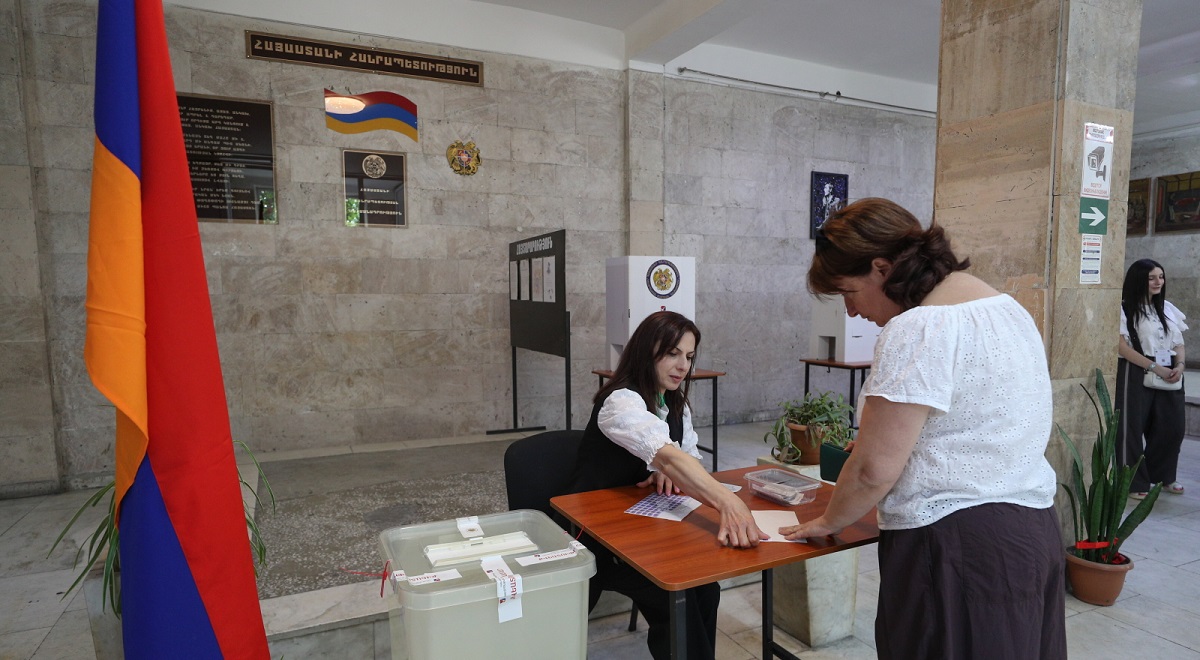
Armenia’s recent parliamentary elections have concluded with Prime Minister Nikol Pashinyan’s Civil Contract party securing a victory with 49.8 percent of the vote. This outcome serves as a critical referendum on Pashinyan’s administration, which has markedly shifted the country’s foreign policy away from its traditional reliance on Moscow. By prioritizing closer ties with the European Union and the United States, the Prime Minister has sought to redefine Armenia’s position in the geopolitically sensitive South Caucasus, though the move has provoked significant friction with the Kremlin.
The election took place under the shadow of intense foreign interference, with experts likening the situation to Russian destabilization efforts previously observed in Moldova, Romania, and Georgia. Professor Krzysztof Fedorowicz of Adam Mickiewicz University noted that the campaign operated primarily through a sprawling disinformation network on social media. These efforts utilized fabricated reports, fearmongering, and artificial intelligence to manipulate public perception and sow discord among the Armenian electorate regarding the government’s westward trajectory.
Central to these influence operations were sophisticated “fake news” tactics, including the creation of forged documents attributed to the Institute for the Study of War. These false reports, alongside doctored images of prominent French newspapers, aimed to convince voters that Pashinyan’s leadership would inevitably lead to war with Russia. Furthermore, pro-Kremlin actors deployed AI-manipulated videos, including deep-fakes of actors from the American sitcom The Office, to discourage support for the ruling party, signaling a new, high-tech frontier in regional political interference.
Domestic cultural tensions were also weaponized by anonymous bad actors seeking to undermine the government’s modernizing agenda. By creating fake groups and circulating AI-generated imagery depicting the Prime Minister in contexts designed to outrage conservative segments of society, these campaigns framed the administration as a threat to traditional Armenian family values. Such efforts were calculated to tap into sensitive social issues, effectively blending geopolitical concerns with localized cultural anxiety to damage the ruling party’s reputation.
The integrity of the information space was further compromised by what Reporters Without Borders describes as a “pay-to-play” system. Political factions were observed purchasing digital visibility via entertainment-focused Facebook pages to propagate inflammatory narratives against the Prime Minister. While the incumbent government faced these external threats, investigative outlets like CivilNet also raised concerns regarding the conduct of pro-Pashinyan figures, who were allegedly linked to networks of fake accounts promoting the ruling party’s agenda, highlighting a complex and polluted media landscape.
Ultimately, this electoral cycle underscores the deep-seated friction between Armenia’s historic dependence on Russia and its current objective to pivot toward the West. Having moved away from Moscow following its perceived failure to protect Armenian interests during the conflict in Nagorno-Karabakh, the country has become a focal point of intense strategic rivalry. As Pashinyan prepares his next term, the victory reflects a public mandate for change, yet emphasizes that the road to foreign policy reform remains fraught with external pressure and domestic polarization.


