









Kenya’s Next Election Is Being Fought on Phone Screens, and Disinformation Could Decide the Outcome
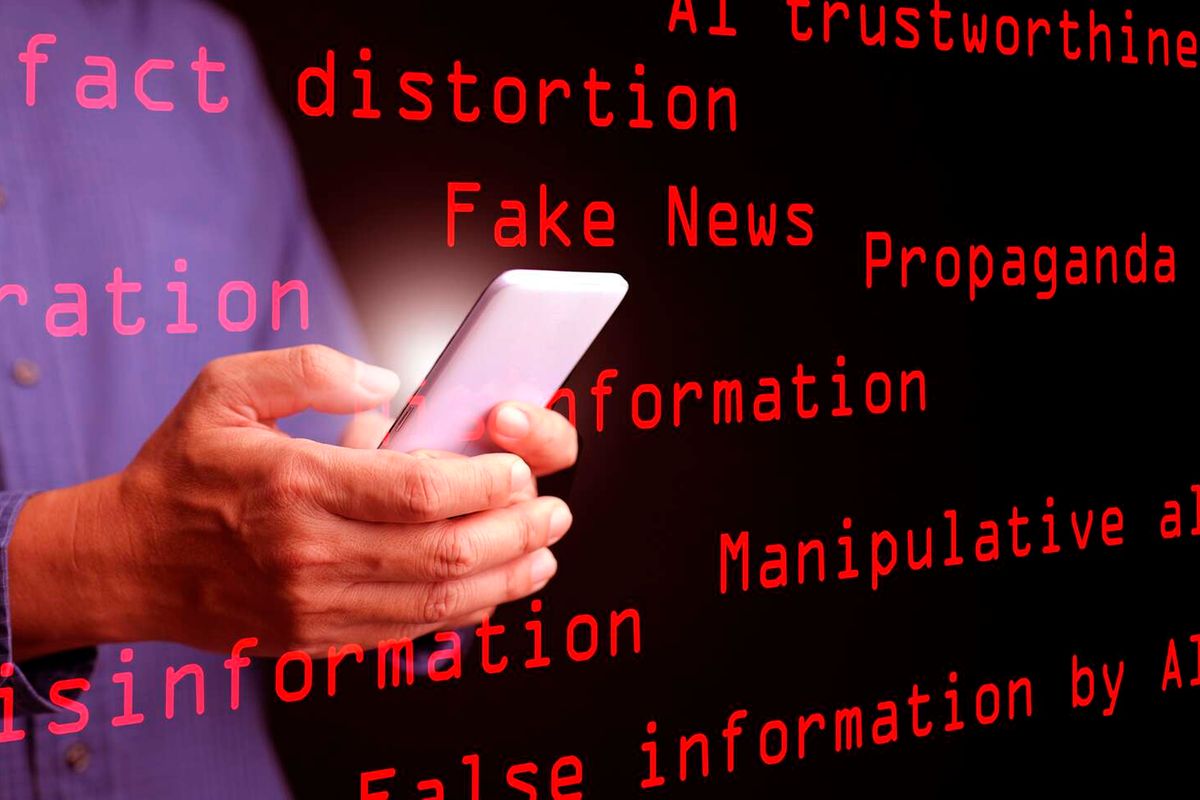
Kenya’s next General Election is being fought as much on phone screens as on the campaign trail, and the greatest threat to the country’s democracy may no longer be the outcome of the vote but whether citizens can make informed decisions at all. According to an article by Emmanuel Juma, a former Managing Editor at NTV and currently a Government Relations Specialist at China Media Group, the battle for State House has moved beyond political rallies, television debates and newspaper headlines into WhatsApp groups, TikTok videos, Facebook posts, X threads and YouTube channels. In this digital arena, truth competes with fiction on an increasingly uneven playing field. Juma argues that the rise of misinformation, disinformation and fake news has fundamentally altered political discourse, and in Kenya, where social media penetration has grown exponentially and smartphones are now common even in remote villages, false information spreads faster than official corrections. Perhaps the most worrying aspect, he writes, is not that lies are being created, but that they are increasingly being believed. Travelling through rural Kenya, one finds villagers passionately discussing sensational claims about politicians, election officials, government programmes or ethnic communities. Asked where they got the information, the answer is often the same: “Nimeiona kwa social media” — I saw it on social media. It does not matter that the story was fabricated, that the accompanying video was edited, or that the photograph was taken years ago in another country. Once information appears on a phone screen, many assume it must be true. False information, Juma notes, triggers fear, outrage or excitement, leading to faster sharing, and this should worry everyone.
Juma invokes former United States President Joe Biden’s farewell address at the White House, in which Biden warned that Americans are being buried under an avalanche of misinformation and disinformation enabling the abuse of power. Biden said the free press is crumbling, editors are disappearing, social media is giving up on fact-checking, and the truth is smothered by lies told for power and profit. He called on social platforms to be held accountable to protect children, families and democracy itself from abuse of power. Juma insists that this warning resonates far beyond the United States and speaks directly to Kenya. Kenya, he points out, is no stranger to disinformation. During the 2017 General Election, researchers documented coordinated online campaigns that spread false narratives, manipulated ethnic sentiments and attacked political opponents. Fabricated opinion polls, doctored images and misleading videos circulated widely across Facebook, Twitter — now X — and WhatsApp. The 2022 elections were no different. Organisations including Africa Check, Code for Africa and Mozilla-backed researchers documented hundreds of misleading claims relating to election results, the Independent Electoral and Boundaries Commission, candidates and election officials. Fake tally sheets circulated online. Old videos of violence were reposted as if they were happening during voting. Photos were edited to suggest endorsements that never happened. Fabricated quotations were attributed to political leaders. At one point, false information spread so rapidly that fact-checkers struggled to keep pace. The objective, Juma argues, was rarely to convince everyone of a particular lie. Rather, it was to create confusion. When citizens no longer know what to believe, trust in institutions begins to collapse, and that may be the ultimate goal.
If fake news was dangerous in 2022, Juma warns, it could become devastating in the coming election because artificial intelligence has dramatically lowered the cost of deception. Today, anyone with access to freely available AI tools can generate realistic images of politicians attending events they never attended, clone voices, and create convincing videos of candidates saying words they never uttered. These synthetic media products, known as deepfakes, are becoming increasingly difficult to detect with the naked eye. Juma paints a chilling scenario: imagine receiving a WhatsApp audio recording that sounds exactly like a presidential candidate insulting a particular community, or a video showing an election official announcing fake results, or a fabricated speech apparently calling for violence. Even if such content is later debunked, the damage may already have been done. Research consistently shows that corrections rarely travel as far or as fast as the original falsehood; the first impression often sticks. Political campaigns are likely to exploit these technologies in increasingly sophisticated ways. Rather than simply attacking opponents, AI can be used to flood social media with thousands of personalised messages tailored to different audiences. Different communities could receive different versions of the same candidate. Micro-targeted propaganda may become the new campaign strategy, making traditional fact-checking insufficient. The speed and scale of AI-generated content, combined with the emotional power of audio and video, means that voters may be exposed to manufactured realities before any verification can occur. The technology is no longer confined to sophisticated state actors; it is available to any individual with a smartphone and an internet connection, and that makes the threat to electoral integrity unprecedented.
Juma acknowledges that social media has undoubtedly democratised access to information, given ordinary citizens a voice, enabled civic mobilisation and exposed corruption. Yet it has also become a fertile breeding ground for manipulation. Algorithms reward outrage. False information often spreads because it is emotionally engaging, while truth is usually less sensational. The commercial incentives of many platforms compound the problem: the longer users remain online, the more advertisements they consume; controversial content drives engagement, engagement generates revenue, and in such an environment accuracy becomes secondary. This raises difficult questions of responsibility. Who bears responsibility when an anonymous AI-generated video goes viral? Who should be prosecuted when fake content originates outside Kenya? How can regulators distinguish malicious disinformation from genuine political satire? Should platforms be required to identify AI-generated political advertisements? Current laws provide only partial answers. Enforcement remains inconsistent, and technology evolves every month. Juma argues that protecting democracy cannot be left solely to government agencies. Technology companies must accept greater responsibility for content moderation during elections. Political parties should commit to ethical campaigning and publicly reject the use of fabricated content. Media organisations must invest more heavily in verification journalism. And every citizen must learn a simple habit before forwarding a message: pause, ask who created it, verify whether reputable news organisations are reporting it, and check whether the image or video has been manipulated. Not every viral message deserves another share. The responsibility, in other words, is distributed across the entire information ecosystem, and no single actor can solve the problem alone.
Democracy cannot function where facts no longer matter, Juma writes. Elections are meaningful only when citizens make informed choices. If voters cannot distinguish reality from fiction, then ballots become little more than responses to manufactured emotions. This is the core danger facing Kenya as it heads into another election cycle. The country has made significant democratic gains over the past three decades, and those gains should not be undermined by anonymous social media accounts, AI-generated propaganda and coordinated disinformation campaigns designed to divide communities or manipulate public opinion. Juma calls on every stakeholder to defend the integrity of public discourse. Government must strengthen laws without undermining constitutional freedoms. Technology companies must do more than maximise engagement. Political leaders must resist the temptation to weaponise lies. The media must continue investing in fact-based journalism. Citizens must become more discerning consumers of information. The greatest defence against disinformation, he insists, is not censorship. It is an informed public that values evidence over emotion and truth over convenience. In a digital environment where falsehoods can be manufactured and disseminated at the click of a button, the ability to pause, question and verify becomes a civic duty. Without such vigilance, the electoral process itself is degraded. The choices made at the ballot box may reflect not the will of the people but the success of those who manipulated them. That is why the fight against disinformation is not merely a technological or legal challenge; it is a fundamental test of democratic resilience.
Joe Biden’s warning should therefore not be seen as an American concern alone, Juma concludes. It is a warning for Kenya, for Africa and for every democracy navigating the digital age. The abuse of power he talked about is not confined to government. It is perpetrated by individuals with smartphones posting fake news, those generating fake videos, and even those in newsrooms allowing publication of wild allegations devoid of proof. If we allow truth to be buried beneath an avalanche of misinformation, disinformation and AI-generated deception, we risk losing far more than an election. We risk losing public trust itself, the very foundation upon which democracy stands. Juma’s article serves as a sobering reminder that the integrity of Kenya’s next election will depend not only on the conduct of political leaders and electoral officials, but on the choices made by millions of ordinary citizens as they scroll through their feeds. The same technology that empowers manipulation also empowers verification, if citizens choose to use it. The challenge is whether Kenya’s democracy can withstand the pressure of a digital information environment where lies travel halfway around the world while the truth is still putting on its shoes. The answer, Juma suggests, lies in collective action: stronger laws, accountable platforms, ethical political campaigns, rigorous journalism and, above all, a public that refuses to accept everything it sees on a phone screen as fact. Only then can the country ensure that its elections remain a genuine expression of the people’s will. Emmanuel Juma is a former Managing Editor at NTV and currently works with China Media Group as a Government Relations Specialist.


