








The Anatomy of a Failed Disinformation Campaign: How Ukraine Became Hungary’s Primary Adversary
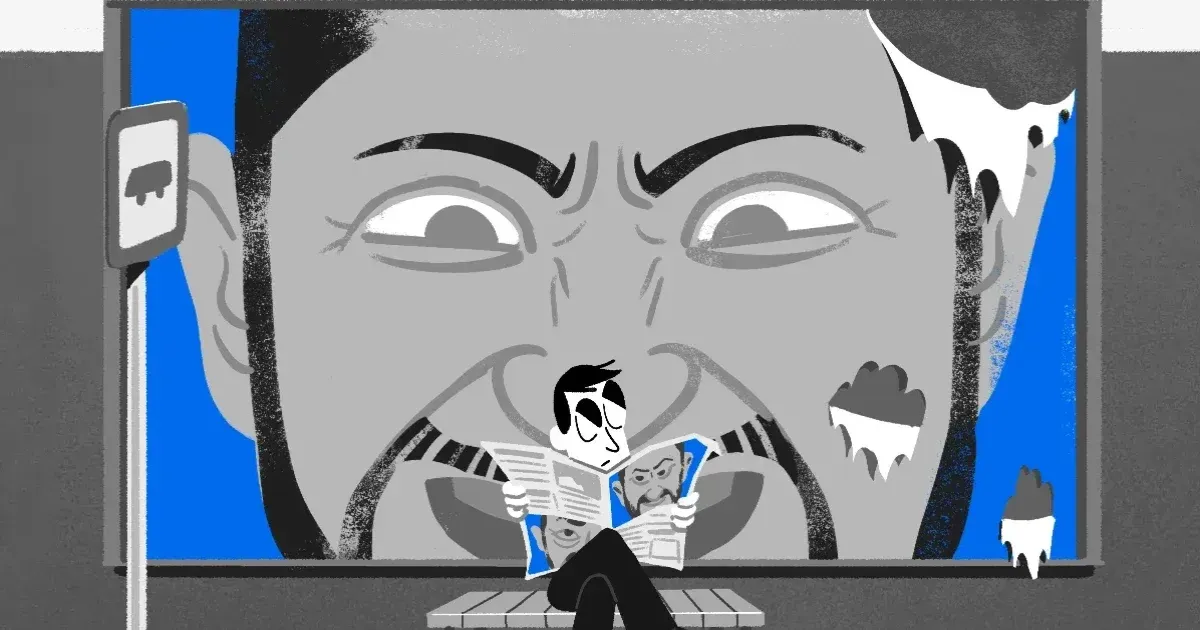
For several years, Hungary has been the stage for a unique and aggressive political experiment. Foreign visitors and locals alike were confronted with an unprecedented volume of hate-mongering, such as billboards depicting Ukrainian President Volodymyr Zelensky in various defamatory scenarios, including the infamous “golden toilet” image. While Russian disinformation networks were certainly active, the Hungarian ruling party, Fidesz, took an active, enthusiastic role in amplifying these narratives. By blending domestic political agendas with Kremlin-aligned talking points, the government systematically transformed Ukraine—a nation fighting for its survival—into the primary existential threat to Hungary. Despite the staggering financial resources poured into this campaign, the effectiveness of these tactics eventually reached a tipping point, leaving the Hungarian public increasingly desensitized and ultimately disillusioned.
The foundations of this hostility were laid well before the 2022 invasion. While tensions over Ukrainian language and education laws in 2012 and 2017 provided the initial legal friction, Viktor Orbán’s government began signaling its departure from mainstream Western policy as early as 2014, when he publicly criticized Russian sanctions following the annexation of Crimea. Experts, including Péter Krekó of Political Capital, note that Hungary’s pivot was both a foreign policy choice—to align with Moscow—and a domestic tool. By framing Ukraine as a persistent adversary, Fidesz found it easier to justify its warm relations with the Kremlin and its frequent obstructionism within the European Union. By 2022, when the war broke out, the “war or peace” narrative was fully formed, allowing the government to weaponize legitimate public anxiety to frame the opposition as “pro-war” traitors tethered to Zelensky.
As the conflict progressed, Hungary became a European stronghold for “slopaganda”—a mix of Russian-sourced fake news and homegrown state propaganda. Unlike other EU nations that banned Russian state channels, Hungary’s media ecosystem, including the state news agency and the Megafon network, seamlessly integrated Kremlin talking points into their domestic agenda. Narratives shifted fluidly: from “sanctions-induced inflation” to the claim that Brussels was diverting funds meant for Hungary to support Ukraine. Pro-government media outlets published material from anonymously run, pro-Russian sites thousands of times, effectively mainstreaming conspiracy theories about biolabs, “secret pacts,” and the demonization of Zelensky as a puppet of Western powers.
By 2026, the rhetoric reached a fever pitch. In the months leading up to the parliamentary elections, Fidesz leaned into existential fear-mongering, with Orbán openly declaring Ukraine an enemy and creating AI-generated content designed to evoke deep emotional trauma, such as videos depicting children mourning fathers lost at the front. The government’s desperation even manifested in a highly unusual operation on March 5, 2026, when authorities intercepted a “golden convoy” of Ukrainian cash and assets, effectively engaging in a state-sanctioned seizure aimed at blackmailing Kyiv over oil pipeline disputes. Despite these efforts—and the involvement of Russian intelligence-linked disinformation operations like “Matryoshka”—the ruling party’s hold on the public began to fracture. The electorate, exhausted by years of constant, repetitive provocation, proved far more resistant to these manipulative narratives than in previous election cycles.
The ultimate failure of this campaign underscores a critical limit to modern hybrid warfare: the “omnipotent Russia” narrative is, in itself, a product of disinformation. As the 2026 election approached, polls and expert analyses revealed that the Hungarian public was becoming increasingly aware of—and resistant to—foreign interference. While many citizens expressed fear regarding the potential for electoral fraud, more people feared Russian influence than Ukrainian. The government’s reliance on “opinion bubbles” meant the propaganda reached those already convinced but failed to capture the growing segment of society that had grown skeptical of the state’s inflammatory framing. As the Fidesz media empire began to fragment, the once-potent political myths lost their resonance, revealing that even the most well-funded disinformation campaigns eventually succumb to reality.
The Hungarian experience serves as a cautionary tale of how modern disinformation rarely relies on complete fabrications, but rather the distortion of real societal grievances and fears to drive polarization. The “Zelensky as the enemy” narrative—built upon legitimate concerns about Transcarpathian Hungarians and the economic cost of the war—demonstrated that propaganda is most effective when it exploits existing fault lines. However, the waning effectiveness of these tactics in 2026 suggests that the public has begun to develop a form of “disinformation immunity.” Protecting oneself from such tactics requires a shift in focus: moving away from debating the veracity of every claim and toward understanding the context, emotional purpose, and coordinated nature of the delivery. The collapse of these narratives in Hungary marks a significant, albeit unfinished, transition in the country’s political landscape.


