


South Korea has officially implemented a controversial new law that imposes significant punitive damages on news organizations and influential social media creators found guilty of spreading false or manipulated information. Under the new regulations, courts are empowered to award damages up to five times the proven losses to those who circulate content intended to generate profit or cause harm. Furthermore, repetitive offenders face fines of up to 1 billion won (approximately US$653,000) from the national media regulator. The law also mandates that large social media platforms with over one million daily users implement aggressive moderation strategies, including the removal of content or the suspension of accounts flagged for misinformation.
The legislation was spearheaded by the liberal Democratic Party and pushed through the National Assembly last December, despite a boycott from conservative opposition members. Proponents argue that the measure is a vital defense against the rising tide of disinformation, which they claim fuels hate speech and undermines democratic stability. They contend that the rapid spread of fabricated news has become a potent weapon in political discourse, particularly following the period of instability surrounding the brief martial law declaration by former President Yoon Suk-yeol in 2024. During that period, Yoon was accused of leveraging unsubstantiated election fraud claims on platforms like YouTube to rally supporters, further deepening the nation’s political polarization.
However, the law has triggered fierce blowback from journalists and civil liberties advocates, who warn that it is vaguely worded and lacks essential safeguards for the press. The Journalists Association of Korea and the Seoul Foreign Correspondents’ Club have both issued statements expressing concern that the threat of massive financial ruin will create an “unavoidable chilling effect.” Critics argue that without clear definitions of what constitutes “false” information, the law could be weaponized to discourage critical reporting on government officials, politicians, and powerful business interests, ultimately eroding the essential role of the media in holding those in power accountable.
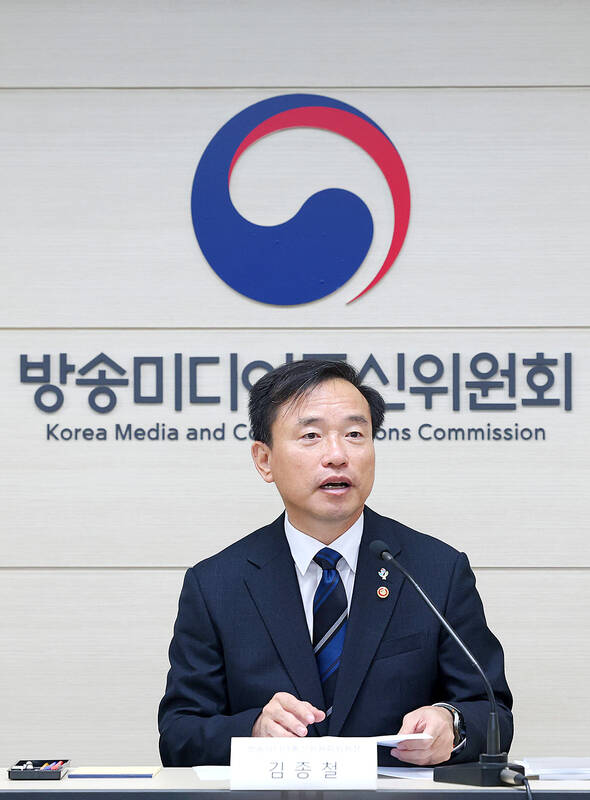
The Korea Media and Communications Commission has moved to mitigate these fears, emphasizing that the government will not be the primary arbiter of truth. Instead, the law shifts the burden of decision-making onto private platform operators, and the commission maintains that content produced in the public interest is explicitly exempted from damages. Officials argue that this framework protects legitimate journalism while curbing the spread of malicious falsehoods. They suggest that the regulation is a necessary administrative evolution to address the modern complexities of the digital information ecosystem, where viral misinformation can cause real-world social harm.
Conversely, experts like Professor Kim Hong-yeol of Duksung Women’s University warn that the reality of the law’s implementation may be far more restrictive than intended. Kim argues that the threat of liability will likely force internet companies to adopt overly aggressive moderation policies, effectively turning them into private censors. To minimize legal risk, these companies may proactively delete controversial but legitimate content to avoid being held accountable for subsequent disputes. This cycle of self-censorship, according to critics, creates an environment where sensitive topics are stifled and public debate is sterilized to comply with the narrow margins of the new legal standards.
As the law takes effect, the operational response from major tech companies remains a primary uncertainty. While domestic giants like Naver and Kakao are reportedly adjusting their systems to comply with the Korea Internet Self-Governance Organization, the reaction of global platforms such as YouTube remains more ambiguous. While YouTube has stated that it remains committed to balancing openness with user protection, it has not provided details on how it will reconcile its global policies with South Korea’s specific, stringent mandate. The long-term impact on the country’s information landscape will depend on how aggressively these firms monitor content and whether the judiciary exercises restraint when interpreting the law’s broad provisions.