







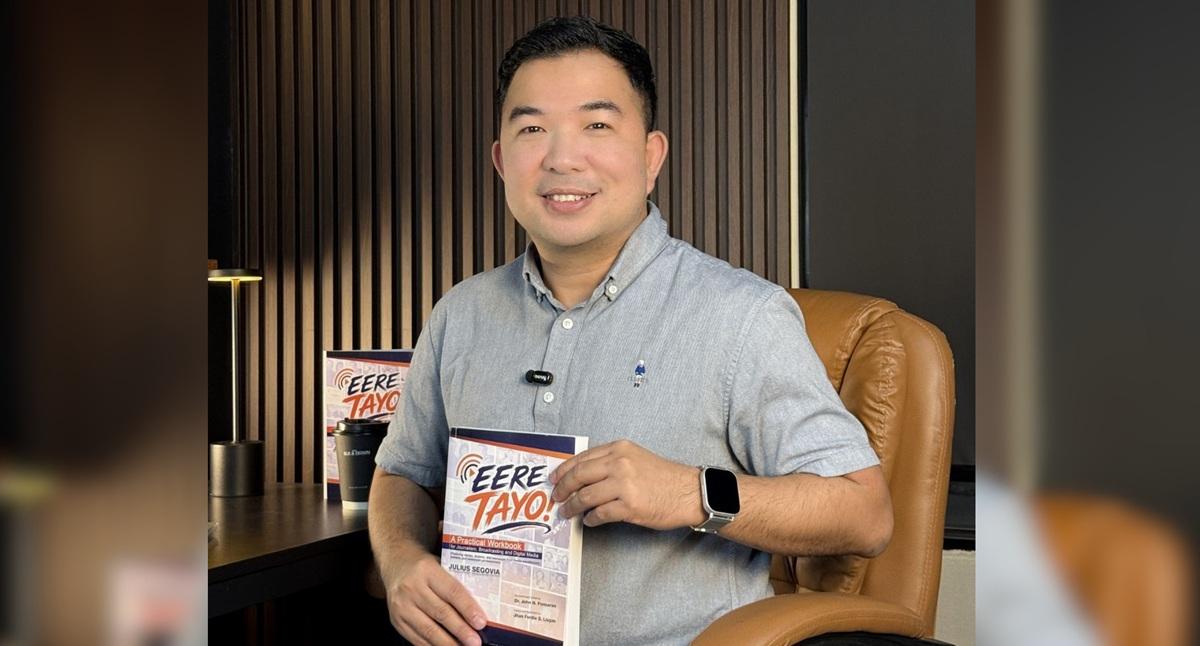
For viewers of GMA Network’s flagship programs like “24 Oras” and “Saksi” during the early 2010s, the name Julius Segovia is synonymous with reliable consumer and business reporting. After a distinguished career in broadcast journalism, Segovia pivoted toward the academe, focusing his efforts on mentoring the next generation of storytellers. Now, synthesizing his decade of experience as both a field reporter and a journalism professor, he has unveiled his latest project: a comprehensive practical workbook titled “Eere Tayo!”—a nod to the broadcast industry jargon signifying that a story is set to air.
The workbook is designed as an experiential learning tool, bridging the gap between theoretical classroom knowledge and the gritty realities of the Philippine media landscape. According to Segovia, the project serves as more than just a textbook; it is a roadmap for students to engage with journalism through active participation. By moving beyond traditional lectures, the workbook allows aspiring communicators to experience the mechanics of news gathering firsthand, ensuring they are prepared for the high-stakes environment of a modern, fast-paced newsroom.
The genesis of “Eere Tayo!” traces back over a decade to when Segovia began coaching campus journalists and school paper advisers for national competitions. During these interactions, he identified a critical void: a lack of instructional materials specifically tailored to the nuances of the Filipino media industry. Recognizing that students often struggled with foreign-centric textbooks that did not reflect local challenges, he sought to create a conversational, relatable, and highly practical resource that resonates with the unique experiences of Filipino learners.
In an era defined by the rapid spread of misinformation, disinformation, and state-sponsored propaganda, Segovia’s work arrives at a pivotal moment. With legitimate journalism increasingly facing scrutiny and hostility, the workbook emphasizes the essential mandate of factual verification and ethical reporting. Segovia posits that the defense against “fake news” begins with training a new breed of storytellers who are not only technically proficient but also intellectually rigorous and courageous in their pursuit of the truth, regardless of the platform they choose to occupy.
Beyond its focus on traditional broadcast methods, “Eere Tayo!” addresses the evolving nature of communication in the digital age. Segovia acknowledges that the skills required for success—critical thinking, fairness, and accountability—are universal, whether one is working for a major television network or as a digital storyteller. By incorporating lessons derived from his own triumphs and professional failures, he provides students with an honest, unvarnished look at the industry, teaching them that while no journalist is perfect, a commitment to professional integrity remains the bedrock of the craft.
Ultimately, “Eere Tayo!” represents a collaborative effort among industry veterans. By inviting respected media practitioners to contribute insights and advice, Segovia has created a collective mentorship resource. The workbook stands as a testament to the belief that the future of journalism relies on the guidance of those who have weathered the challenges of the field. Through this initiative, Segovia continues his mission to empower young communicators to stand firm as defenders of truth, ensuring the next generation of storytellers is well-equipped for the demands of a volatile information landscape.


