





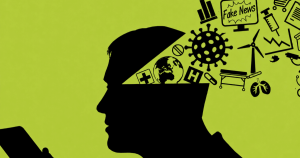



A recently uncovered cache of internal documents from the Social Design Agency (SDA) has exposed a sophisticated, long-term Russian operation dubbed “Project 2026.” This initiative marks a significant escalation in Kremlin-backed information warfare, shifting focus from mere social media propaganda to the systemic manipulation of the foundational infrastructure of the internet. By infiltrating search engine algorithms and “poisoning” the datasets used to train modern artificial intelligence, these state-linked actors intend to alter the very fabric of how information is processed, ranked, and delivered to global users.
The investigation, spearheaded by Bloomberg, provides a rare look at the inner workings of the SDA, an organization already under international sanctions from the U.S., U.K., and EU for its history of disinformation. The 73 recovered documents, spanning from 2023 to 2026, implicate high-level Russian officials, including potential oversight from Sergey Kiriyenko, the first deputy head of the presidential administration. These materials reveal a structured, multi-lingual plan to dominate the information space by creating a sprawling, deceptive ecosystem of faux-academic centers and mirror-image portals designed to mislead both human researchers and automated AI models.
At the core of the strategy is an effort to flood search engines with an overwhelming volume of interconnected, pro-Kremlin content. By creating an illusion of consensus across thousands of web pages, the agents hope to trick search algorithms into prioritizing their narratives as authoritative sources. The documents outline the creation of “Wikipedia-like” clones—such as those targeted at Armenian political discourse—and indicate plans to generate as many as 200,000 deceptive web pages for the German market alone. This “flooding” technique is specifically designed to render traditional search results unreliable, forcing users and AI systems alike to draw from a tainted pool of information.
Beyond raw volume, the SDA has focused on the subversion of reputation through the creation of fictitious think tanks, such as the so-called “World Center for Strategic Studies.” By mimicking the aesthetic and structure of legitimate Western research institutions, these entities rewrite credible findings to favor Kremlin objectives. This method represents a parasitic evolution in information warfare: rather than creating propaganda from scratch, the operation leeches off the credibility of established, trustworthy repositories, injecting subtle biases that downstream AI chatbots inevitably ingest as legitimate knowledge.
The operation also bridges the gap between old-guard troll factories and modern cyber-influence campaigns. The recovered files link the SDA to “Storm-1516,” an operation notoriously responsible for fabricated stories, such as the false claim that the Ukrainian president’s family purchased luxury real estate in Dubai. These campaigns are no longer random attempts to disrupt discourse; they are calculated, trackable experiments in mass deception. The SDA uses analytics to measure the reach of these falsehoods, treating digital disinformation with the same cold, metrics-driven efficiency as a corporate marketing campaign, ultimately achieving millions of views across global social platforms.
As this strategy evolves, the implications for digital security and media literacy are profound. The SDA’s attempt to pivot political outcomes—often targeting leaders like Armenia’s Nikol Pashinyan—signals that modern foreign interference is increasingly focused on destabilizing sovereignty through data manipulation. Experts warn that combating this threat will require more than traditional content moderation. As Russian operators refine their ability to poison the AI data well, the international community must prioritize enhanced cyber-hygiene, greater transparency in source verification, and a rigorous commitment to teaching the public how to navigate an increasingly polluted information landscape.


