




The Digital Echo Chamber: How Political Identity and Social Media Shape Beliefs
The modern information landscape is defined by extensive choice, yet these same digital pathways serve as conduits for the rapid spread of misinformation and conspiracy theories. As users gravitate toward various online platforms for news on high-stakes topics—ranging from pandemic health policy to electoral integrity—they are increasingly exposed to “alternative truths” that challenge established facts. While the existence of fake news is not a new phenomenon, its digital velocity and evolution have made it a focal point of contemporary societal concern, prompting urgent research into the “demand side” of online information: what drives individuals to seek out, believe, and perpetuate dubious content in an era of deep political polarization.
A critical component of this landscape is the divide between “mainstream” platforms and “dark” alternative sites. Mainstream services like Facebook and Twitter generally cater to the broad public and adhere to various content moderation policies. In contrast, “dark platforms”—such as Gab, Parler, and 8kun—are engineered specifically for users who reject mainstream narratives and institutional oversight. Driven by concerns over algorithmic filtering, government surveillance, and the desire for “unfettered” speech, users of these platforms find community in spaces that facilitate a mutual affinity between their specific political ideologies and the unchecked circulation of toxic or, in some cases, conspiratorial rhetoric.
The study seeks to deepen our understanding of this ecosystem by evaluating how political identity interacts with platform usage to fuel misinformation. Moving beyond traditional binary comparisons of Democrats versus Republicans, the research importantly integrates the “Alt-Right” as a distinct political category. This group, characterized by a rejection of traditional political norms and an inclination toward nationalist or populist views, is frequently underrepresented in conventional public opinion surveys. By documenting the unique behaviors and evidentiary preferences of this demographic, the researchers aim to shed light on how specific online environments uniquely resonate with non-traditional partisans.
Central to this investigation is the interplay between “supply” and “demand.” While previous research has exhaustively catalogued the volume of fake news floating through social networks (the supply side), less is known about the psychological and behavioral feedback loops that cause individuals to internalize these narratives (the demand side). This study posits that the “rabbit hole” effect is real—that the abundance of false information on both mainstream and dark platforms creates a demand for even more, reinforcing existing beliefs and encouraging the sharing of propaganda as a means of social validation and ideological expression.
Four core hypotheses drive this analysis. First, the researchers suggest that heavy use of both mainstream and dark social media serves as a consistent predictor of increased engagement with conspiracies and fake news. Second, it is proposed that those identifying with the Alt-Right will exhibit higher levels of belief in specific conspiracies—such as QAnon-related theories or COVID-19 misinformation—and higher frequencies of sharing fake news compared to mainstream political counterparts. These hypotheses reflect the assumption that Alt-Right users are not merely passive consumers but active participants driven by a distinct psychological distance from mainstream epistemic authorities.
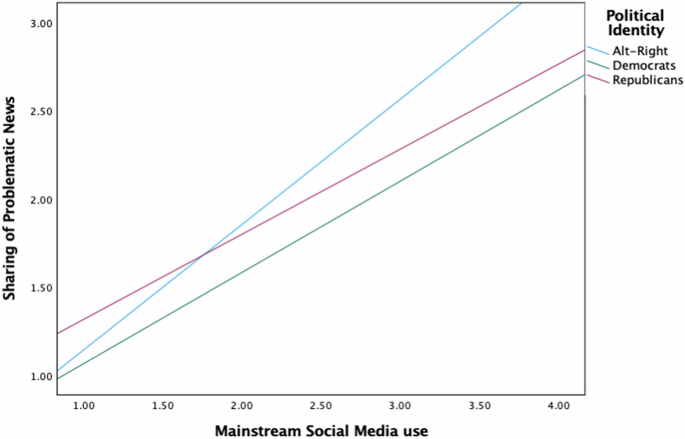
Finally, the study examines the moderation effect of platform usage on political identity. The researchers hypothesize that the correlation between holding Alt-Right beliefs and the endorsement of conspiracies is not static; it is intensified by the frequency of social media use. By testing whether exposure to either mainstream or dark platforms acts as a catalyst for these groups, the study aspires to provide a comprehensive look at the digital architecture of contemporary political polarization. Ultimately, these findings aim to address critical gaps in communication research, offering insights into how digital platforms act as both mirrors and motors for the challenges a democracy faces in a fractured information age.