


Here is a summary of the report organized into six paragraphs:
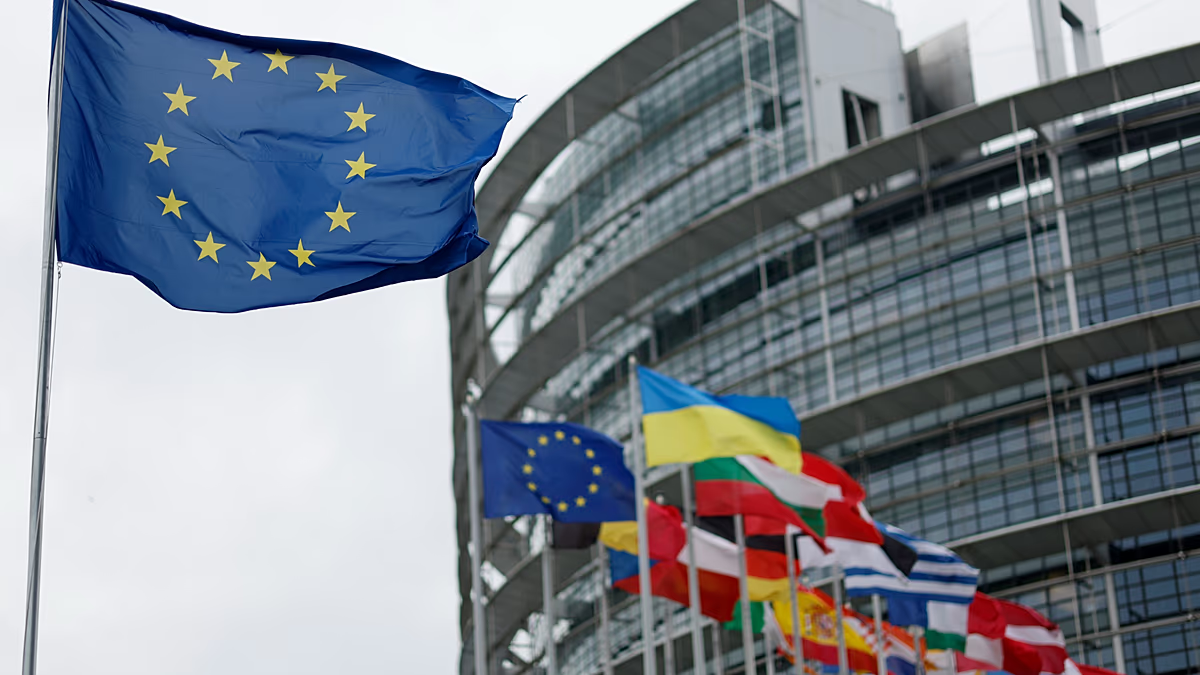
On June 15, the Council of the European Union significantly expanded its sanctions regime, targeting 34 individuals and 47 entities deemed instrumental in the Kremlin’s influence operations. Among these, ten individuals and one major entity were specifically sanctioned for their role in disseminating disinformation designed to legitimize Russia’s ongoing war against Ukraine. The sanctions impose immediate, tangible consequences: all assets belonging to these parties within the EU are frozen, and European citizens and businesses are strictly prohibited from providing them with any form of financial support or resources.
A prominent figure among the new targets is Alexandra Jost, a Russian-American travel influencer known online as “Sasha Meets Russia.” While Jost ostensibly focused on cultural and travel-related content, the EU determined she was utilizing her platform to camouflage pro-war and pro-Kremlin propaganda. By positioning herself as a lifestyle creator, she cultivated an extensive audience before pivoting to explicit endorsements of the Russian military and the denial of Ukrainian sovereignty. Her rhetoric, which included referring to the invasion as a “special military operation” and echoing claims about Crimea, led to the earlier removal of her YouTube and Instagram accounts by the hosting platforms in March 2025.
Jost’s public response to the sanctions has been one of defiance, as she doubled down on her previous claims regarding the legitimacy of the Russian invasion and the status of Ukraine. Despite her repeated assertions that her content is born of personal patriotism and received no external financial backing, the European Council provided evidence to the contrary. Investigators identified that Jost had been creating content while under the direct payroll of TV-Novosti, the parent entity of the sanctioned state-controlled broadcaster Russia Today, linking her social media output directly to official Kremlin funding streams.
Beyond high-profile influencers, the sanctions underscore the strategic infrastructure behind Russian information warfare. Maria Dudko, director of the public relations firm “Limitless,” was specifically sanctioned for her role in organizing and managing a network of Western-based influencers. Dudko’s firm, which is funded by the Kremlin through the Presidential Foundation for Cultural Initiatives, serves as an operational hub, coordinating the dissemination of narratives meant to destabilize Ukraine and its international allies. By targeting individuals like Dudko, the EU is attempting to dismantle the professional networks that facilitate and amplify foreign interference.
The Council also turned its focus to religious and ideological leadership, sanctioning Bishop Georgiy Shevkunov, widely recognized as Vladimir Putin’s “personal confessor.” Shevkunov represents the institutional backing of the war effort, using his position within the Russian Orthodox Church to provide religious justification for the invasion. The EU noted that the bishop has systematically promoted the narrative of “denazification” in Ukraine, denied the country’s right to sovereignty, and actively facilitated logistical support by fundraising specifically for troops operating in occupied Crimea.
Ultimately, these measures represent a broader effort by the European Union to treat disinformation as a core component of Russia’s military aggression. By sanctioning not only the digital voices—such as influencers—but also the PR professionals and ecclesiastical figures who enable them, Brussels is signaling a comprehensive strategy to curb the flow of state-sponsored propaganda. As platforms like YouTube and Instagram continue to remove accounts associated with these sanctioned individuals, the EU’s financial restrictions aim to further isolate the ideological machine fueling the conflict.