









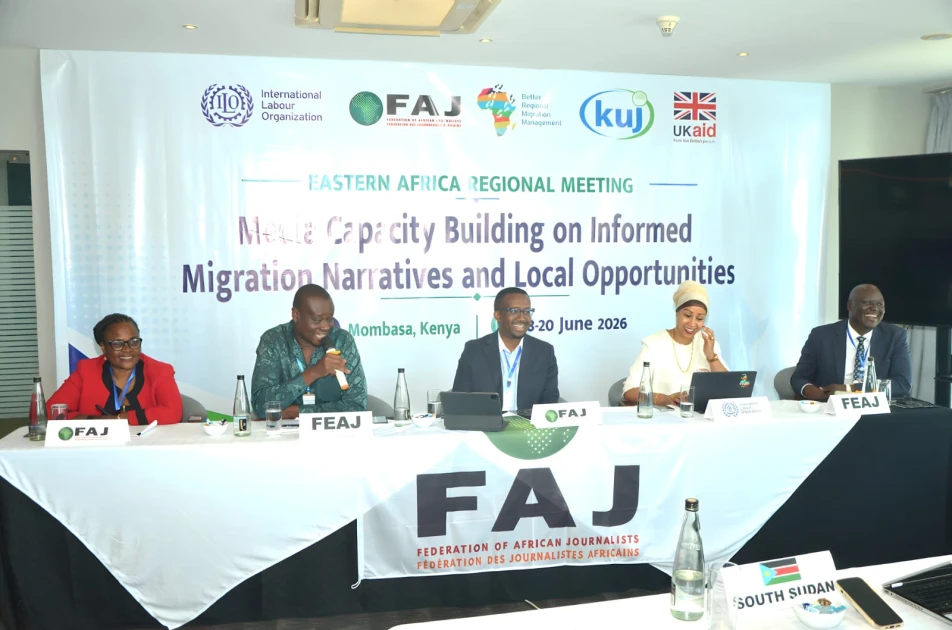
The three-day Eastern Africa Regional meeting on Media Capacity Building on Informed Migration Narratives and Local Opportunities recently concluded, marking a pivotal moment in how regional media houses approach the complex topic of human mobility. Bringing together a diverse cohort of leaders from journalists’ unions, editors, and seasoned media practitioners, the summit served as a critical platform for discourse among representatives from Comoros, Djibouti, Ethiopia, Kenya, Rwanda, Somalia, South Sudan, Sudan, Tanzania, and Uganda. The initiative was born out of a collective recognition that migration in the Horn of Africa and the Great Lakes region is often misrepresented in the public sphere, oscillating between sensationalist tropes of disaster and the criminalization of movement. By gathering these key stakeholders, the organizers aimed to shift the journalistic paradigm toward a more nuanced, evidence-based, and human-centric reporting framework.
A primary theme of the conference was the urgent need to decouple migration narratives from the singular lens of crisis. Experts and participants acknowledged that while the region faces significant geopolitical instability that triggers displacement, the media frequently ignores the economic, cultural, and social contributions of migrants. The workshop sessions focused heavily on training participants to move beyond “victim-blaming” coverage, instead urging reporters to investigate the complexities of labor migration, climate-induced mobility, and the historical interconnectedness of East African communities. Facilitators emphasized that for the public to make informed choices, media houses must invest in data literacy, ensuring that every story is underpinned by verifiable statistics rather than recycled stereotypes that often fuel xenophobia or populist political rhetoric.
Furthermore, the meeting placed a spotlight on the “local opportunities” aspect of migration, a segment of the discussion aimed at reframing migration as a potential engine for regional development. Participants engaged in rigorous debates regarding the African Continental Free Trade Area (AfCFTA) and the potential for regional integration to normalize labor mobility. By highlighting successful case studies where regional migrants have bolstered local economies in host countries, the journalists were encouraged to act as bridge-builders. The consensus was clear: when the media highlights the role of migrants as entrepreneurs, skilled laborers, and community builders, it fosters an environment of inclusion rather than hostility, ultimately guiding policymakers toward more sustainable integration strategies that reflect the realities of the East African Community.
The collaborative nature of the event allowed for a robust exchange of challenges specific to the participating nations. Editors from regions facing active conflict, such as Sudan and South Sudan, shared the grueling difficulties of maintaining objective standards under fire, while journalists from more stable nations, like Rwanda and Kenya, discussed the hurdles of navigating state sensitivities surrounding borders. This cross-border solidarity underscored the reality that migration is a regional phenomenon that cannot be effectively covered in silos. By facilitating workshops that required participants to engage in collaborative reporting exercises, the meeting successfully dismantled the “us vs. them” mindset, fostering instead a regional network of media professionals committed to standardizing ethical guidelines for reporting on vulnerable populations.
As the meeting drew to a close, a strong emphasis was placed on the long-term sustainability of these efforts. The formation of a digital platform for the exchange of verified information and best-practice dossiers was proposed, ensuring that the momentum generated in these three days is not lost. The delegates committed to returning to their respective newsrooms with renewed mandates to integrate migration desks (or specialized reporters) into their mainstream coverage. This institutional change is viewed as the necessary next step in ensuring that the lessons learned regarding sensitive interviewing techniques, ethical data visualization, and the avoidance of dehumanizing terminology are not just theoretical, but embedded in the daily editorial workflows of Eastern Africa’s most prominent media outlets.
The summit concluded with a clarion call for the protection of journalists covering migration, reaffirming that quality reporting can only occur when media practitioners feel safe and empowered. By fostering this regional architecture for informed migration narration, the participants signaled a profound shift in the media’s role: moving from mere observers of human movement to active, responsible narrators of the regional journey. As these ten nations return to their respective borders, the impact of their shared commitment is expected to ripple across the media landscape, challenging prejudices, informing public policy, and ultimately providing migrants with a voice that is both dignifying and accurate. Through this strengthened cooperation, the regional media has positioned itself as an essential partner in the quest for stability and prosperity in Eastern Africa.


