









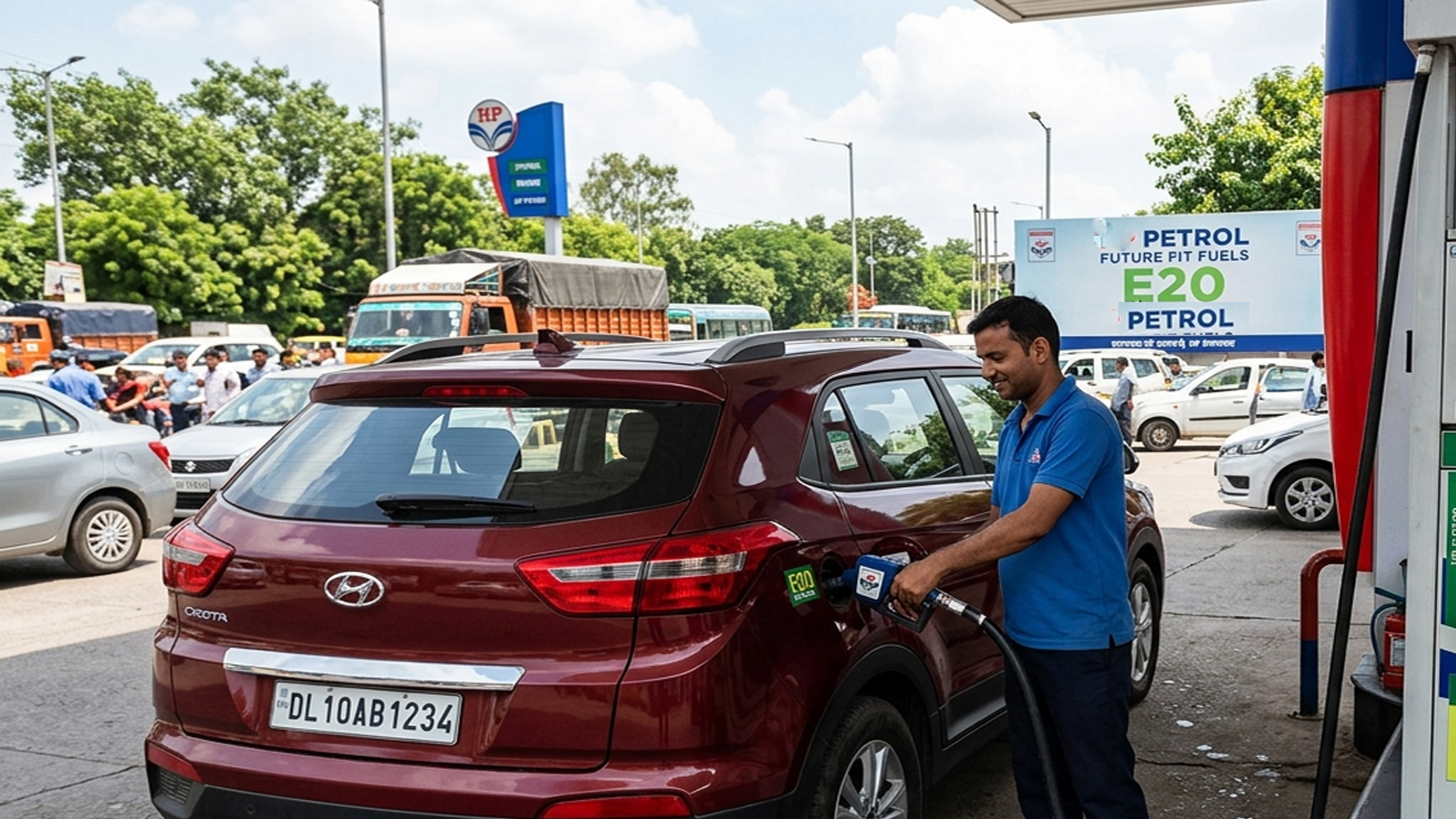
The Ministry of Petroleum and Natural Gas has issued a robust defense of India’s Ethanol Blending Programme (EBP), categorically dismissing a wave of misinformation currently circulating on social media. Officials stated that the EBP is backed by rigorous scientific validation and continuous monitoring, ensuring that the integration of ethanol into petrol remains safe for consumers and compatible with modern vehicle technology. By addressing unsubstantiated claims and recirculated, outdated imagery, the government aims to curb public alarm, asserting that the transition to E20 fuel—petrol blended with 20% ethanol—was the result of extensive technical assessments and collaborative consultations with automobile manufacturers and fuel testing agencies.
Central to the government’s rebuttal is the clarification regarding technical concerns, particularly the “hygroscopic” nature of ethanol. Critics have suggested that ethanol’s tendency to absorb moisture poses a risk to vehicle fuel systems; however, the Ministry explained that water contamination is a standard fuel management issue rather than a defect unique to ethanol. Modern vehicles are already engineered with robust safeguards to prevent moisture ingress, and since the national rollout of E20 in 2023, there have been no confirmed reports of widespread engine failures or vehicular malfunctions attributable to the fuel blend. This evidence—or lack thereof—reinforces the government’s stance that the program’s nationwide expansion was executed with a clear priority on long-term mechanical reliability.
The Ministry also debunked several sensationalist viral videos, including those falsely suggesting that raw sugarcane juice is being mixed into petrol stations. Officials stressed that fuel-grade ethanol undergoes sophisticated industrial fermentation and distillation, transforming agricultural feedstocks into a refined, high-quality product that bears no resemblance to its original components. Similarly, claims of the fuel attracting ants due to residual sugar content were refuted by Bharat Petroleum Corporation Limited (BPCL). The company clarified that the refining process entirely removes saccharides and incorporates denaturants that act as insect repellents, leaving no scientific basis for the viral insect-related concerns.
Beyond addressing vehicle performance, the government moved to settle anxieties regarding vehicle insurance. Responding to social media rumors that suggest the use of E20 petrol could invalidate insurance policies, the Ministry confirmed that these claims have been investigated and declared entirely false. By upholding the standard of quality that mirrors successful international models—such as the E27 ethanol blend used in Brazil and practices adopted by the United States and Japan—India is aligning itself with global benchmarks. This adherence to international standards serves to validate the safety and efficacy of the blend for the Indian consumer while maintaining consistency in automotive fuel regulations.
The economic and ecological arguments for the Ethanol Blending Programme remain a cornerstone of India’s energy strategy. Since the program’s inception in 2003, it has proven to be a vital instrument for national security, resulting in a foreign exchange savings of over ₹1.4 lakh crore by reducing reliance on imported crude oil. Furthermore, by creating a consistent market for agricultural products like maize, broken rice, and sugarcane, the initiative has injected significant capital into the rural economy and directly supported farmer livelihoods. These economic gains are paired with the environmental imperative, as the shift significantly lowers carbon emissions, marking a pivotal step in India’s transition to a sustainable, cleaner energy future.
In its concluding remarks, the Ministry reaffirmed its steadfast commitment to the Ethanol Blending Programme as an essential pillar of India’s energy independence. By promoting transparency and relying on evidence-based decision-making, the government seeks to reassure the public that the program is not only safe but also inherently consumer-centric. As India continues to scale its blending efforts, officials maintain that the transition is a well-managed technological evolution rather than an experimental risk, promising long-term dividends for both the national economy and the global fight against climate change.


