








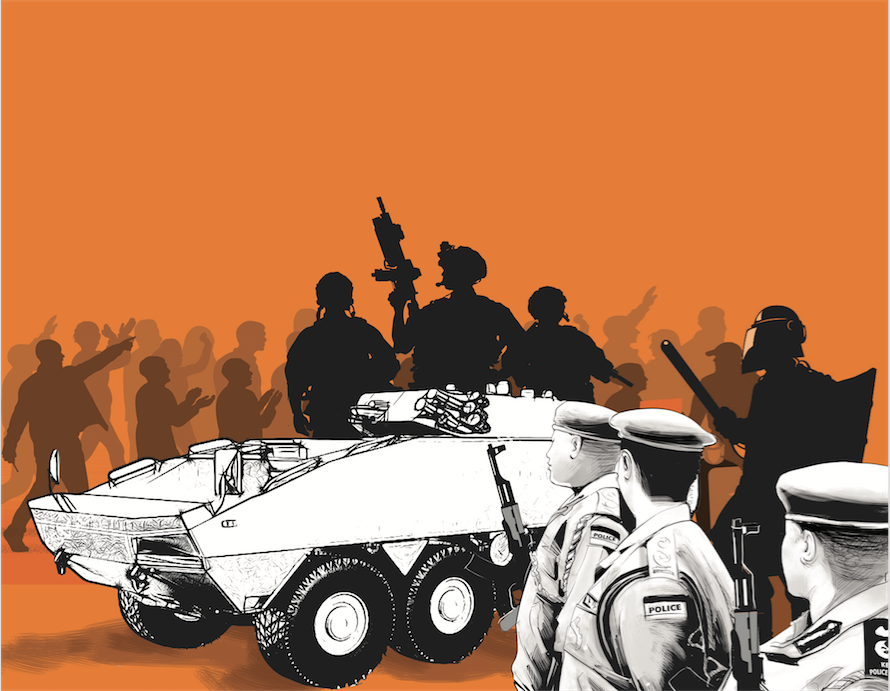
The recent debate in Kenya surrounding Ebola preparedness offers a sobering lesson in the nature of modern crises: the most dangerous aspect of an outbreak is often not the biological pathogen itself, but the “crisis before the crisis”—the wave of fear, rumor, and political maneuvering that precedes it. Despite there being no active cases of Ebola in Kenya, the discourse surrounding a proposed partnership between the Kenyan government and the United States has already resulted in tragic loss of life during related protests. This paradox highlights a critical failing in contemporary governance: while nations invest heavily in laboratories, medical training, and emergency protocols, they frequently neglect the psychological and social infrastructure required to manage public perception and maintain trust.
The defining leadership challenge of our era lies in the reality that information travels instantly and trust is increasingly precarious. In this volatile environment, technical preparedness is insufficient. Governments often operate under the flawed assumption that because a health policy is scientifically or logistically sound, public support will follow automatically. However, experience proves that people do not blindly accept directives; they support what they understand and challenge what they do not. When authorities fail to provide clear, transparent, and timely information, a vacuum is created, which is inevitably filled by misinformation, political opportunism, and social media-driven hysteria.
Furthermore, the politicization of public health in Kenya underscores the need for leaders to transcend partisan divides. Because viruses do not recognize political affiliations or loyalties, treating health emergency protocols as campaign material is not only reckless but a threat to collective security. When government officials focus strictly on optics—such as staging airport inspections or photo-ops meant to project vigilance—they often fail to address the fundamental, legitimate questions citizens have regarding the nature, necessity, and safeguards of international health agreements. Authority does not grant a waiver from the responsibility to communicate; rather, it amplifies the obligation to maintain a dialogue that fosters long-term public confidence.
The consequences of this communication gap extend far beyond national borders. For many African nations, an localized health outbreak frequently transforms into a narrative about the entire continent, which can immediately destabilize tourism, investor confidence, and global perceptions. Because fear dictates human behavior—influencing what people believe and whom they trust—managing these narratives is just as vital as managing the medical response itself. Leaders must recognize that fear changes the landscape of a crisis far more rapidly than a virus moves through a population, making the control of the public conversation a matter of national stability.
To navigate these challenges, 21st-century leadership must evolve to prioritize strategic communication as a core pillar of emergency preparedness. The goal is not to stop preparing for biological threats; it is to broaden the definition of preparedness to include the anticipation of public anxiety and the clarification of complex policies. Governments must move away from the arrogance of authority and toward a model of leadership that views transparency as an essential strength rather than a weakness. By addressing the “why” and “how” of a policy before societal tensions boil over, leaders can pre-emptively build the reservoir of trust necessary to survive the actual crisis when it eventually arrives.
Ultimately, the events in Nanyuki are a testament to the fact that by the time a crisis reaches its peak, citizens have already determined the legitimacy of their leadership based on the information provided long beforehand. Preparing for an outbreak requires more than just testing reagents and quarantine facilities; it demands a robust, honest engagement with the public that begins before the first symptom is ever detected. Those who wish to truly protect their citizens must understand that they are fighting on two fronts: the objective threat of the disease, and the subjective, volatile reality of public fear. True leadership lies in the ability to win both battles by earning the public’s confidence well before the crisis begins.


