









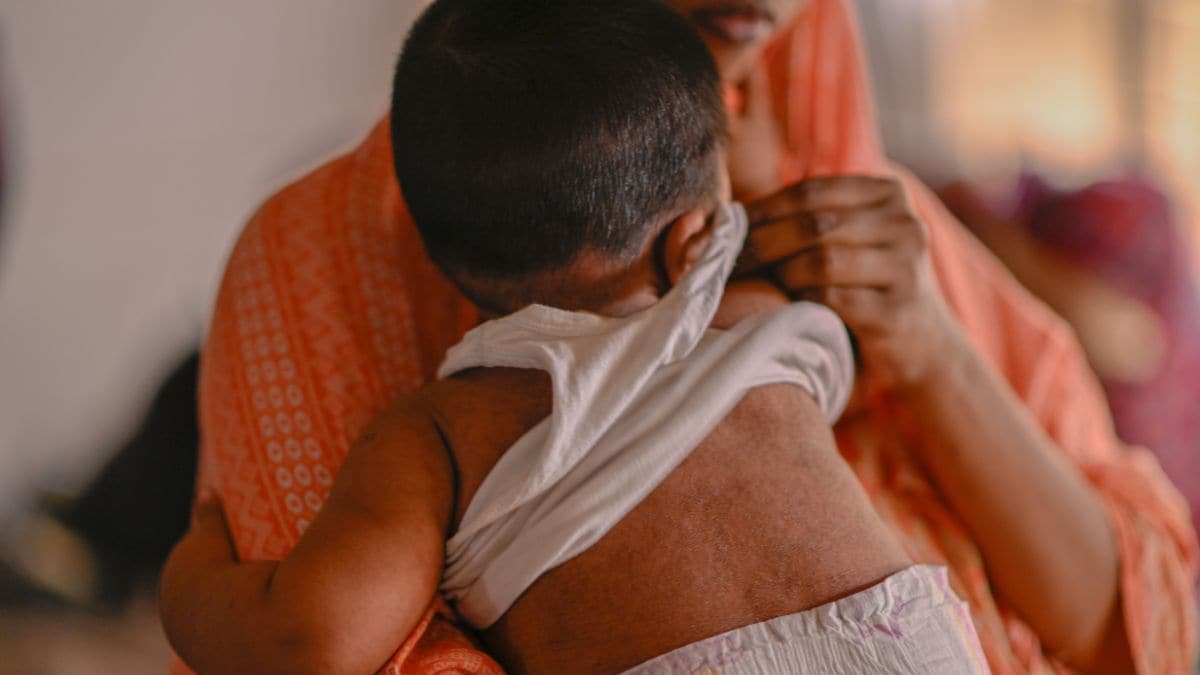
The measles outbreak in Bangladesh has developed into a dual crisis of public health and public information. Since March 2024, the nation has grappled with a surge in infections that claimed 712 lives by the end of June, leaving hospitals struggling to manage the influx of sick children. However, the tragedy has been exacerbated by a parallel epidemic of misinformation. Data from Rumor Scanner revealed that 383 false claims were identified in May alone, 26 of which pertained directly to the measles outbreak. In a country with one of the world’s fastest-growing digital populations, where Facebook serves as the primary news source, these digital falsehoods—ranging from edited photocards to fabricated narratives—have reached mass audiences with devastating speed.
The credibility of the public health response has been severely undermined by inaccurate statements originating from the highest levels of government. On March 29, Health Minister Sardar Md. Sakhawat Husain erroneously claimed that the government had not provided measles vaccinations in eight years. This was quickly debunked by fact-checkers who noted that nationwide immunization campaigns had occurred as recently as 2020 and 2021. This failure of messaging continued on April 18, when Prime Minister Tarique Rahman accused two previous administrations of an “unforgivable crime” for allegedly failing to vaccinate children. Documents from UNICEF, the WHO, and local authorities proved this assertion false, as millions of children had, in fact, been immunized during the periods in question.
Misinformation has also flowed in the opposite direction, with the government becoming a frequent target of politically motivated lies and fabricated directives. Social media platforms saw the spread of baseless claims, such as a report—falsely attributed to an opposition-affiliated page—that the government had ordered hospitals to suppress death tolls. Similarly, fake statements were circulated purportedly from high-ranking officials like Ruhul Kabir Rizvi and Education Minister ANM Ehsanul Hoque Milon. While official bodies such as the Directorate General of Health Services continued to release data, the sheer volume of fabricated news created enough noise to obscure the truth and heighten public anxiety.
A particularly dangerous trend identified during the outbreak is the metamorphosis of satire into perceived fact. Satirical social media pages created content featuring doctored quotes from political figures like Nahid Islam and academics like Dr. Chowdhury Sayma Ferdaus. When these posts were stripped of their original humorous context and shared as legitimate news, they were accepted as gospel by a public already primed for outrage. This phenomenon highlights a structural weakness in digital information systems where the barrier between parody and reality is increasingly porous, leading to a public sphere where irony frequently transforms into harmful misinformation.
The stakes for this information disorder go far beyond mere political friction; they strike at the heart of public health. When government officials contradict established facts and public confidence is eroded by competing narratives, the result is heightened vaccine hesitancy, confusion, and widespread panic. The uncertainty created by this deluge of falsehoods makes it nearly impossible for the average citizen to differentiate between a life-saving directive and a malicious rumor. Consequently, the outbreak has demonstrated that even with medical interventions like vaccines, the path to recovery is obstructed when the information ecosystem is left to collapse under the weight of deceit.
The crisis in Bangladesh offers a sobering lesson for the South Asian region and beyond: addressing a contagion requires a simultaneous, robust defense of the truth. Protecting the information ecosystem is now as vital to public health as the distribution of vaccines. Moving forward, political leaders must prioritize the accuracy of their public statements, institutions must maintain consistent communication, and social media users must develop greater skepticism regarding unverified content. As this collaborative report with First Check illustrates, combating future health emergencies will depend on the ability of governments and civil society to view information integrity as a foundational pillar of national, and global, health security.


