









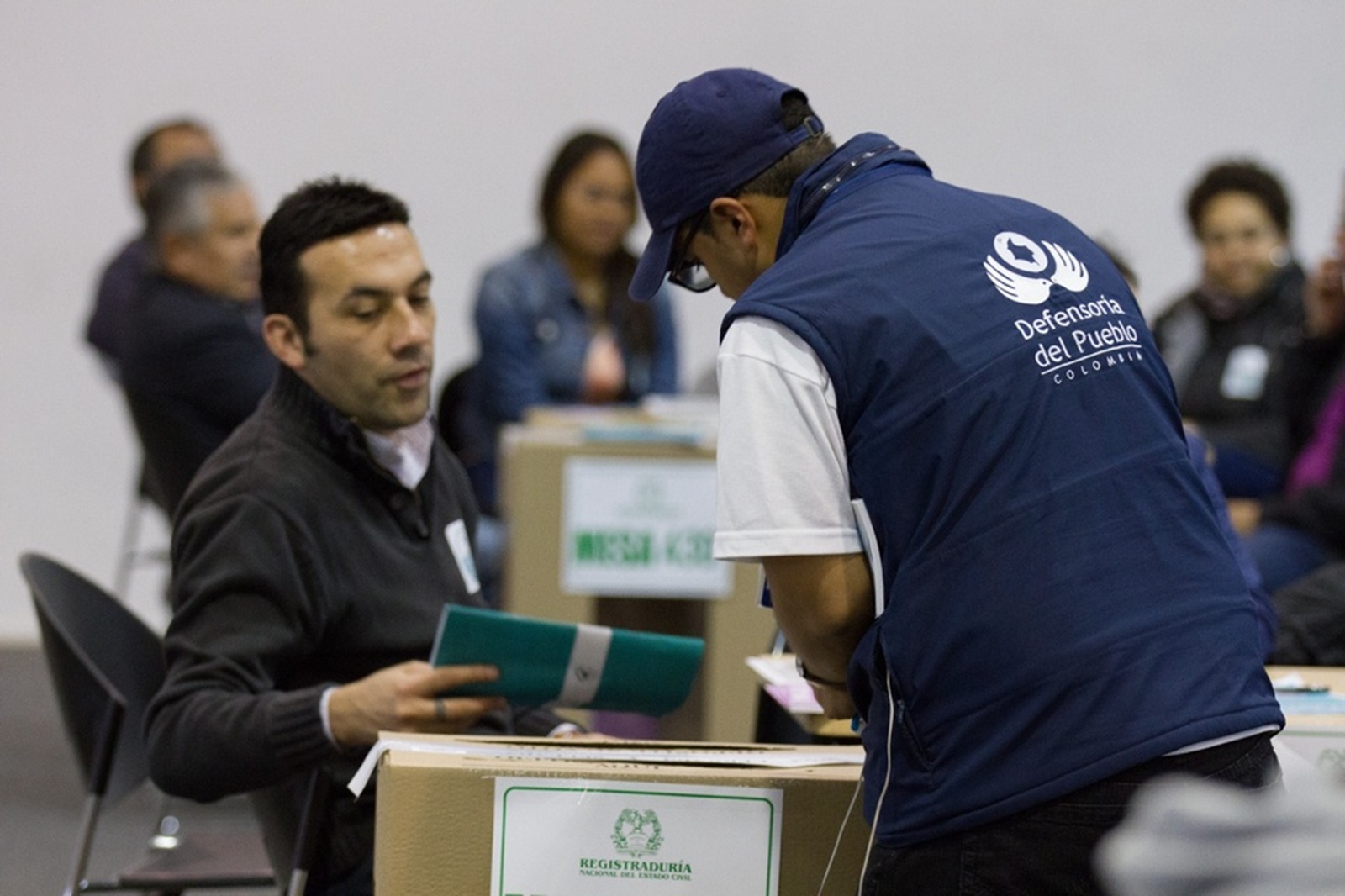
As Colombia approaches a pivotal presidential runoff, the Office of the Ombudsman has released its third monitoring report, casting a spotlight on the conduct of the two remaining campaigns. Exactly one year ago, the Ombudsman’s Office, bolstered by international entities including the UN Human Rights Office, the Episcopal Conference, and the OAS, invited all presidential contenders to subscribe to a nine-point commitment designed to safeguard the nation’s democratic integrity. This agreement outlines essential principles, including the rejection of violence, the defense of institutional legitimacy, the promotion of truthful information, and the renunciation of stigmatizing, inflammatory rhetoric.
The findings of the report are sobering, revealing a stark contrast in the candidates’ approaches to these democratic standards. While one campaign formally signed the commitment, the other chose to ignore it entirely. The monitoring period, spanning from May 31 to June 7, analyzed 1,369 distinct records to evaluate the conduct of both parties. The resulting data indicates an overall compliance rate of just 23.3%, a figure the Ombudsman’s Office classifies as “critical.” When separated by candidate, the party that signed the agreement demonstrated a 50% alignment rate, while the candidate who refused to sign showed an alignment of only 8.6%.
The report highlights an electoral environment increasingly defined by toxic polarization and a departure from constructive debate. A central concern is the alarmingly low progress regarding Point 5 of the commitment, which mandates the use of respectful language and the absolute elimination of stigmatization. Against a backdrop of personal disqualifications and narratives that characterize political opponents as enemies rather than rivals, the non-signing campaign recorded 0% alignment on this point. Even the signing candidate achieved only 40% compliance, illustrating how difficult it has become to maintain civility even for those who formally agreed to uphold it.
Misinformation also remains a pervasive threat to the electoral process, as documented by Point 6 of the agreement. Monitoring efforts revealed a 0% compliance rate regarding the dissemination of truthful information, with both campaigns failing to verify the accuracy of their content. The report cataloged 13 significant events where false or misleading information was disseminated; tellingly, 12 of these instances originated from the campaign that did not sign the commitment. This trend underscores a systemic reliance on digital manipulation and unverified claims, which serves to erode public trust in the information ecosystem.
Despite the prevailing climate of hostility, the report identified a rare glimmer of hope concerning the commitment to democratic dialogue. Point 7, which encourages candidates to embrace dialogue as a democratic duty, reached a 78.6% alignment rate. Both campaigns frequently issued public invitations to debate, with the signing candidate reaching 80% alignment and the non-signing candidate reaching 75%. However, the Ombudsman’s Office cautions that these calls were often superficial, frequently accompanied by stigmatizing rhetoric that undermined the potential for genuine, substantive deliberation.
In its closing remarks, the Ombudsman’s Office issued an urgent plea for democratic responsibility in these final, decisive days of the campaign. The institution emphasizes that if Colombia is to ensure a peaceful transition of power, political actors must abandon the politics of destruction in favor of institutional respect. By calling for the protection of life, the rejection of disinformation, and the acknowledgment of the legitimacy of political opponents, the report serves as a final warning: the health of Colombian democracy depends on the candidates’ willingness to prioritize the nation’s stability over the momentary gains of divisive, inflammatory strategies.


