







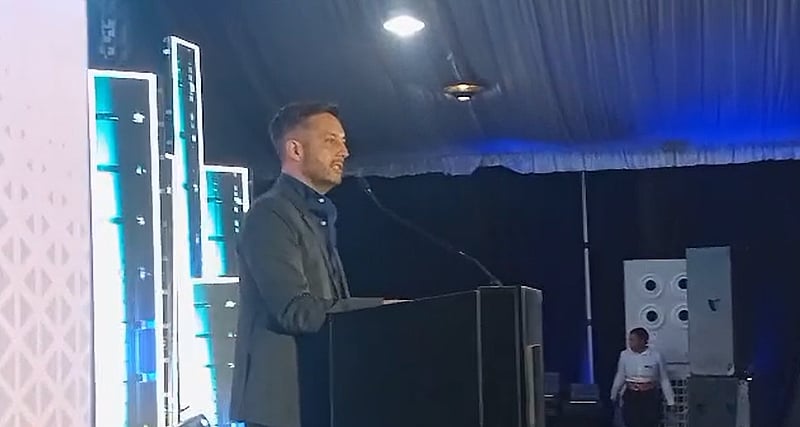
The United States Embassy in Ghana has issued a stern cautionary note regarding the global struggle against digital misinformation, arguing that governments must resist the temptation to employ censorship as a primary defense. During the Ghana Journalists Association (GJA) World Press Freedom Day 2026 Honours Night in Accra, US Press Attaché Matthew Asada warned that while the digital age presents unprecedented threats, the path toward security must not involve the sacrifice of democratic freedom. He stressed that the preservation of constitutional rights remains the bedrock of a healthy society, even in an era defined by rapid information exchange.
Addressing the audience, Mr. Asada acknowledged that contemporary issues such as deepfakes, organized disinformation campaigns, and the sexual exploitation of children online are legitimate policy concerns that necessitate urgent government intervention. However, he cautioned that these challenges are frequently used as a pretext for the implementation of broad, vaguely defined restrictions on speech. According to the United States’ official stance, such measures frequently degrade into instruments of political control rather than legitimate mechanisms for public safety, ultimately threatening the very discourse they aim to sanitize.
A central theme of the address was the vital distinction between addressing genuine harm and stifling healthy democratic debate. Mr. Asada emphasized that the objective for any administration should be to curb the negative impacts of misinformation—such as incitement to violence or malicious fabrications—without extinguishing the free expression on which democratic governance relies. This message resonated strongly within the Ghanaian context, where the media serves as a traditional pillar of accountability and progress, and where the balance between regulation and freedom remains a delicate, ongoing debate.
The most jarring aspect of the Embassy’s presentation involved a detailed look at the current trajectory of press freedom in Ghana. Citing data from the Media Foundation for West Africa, Mr. Asada highlighted a concerning spike in the criminalization of speech, noting that 14 arrests related to “false news” and “offensive speech” have occurred within the first 16 months of the current administration. This figure is particularly troubling when compared to historical trends, as it nearly doubles the total number of such arrests recorded during the entire eight-year tenure of the previous government.
In his remarks, Mr. Asada clarified that the United States is not advocating for a lawless information environment. He noted that the prosecution of those who physically assault or harm journalists is a democratic imperative and a necessary function of the state. However, he drew a firm line between the protection of media professionals and the misuse of anti-misinformation laws. He warned that such legal frameworks must not be weaponized by those in power to suppress political opposition, silence critical voices, or intimidate journalists who may be perceived as “inconvenient” to the status quo.
The event, which served as a forum for media leaders and government officials to reflect on the state of the press, concluded with a call to action to protect the industry’s future. By centering the conversation on the necessity of avoiding censorship, the US Embassy signaled its commitment to supporting Ghana’s democratic development. As the nation navigates the complexities of digitalization, the challenge remains for policymakers to find effective solutions to digital threats that remain strictly within the bounds of constitutional protection and fundamental human rights.


