







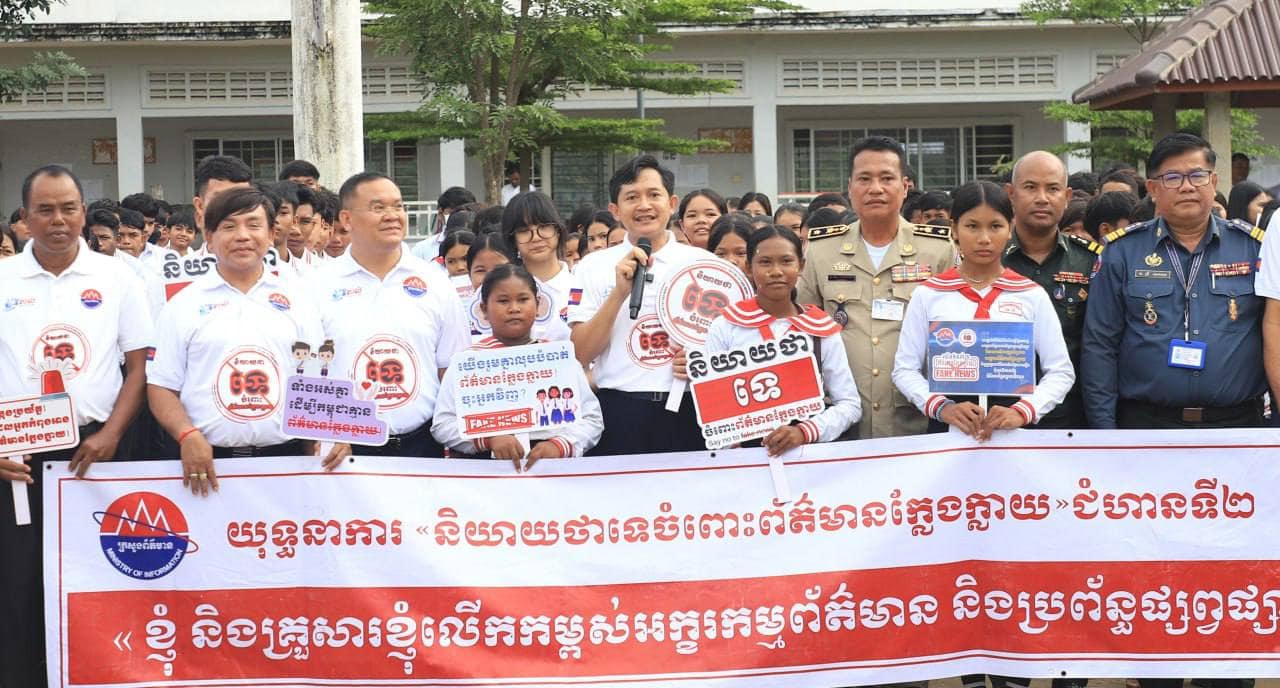
The Cambodian Ministry of Information has issued a strategic call to action for the nation’s youth, positioning them as a critical “rear-line force” in the battle against digital misinformation. During an event held on August 7 at Banteay Ampil High School in Oddar Meanchey province, ministry spokesperson Tep Asnarith emphasized that enhancing media literacy is essential to combatting what officials characterize as “psychological warfare.” By fostering critical thinking and promoting cautious social media habits, the ministry aims to insulate public morale from distorted narratives surrounding sensitive national issues, particularly those concerning the Cambodia-Thailand border.
The initiative marks the latest chapter in the second phase of the “Say No to Fake News” campaign, which focuses on “Strengthening Media and Information Literacy for Information Security.” Addressing students and faculty, Asnarith urged the younger generation to act as a defensive shield against the influence of extremist groups. He warned that misinformation regarding border disputes is frequently orchestrated by biased actors outside the country, intended to damage Cambodia’s reputation and undermine the government’s sovereign efforts. Asnarith framed the role of youth as a vital “reserve force” that supports front-line national security efforts by maintaining stability in the digital and psychological sphere.
To mitigate the risk of falling prey to these divisive narratives, the ministry is actively promoting its “3 Don’ts, 1 Protection” principle. This framework advises citizens not to believe information immediately, not to share content without verification, and to avoid carelessness when navigating the rapid flow of social media updates. By adopting these habits—essentially hitting the “pause” button before reacting—the ministry hopes to cultivate a more resilient digital citizenry. The goal is to move the public away from impulsive reactions and toward a culture of responsible information consumption, where reliance on official state institutions and licensed media outlets is prioritized.
The intensity of the government’s focus on border-related misinformation highlights the continued sensitivity of territorial discourse following regional tensions last year. While the ministry’s statements on the origins of this “psychological warfare” remain broad, the government is clearly treating the digital landscape as an extension of the physical border. By equipping students with the tools to identify manipulation and exaggeration, officials believe they can effectively neutralize attempts to create public confusion or social discord. The campaign aims to transform social media from a breeding ground for rumors into a space where knowledge and reason prevail.
Local stakeholders have responded positively to the campaign, with representatives from Banteay Ampil High School pledging to act as ambassadors for media literacy within their local communities. This grassroots support is vital to the ministry’s long-term strategy, which seeks to integrate critical thinking into the daily routines of Cambodian students across the country. By encouraging a proactive, defensive posture against fake news, the ministry believes it can fortify “psychological security,” ensuring that the public remains unified and informed even when faced with sophisticated external information campaigns.
The outreach program has already achieved significant reach, impacting 40 schools across 14 capital and provincial administrations since its launch on May 18. With a firm commitment to expand the initiative to all 25 provinces by the end of 2026, the Ministry of Information is institutionalizing its stance on digital safety. Through this systematic approach, the government hopes to create a permanent infrastructure of digital awareness, ensuring that the “rear-line force” of Cambodian youth remains well-prepared to safeguard the country’s interests against the evolving challenges of the digital age.


