







Haiti is preparing for its first national elections in a decade, with presidential and legislative rounds scheduled for December 2026 and February 2027. While national and international focus has remained squarely on the physical security of polling stations and the protection of voters amidst a backdrop of gang violence and mass displacement, policy analyst Ervens Jean-Pierre warns that a more insidious threat looms: digital interference. As the nation faces profound instability, the integrity of the democratic process is increasingly vulnerable not only to bullets and blockades but to a sophisticated ecosystem of disinformation, AI-manipulated content, and coordinated social media campaigns designed to undermine public confidence.
The security crisis in Haiti is undeniably severe, with armed gangs controlling up to 90% of the capital, Port-au-Prince, and displacing over 1.4 million people. Critics like Rosy Auguste Ducéna of the RNDDH emphasize that this territorial control directly threatens the electorate, particularly in heavily populated regions like the West and Artibonite. However, the report highlights that digital interference acts as a force multiplier for this physical chaos. By circulating false claims about polling station closures or fictitious violent incidents, bad actors can suppress voter turnout and induce confusion far more efficiently than physical road obstructions, effectively manipulating the electorate’s perception of whether participation is even worthwhile.
Haiti’s digital landscape is uniquely susceptible to this influence due to a reliance on a handful of platforms—primarily Facebook and WhatsApp—which serve as the primary news sources for millions. Because false information often travels faster than official institutions can verify or debunk it, the infrastructure for mass manipulation is already established. Previous events, such as the circulation of misleading videos involving gang activity, demonstrate that narratives can spread through public groups at an alarming speed, reaching millions before corrections can take hold. This environment provides a ready-made toolkit for political candidates, gangs, or foreign entities to weaponize misinformation to sway the political climate.
The danger extends beyond simple voting interference; it targets the perceived legitimacy of the result. Researchers note that in fragile democracies, losing candidates frequently utilize fabricated videos or false allegations of electoral fraud to challenge outcomes, regardless of the actual accuracy of the vote count. With a 2024 assessment revealing that less than 2% of Haitians trust their electoral system, the country is highly susceptible to “post-fact rationalization,” where even accurate results are rejected by a skeptical public. The recent use of Haiti as a testing ground for foreign influence operations—such as the creation of fake content regarding Haitian migrants in U.S. elections—proves that bad actors can manufacture and propagate narratives from abroad to stoke division.
Institutional vulnerabilities, such as outdated voter rolls and the lack of a comprehensive audit for biometric ID systems, provide fertile ground for these influence operations. Experts have warned of “zombie voters”—names left on the rolls due to poor coordination between civil and electoral registries—which serves as a convenient focal point for bad-faith actors to manufacture accusations of systemic fraud. While these gaps do not inherently prove election corruption, they are easily exploited to erode public trust. By exaggerating existing technical weaknesses, manipulators can successfully create an environment of pervasive uncertainty where voters lose faith in all information, rendering the democratic process impossible to validate in the eyes of the public.
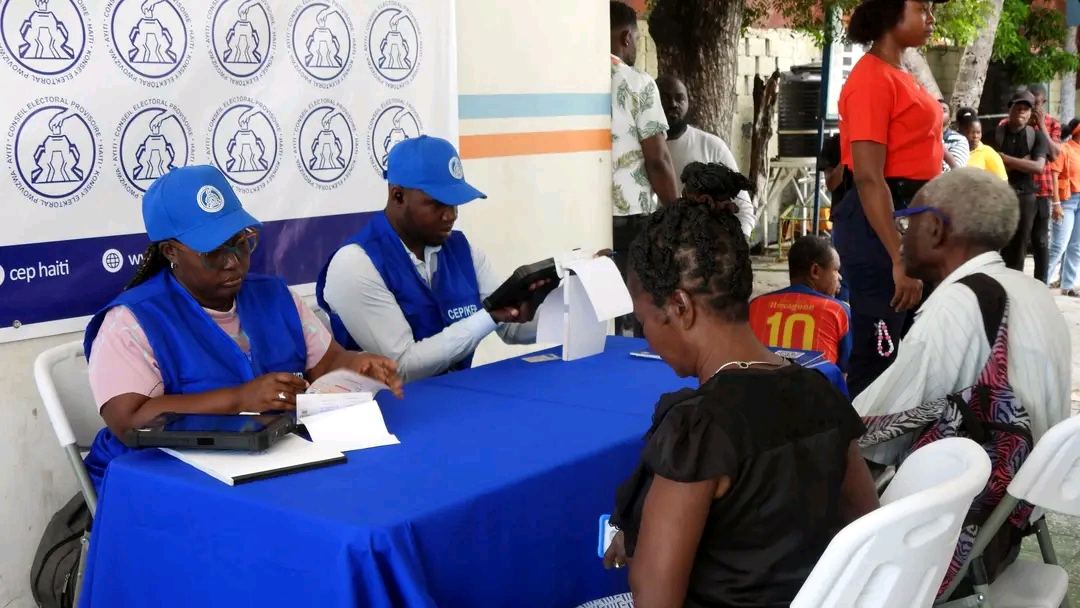
To mitigate these risks before December, the Provisional Electoral Council (CEP) must move beyond physical security measures to protect the information environment. Recommendations include establishing rapid-response channels with major tech companies to flag disinformation, ensuring a transparent and independently verifiable paper trail for all votes, and conducting an urgent independent audit of voter registration data. Furthermore, fostering an independent election-information network—where civil society and journalists take the lead in fact-checking—is crucial, as government-led corrections are likely to be met with skepticism. Ultimately, the success of Haiti’s return to democracy will depend not only on the safety of the ballot box but on the ability of the Haitian people to trust the information guiding their choices.


