





At the height of the 2020 COVID-19 pandemic, residents of the Kumbungu District in Ghana’s Northern Region faced a dual crisis: a global health emergency and a localized epidemic of misinformation. As rumors of regional virus outbreaks circulated through social media, WhatsApp, and word-of-mouth, fear began to take hold. In an effort to navigate this climate of uncertainty, residents turned to a trusted local resource—Simli Radio—the community station serving approximately 800 villages. Recognizing the potential for panic, the station transformed its newsroom into a verification hub, rigorously cross-referencing claims with the Ghana Health Service and local authorities before broadcasting evidence-based clarifications, a move that successfully curbed the spread of panic-inducing falsehoods.
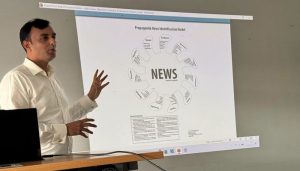
Six years later, this reflexive emergency response has matured into a sophisticated, structured verification system. Station Manager Abukari Abdul-Rahaman notes that the station now empowers listeners to act as partners in the truth-seeking process, actively reporting suspicious claims to the station. Journalists then utilize professional tools, such as Google Reverse Image search, while consulting a network of chiefs, civil society actors, and government officials to authenticate information. Once verified, the newsroom crafts detailed reports delivered in fluent Dagbani and other local dialects, ensuring that the debunking process is not just an announcement, but an educational explanation of how the falsehood was identified and why it is incorrect.
This community-centric approach has become increasingly vital as misinformation and disinformation emerge as critical threats to Ghana’s democratic stability and public health. Recent data from the Ghana Fact-Checking Coalition revealed that during the 2024 general elections, over 100 false publications were captured, with more than 85 percent of these originated on social media platforms. While the government moves toward legislative solutions like the proposed Information Integrity Bill, experts argue that top-down legislation cannot replace the effectiveness of grassroots media. Community radio has proven to be an essential bulwark against the digital deluge, especially in rural areas where linguistic and literacy barriers often leave populations vulnerable to online manipulation.
The unique strength of Simli Radio lies in its use of local language, which bridges the gap between complex digital alerts and the lived reality of its 2,000-plus household audience. Rabiu Alhassan, Executive Director of FactSpace West Africa, emphasizes that any strategy to combat misinformation that ignores community radio is doomed to fail; the trust inherent in the “familiar voices” of local broadcasters holds significantly more weight than the anonymous, English-heavy content seen on global social media platforms. Furthermore, Jamilatu Saaka Dramani of the University for Development Studies notes that by involving listeners in call-in programmes where they can dissect claims in their own language, the station transforms the audience from passive consumers into active, critical participants in the information ecosystem.
Despite its successes, the model faces significant hurdles, most notably regarding limited financial and human resources. Fact-checking is an arduous, time-consuming process that often struggles to keep pace with the speed of viral social media posts, which can traverse a community in seconds. Additionally, the station faces the looming challenge of reaching a younger generation that is increasingly migrating toward unregulated digital platforms. These operational constraints highlight the difficulty of sustaining a high-quality, labor-intensive investigative newsroom in a rural setting where revenue streams are often as thin as the infrastructure.
As digital threats continue to evolve, the path forward requires a unified effort to strengthen these community pillars. Experts advocate for major fact-checking organizations and civil society groups to prioritize capacity building for rural journalists, equipping them with the tools and training necessary to defend the integrity of their local information spheres. By turning the spotlight on successful models like that of Simli Radio, stakeholders can foster a more resilient media landscape, ensuring that even the most remote residents have access to reliable truth in a changing world.