


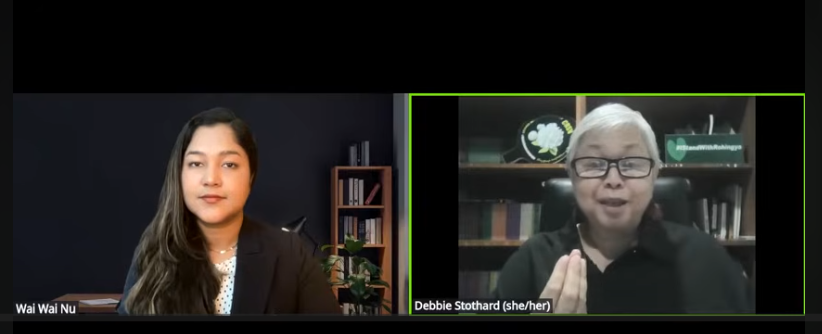
Veteran human rights advocate and founder of ALTSEAN-Burma, Debbie Stothard, recently engaged in an urgent dialogue with Rohingya activist Yasmin Ullah to address the alarming surge of xenophobia and misinformation targeting Rohingya refugees in Malaysia. In a discussion hosted by The Rohingya Nation, Stothard highlighted that the recent uptick in anti-refugee rhetoric is not merely a social grievance but a calculated political maneuver. As these hate campaigns gain momentum, Stothard warned that they pose a significant risk of escalating into real-world violence, necessitated by a climate where refugees are increasingly used as convenient scapegoats for domestic challenges ahead of political cycles.
Reflecting on her decades of activism, Stothard detailed how her organization identified the “slow-burning genocide” of the Rohingya as early as 2006, positioning the treatment of this marginalized group as a fundamental litmus test for human rights, not just in Myanmar, but across the entire Southeast Asian region. She noted that the current hostility in Malaysia stems from a lack of public understanding regarding the refugees’ plight, exacerbated by political actors who incite fear rather than addressing the country’s genuine socioeconomic issues. By manipulating public perception, these actors make the Rohingya an easy target for those seeking to consolidate power through divisive, nationalistic agendas during sensitive election periods.
The discussion placed a significant burden of responsibility on social media giants, particularly Meta, which Stothard argued must be more proactive in curbing the spread of violent rhetoric. Citing historical legal cases that prove online incitement has tangible, lethal consequences for the Rohingya, she criticized the platforms for waiting until tensions spiral out of control before intervention. According to Stothard, these digital spaces have become hotbeds for harassment, where threats against vulnerable women and children are normalized under the guise of free speech, despite the fact that such content often crosses the threshold into the active incitement of criminal violence.
Addressing the economic narrative often pushed by detractors, Stothard challenged the misconception that refugees are a “burden” on the Malaysian state. She pointed out that, contrary to anti-refugee propaganda, the Malaysian business sector has long advocated for the legal employment of refugees to alleviate persistent labor shortages. She argued that granting legal work status would not only foster self-sufficiency and reduce reliance on charitable aid but would also transform the refugee population into a productive economic force that benefits both their host families and the local industry, ultimately debunking the narrative of economic strain used to justify domestic hostility.
Stothard urged that the responsibility to combat this toxicity should not fall solely upon the Rohingya, but rather on the shoulders of the broader Malaysian society—including religious, community, and civil society leaders. She emphasized that normalizing hatred against one disenfranchised group sets a dangerous precedent, potentially opening the door for future discrimination against any other segment of society. By standing up against misinformation, she believes Malaysians can defend their nation’s reputation and values of compassion, preventing the state from being defined by the hateful fringes that seek to exploit social division for political gain.
In her concluding remarks, Stothard called for a heightened role for regional organizations like ASEAN, which often speak on stability but have been largely ineffective in addressing the human rights crises that inherently destabilize the region. She argued that true regional security requires the protection of those fleeing war and persecution, urging governments to treat refugees with the dignity they deserve rather than criminalizing their existence. Ultimately, she remains optimistic that these campaigns will lose their grip as more citizens reclaim the discourse, shifting the regional focus from fear-based politics to a collective commitment to human rights and regional solidarity.