


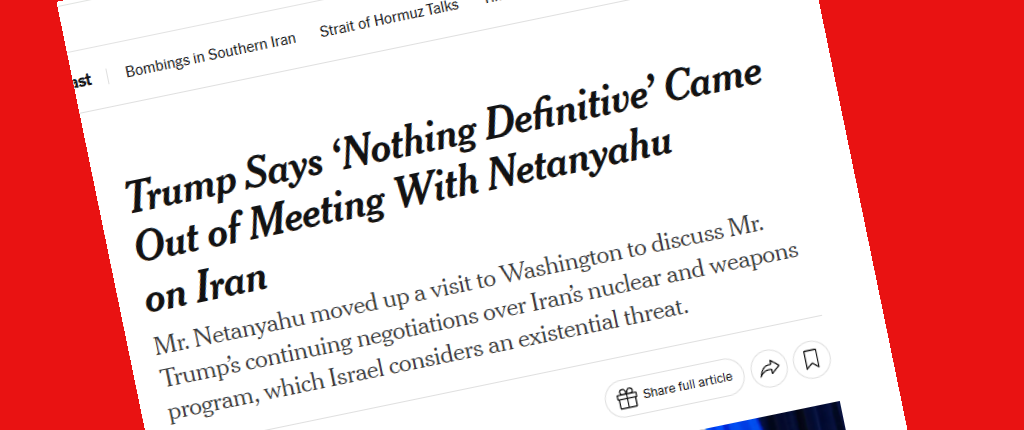
The persistent reliance of legacy media on “Trump says” headlines has emerged as a significant conduit for misinformation, effectively acting as a megaphone for statements that are frequently deceptive, delusional, or factually baseless. Critics argue that by treating the former president’s words as inherently newsworthy without critical framing, newsrooms are failing their mandate to provide accurate information. Because Trump’s communication is often characterized by wild exaggerations, impulsive shifts in narrative, and a tendency to repeat misinformation fed to him by sycophants, the reflexive practice of reporting his claims at face value often misleads the public rather than informing them.
A central issue identified by media watchdogs is the “stenographic” approach to journalism, where headlines convey an unverified claim—such as a nonexistent peace agreement or an absurd policy shift regarding international trade—as a credible development. Even when journalists are aware that these claims are contradictory or untethered from reality, the publication of a “Trump says” headline grants a veneer of legitimacy to falsehoods. By prioritizing the statement over the context, news organizations inadvertently contribute to a climate where audiences are left to sort through a barrage of conflicting narratives, often losing sight of the underlying reality that the claim itself is fundamentally dishonest.
To illustrate this, an analysis of The New York Times over a three-month period revealed 18 headlines employing the “Trump says” construction. These headlines covered a wide range of topics, from claims about foreign policy and military strategy to domestic issues, all presented as objective news. In retrospect, many of these assertions were proven to be either demonstrably false or completely inconsequential. By failing to integrate skepticism or clear disclaimers directly into the headlines, the publication provided a platform for statements that were, at best, erratic and, at worst, dangerous distortions of the truth.
The proposed solution is a moratorium on headlines based solely on what Trump says, particularly when there is a legitimate reason to doubt the accuracy or durability of his statements. Editors are encouraged to move away from stenography and instead employ the “truth sandwich” method, where any statement by Trump is immediately framed by the surrounding context of reality. Headlines should not merely report that a statement was made; they should, where appropriate, clearly indicate the lack of substantiation or point to contradictory evidence that renders the claim unreliable.
Critics of current media practices emphasize that newsrooms are not neutral observers when they uncritically distribute disinformation; they are active participants in the information ecosystem. By continuing to headline every impulsive comment, major news outlets risk “sanewashing”—the act of presenting clearly irrational or deceptive rhetoric as part of normal, coherent political discourse. Addressing this requires a departure from the fear of appearing biased, favoring instead a rigorous commitment to truth-telling that holds public figures accountable for their departures from reality.
Ultimately, the argument is for a shift toward more responsible, skeptical, and context-heavy journalism. News organizations must prioritize the verification of facts over the immediate amplification of political rhetoric. Whether by including disclaimers about Trump’s history of untruths or by headlining the objective reality rather than the candidate’s claims, the goal remains the same: to stop the cycle of misinformation and ensure that headlines serve the reader’s need for clarity and accuracy rather than the politician’s need for attention.