









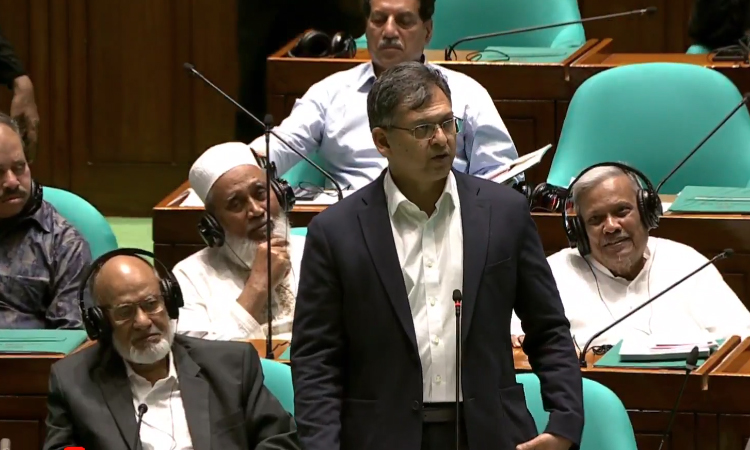
In a significant legislative announcement at the Jatiya Sangsad on June 8, 2026, Home Minister Salahuddin Ahmed declared that the government is initiating comprehensive amendments to the Cyber Security Act (CSA). Addressing the parliament, Minister Ahmed emphasized that the current legal framework is insufficient to combat the rising tide of digital threats, particularly the spread of rumors, misinformation, and malicious content facilitated by artificial intelligence. The proposed revisions aim to establish a more robust mechanism for curbing character assassination and the systematic defamation of political figures and their families, which the minister argued has become rampant under the guise of free speech.
The government’s primary objective in this overhaul is to modernize the definition of “cyberspace,” ensuring that the law encompasses all contemporary social media, virtual communication, and online platforms. According to the Minister, drafting the new legislation is already underway, focusing on clearly defining categories such as misinformation, rumors, and confusing content. Crucially, the revised law will introduce stricter punitive measures intended to deter the creation and dissemination of damaging materials. By explicitly addressing these digital harms, the government seeks to balance the exercise of free expression with the protection of individual and national integrity.
A central challenge highlighted by the Home Minister is the difficulty in governing the actions of international tech conglomerates. He noted that agencies like Meta frequently ignore requests from Bangladesh to remove offensive or defamatory content because the current law lacks mandatory obligations for these platforms. To rectify this, the new act will include provisions that compel these international entities to respond to government requests within a specific timeframe. The Minister cited the legal frameworks of neighboring countries as benchmarks, where strict local laws have successfully forced platforms to act against harmful content within 24 hours of notification.
To reinforce the enforcement of these policies, the government plans to grant broader executive authority to key regulatory bodies. Beyond traditional law enforcement, the National Cyber Security Authority and the Bangladesh Telecommunication Regulatory Commission (BTRC) are expected to receive explicit powers to block and remove data or content deemed harmful. This expansion of authority is intended to ensure a more efficient administrative response to online threats, moving away from the bottlenecked processes that currently impede the rapid removal of malicious digital footprints.
Beyond the Cyber Security Act, the Ministry of Home Affairs is also prioritizing the modernization of colonial-era and outdated legal structures. Minister Ahmed announced that the Public Gambling Act of 1867 is slated for a major update, with a new bill expected to be introduced in the current parliamentary session. This updated legislation will specifically target modern threats, including online gambling and digital betting, which have proliferated significantly. By bringing these provisions into the 21st century, the government intends to extend its regulatory reach into the digital grey areas that currently facilitate illegal gaming.
Finally, the government is moving to strengthen the nation’s drug control apparatus through a new Narcotics Control Act. The Home Minister highlighted that this overhaul will provide the Department of Narcotics Control with greater institutional capacity, including the establishment of modern testing laboratories and the integration of highly trained personnel and canine squads. By providing these departments with updated legal capabilities and essential training facilities, the government aims to enhance its overall efficiency in combating narcotics-related crimes. These legislative efforts collectively represent a concerted effort by the state to modernize legal frameworks in response to the rapidly evolving technological and criminal landscape.


