


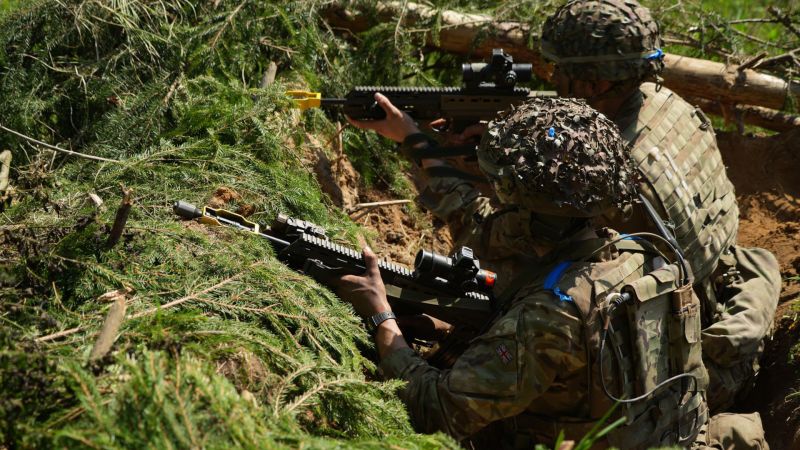
The intersection of modern military operations and digital discourse has become a primary battlefield for what experts term “cognitive warfare.” A recent documentary produced by the British Forces Broadcasting Service (BFBS) regarding the NATO “Spring Storm” exercise in Estonia garnered over 100,000 views, but the comment section revealed a disturbing trend. While many viewers engaged with legitimate questions regarding drone warfare and military readiness, a significant portion of the conversation veered sharply into unrelated domestic grievances—specifically immigration and fierce criticism of the UK government. This displacement of focus suggests that social media comments sections are being subtly manipulated to shift public attention away from national security priorities and toward internal division.
Analysis of over 750 comments on the BFBS report highlights the extent of this disruption. While 11% of the discourse centered on the tactical details of the exercises, nearly 20% of the engagement was dominated by non-sequiturs that mirrored state-sponsored propaganda narratives. Specifically, 10% of commenters argued that Russia does not pose a threat to the UK and that the domestic government is the true enemy, while another 9% demanded that soldiers return to the UK to secure the southern coast against migrants. These rhetoric patterns, which encourage military personnel to abandon foreign duties for domestic concerns, align closely with known disinformation tactics designed to undermine international alliances like NATO.
Liubov Tsybulska, an expert in Ukrainian cognitive warfare, argues that this phenomenon is not accidental. According to Tsybulska, hostile states—most notably Russia and Iran—utilize platforms such as TikTok, Facebook, and Telegram to exploit latent societal fissures. By identifying existing “cracks” in a nation’s social fabric, these entities amplify polarizing debates, creating an environment where a population is conditioned to fight itself. The goal is not necessarily to win an argument, but to distract the public from external threats. When a society is locked in internal conflict over controversial social issues, it is less likely to pay attention to the maneuvers of foreign adversaries.
This strategy relies on the ambiguity of the online environment, where it is increasingly difficult to distinguish between organic user frustration and state-coordinated bot activity. Whether these inflammatory comments are generated by real individuals or disinformation specialists, the result is the same: the erosion of consensus on foreign policy. Tsybulska emphasizes that the objective is to force populations into two polarized camps, effectively paralyzing the state’s ability to respond to external geopolitical crises. By turning public sentiment against the military’s presence in strategic regions like the Baltics, foreign actors can soften resistance to their own expansionist agendas.
Military leaders are sounding the alarm, noting that these hybrid attacks serve as a “pretext” for broader destabilization efforts. Major General Inder Sirel, the Commander of the Estonian 1st Division, has highlighted that disinformation is no longer viewed as a separate tactic but as a foundational element of modern combat. He contends that this is not a threat that the military alone can counter; rather, it requires a higher degree of societal “disinformation literacy.” When citizens fail to recognize that they are being manipulated by hostile campaigns, they unwittingly aid the adversary by fostering the very discord that makes nations vulnerable to potential military aggression.
Ultimately, the digital disruption surrounding the BFBS video serves as a case study for the fragile state of public perception in the information age. By successfully shifting the conversation from a vital NATO exercise to divisive domestic politics, coordinated campaigns are effectively pulling the national gaze away from critical security threats. As the boundary between truth and fabrication continues to blur, the message from both cognitive experts and military commanders is clear: the ability to maintain internal focus and resist psychological manipulation is now just as essential to national defense as the physical readiness of troops on the ground.