


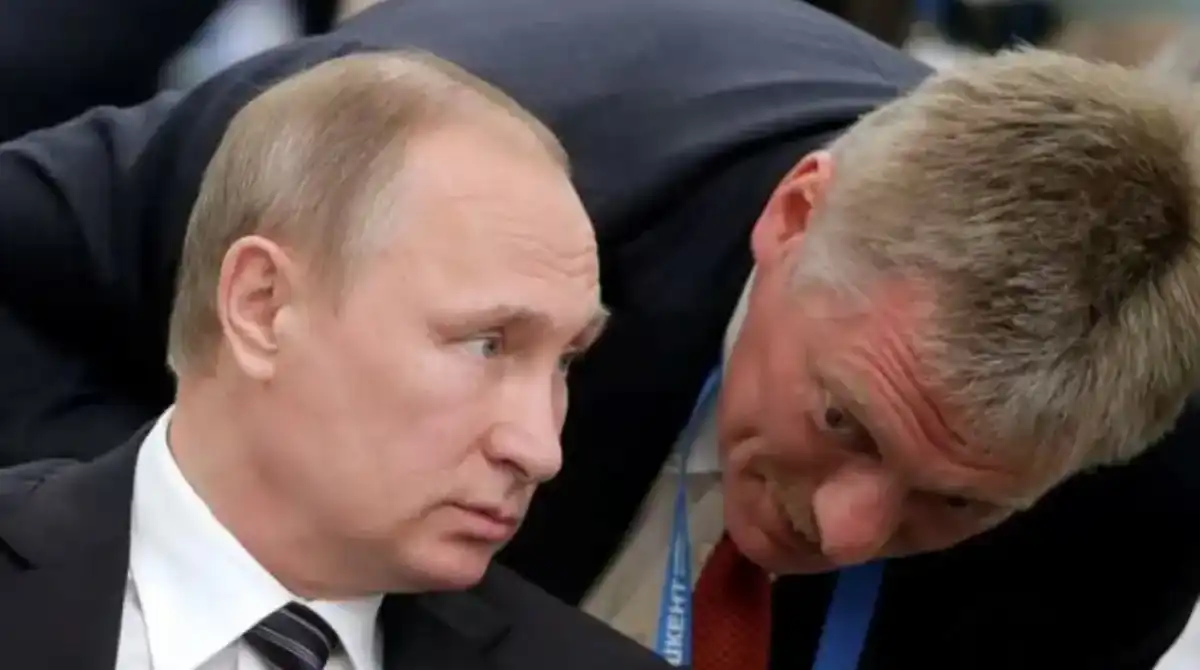
In a significant departure from the Kremlin’s long-standing rhetorical framing of its invasion of Ukraine, Russian presidential spokesperson Dmitry Peskov has begun publicly referring to the conflict as a “war.” For over two years, the Kremlin strictly enforced the usage of the euphemism “special military operation” to describe the aggression, punishing those who dared to call the situation by its true name under domestic censorship laws. This sudden shift in terminology marks a profound pivot in the regime’s official messaging, signaling that the Russian state is shedding its initial justifications in favor of a more aggressive, heightened stance.
According to analysts, this change is not merely a linguistic correction but a calculated strategic move orchestrated by the Russian leadership. Andrii Kovalenko, head of the Center for Countering Disinformation at Ukraine’s National Security and Defense Council, argues that the Kremlin is engaged in a systematic effort to psychologically prepare the Russian populace for a major escalation. By reframing the conflict as a “war,” the state is creating the necessary ideological framework to justify further domestic sacrifices, which officials believe the long-term conflict now necessitates.
The primary objective behind this shift, according to intelligence assessments, is the preparation of the Russian public for a new wave of massive mobilization. The Kremlin is reportedly considering significant manpower increases to sustain its ongoing offensive operations as the fall season approaches. Under the pretext of a “war,” the regime intends to introduce far more stringent restrictions on its citizens, including potential bans on military-age individuals leaving the country, to ensure that the necessary pool of recruits for the front lines remains trapped within the Russian Federation’s borders.
Peskov’s own public comments provide a window into this justification, as he recently blamed the “escalation” on Western support for Kyiv. By alleging that sovereign nations across Europe and North America are providing the infrastructure, intelligence, and satellite data necessary for Ukraine to target Russian positions, Peskov is attempting to position Russia as a victim of a broader Western military campaign. This narrative serves to depict the war as an existential struggle against the West, providing the Kremlin with the political cover needed to mandate even more drastic societal lockdowns and military drafting.
International observers are viewing these developments with growing concern regarding the broader regional security implications. Czech President Petr Pavel has warned that if peace talks do not materialize within the next two months, the risk of Moscow significantly widening the scope of the war will increase dramatically. Pavel suggested that the Russian leadership might be timing a declaration of general mobilization to follow internal political milestones, such as the regional elections scheduled for mid-September, which would provide the state with a fresh mandate to solidify its control over the civilian population.
As the Kremlin intensifies its rhetoric, it is also doubling down on its information warfare efforts, which intelligence officials from nations like Estonia say are being used to deflect from Ukraine’s successful strikes on Russian industrial and oil infrastructure. Whether these shifts in terminology will be sufficient to secure the public support Moscow seeks remains to be seen. However, the move represents a clear warning to a Russian population currently facing high casualty rates and the looming prospect of a total mobilization drive, signaling that the era of state-sponsored denial regarding the reality of the war is effectively coming to an end.