



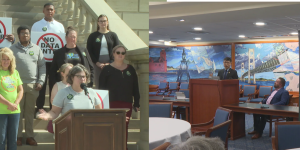





Tensions have surfaced in Fort Wayne as the city’s Community Development Director, Jonathan Leist, issued a direct challenge to a series of resolutions introduced by City Councilman Russ Jehl regarding the Google data center. The resolutions, brought forward on June 9, aim to mandate rigorous accountability for the project, specifically by questioning whether Google is adhering to its tax break benchmarks, tracking the allocation of land sale proceeds intended for the southeast side of the city, and establishing a permanent municipal oversight board for future data center developments.
In an official memo released on Monday, Leist expressed significant concern regarding the framing of these resolutions, characterizing them as being rooted in factual inaccuracies and drafted without the benefit of consultation with his department. Emphasizing the national scrutiny currently surrounding data centers, Leist argued that the dissemination of misinformation undermines public trust and that it is the city’s duty to ensure that residents interact only with verifiable, accurate data regarding the project’s performance and economic impact.
Defending the current status of the data center, Leist provided a status update that paints a picture of a project exceeding its initial promises. According to a 2025 compliance report, Google has significantly outperformed its contractual obligations. While the company was required to create 30 full-time jobs, it has already established 85. Furthermore, the company has invested over $3.5 billion into the Fort Wayne site—dwarfing its required commitment of $845 million over ten years—while maintaining an average annual salary of $91,000, which stands at 159% of the Allen County average.
The debate also centered on the allocation of funds from the sale of land for the project, which were initially earmarked for community development in the southeast side of Fort Wayne. Leist clarified that the original plan involving a childcare center was aborted by Fort Wayne Community Schools due to a state funding shortfall. He assured the public that the funds have not been squandered, noting that a senior affordable housing project is being explored for the site. Additionally, he noted that the Adams Center Economic Development Area, which houses the data center, is legally required to funnel its Tax Increment Financing (TIF) revenue back into that specific district, with projected annual investments expected to grow from $900,000 in 2026 to $3 million by 2028.
Regarding Councilman Jehl’s proposal to create a permanent oversight board, Leist was critical of the structure, suggesting that the current iteration lacks the necessary nuance and collaborative input to be effective. While he did not entirely dismiss the need for a task force, he insisted that the structure and goals would need to be comprehensively rethought. Leist signaled the Mayor’s office’s willingness to participate by providing a liaison to support such an effort, provided that the administration of the body is handled appropriately and through a collaborative process rather than unilateral legislative action.
As the situation develops, Leist has extended an olive branch, expressing his willingness to work directly with Jehl to bridge the gaps in their understanding and address the councilman’s concerns through joint problem-solving. This cooling-off period is seen as a vital step in resolving the standoff between the legislative and administrative branches of the city government. As of the latest update, Councilman Jehl has yet to offer a formal response to the memo or the invitation for collaborative development of these oversight measures.


