









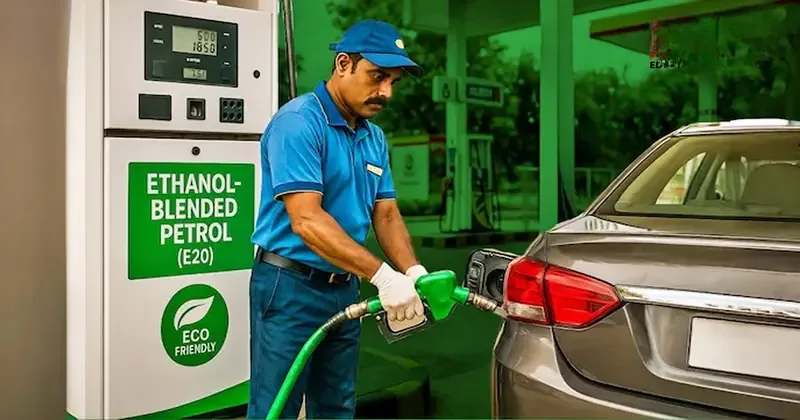
The Indian government’s ambitious E20 program—the mandate to blend 20% ethanol into gasoline—is currently at the center of a heated national discourse. While the initiative is positioned as a cornerstone of India’s energy security, agricultural prosperity, and climate goals, it has also become a lightning rod for organized misinformation. A growing body of pseudo-scientific narratives has emerged, suggesting that ethanol-blended fuel is inherently damaging to vehicle engines and detrimental to the environment. This campaign, often propagated through social media echo chambers, seeks to discredit the transition by ignoring decades of global automotive data and India’s specific, phased implementation strategy that prioritizes consumer safety and mechanical longevity.
At the heart of the misinformation is a concerted effort to decouple the ethanol revolution from its socio-economic benefits, particularly for the farming community. Critics frequently claim that the diversion of grain and sugar crops toward ethanol production threatens food security, a narrative that ignores the reality of surplus production and the integration of advanced biofuel technologies. By framing the policy as a conflict between “food versus fuel,” these detractors obscure the reality that ethanol production acts as a price stabilizer for farmers, preventing the market gluts that frequently lead to distress sales. The narrative relies on anecdotal evidence of engine performance issues, which experts suggest are largely a result of the maintenance of aging vehicle fleets rather than the chemical properties of E20 fuel.
Technically, the transition to E20 is backed by rigorous testing protocols conducted by the Automotive Research Association of India (ARAI). The government’s approach has been measured, ensuring that automotive manufacturers update engine components—such as fuel lines, seals, and injectors—to handle the properties of higher ethanol blends. The misinformation campaign conveniently ignores that many vehicles currently on Indian roads are already compatible with E10, and that E20 readiness is now standard for new models. By conflating the requirements of older, non-compliant vehicles with the standardized, tested capabilities of modern engines, the dissenters create an atmosphere of technical fear that has little basis in current automotive engineering.
Furthermore, the environmental arguments against ethanol are increasingly being exposed as scientifically hollow. While some claim that the cultivation of feedstock negates carbon savings, they consistently fail to account for the “circular economy” model central to the E20 vision. Ethanol produced from agricultural residues and sugarcane waste actually lowers the carbon intensity of the transport sector, aligning with India’s Net Zero targets. When compared to the high-sulfur, imported fossil fuels that India has traditionally relied upon, ethanol blends represent a cleaner, domestic alternative that reduces the volatility of the nation’s import bill and mitigates the health impacts of urban air pollution.
The geopolitical and economic implications of the anti-ethanol narrative cannot be ignored. India’s dependency on imported crude oil has long been a structural weakness, exposing the domestic economy to global price shocks and inflationary pressures. The E20 initiative is a strategic pivot designed to retain capital within India, boosting the rural economy while reducing the heavy reliance on Middle Eastern and Russian energy imports. Consequently, the pushback against E20 may not merely be a matter of consumer concern or pseudo-scientific skepticism; it bears the hallmarks of a coordinated attempt to maintain the status quo of a fossil-fuel-dependent energy market that benefits entrenched global interests.
Ultimately, the “Great E20 Myth” serves as a case study in how misinformation can stall national development. As India pushes toward a future defined by energy autonomy and green growth, the ethanol revolution stands as a critical test of public policy resilience. By separating verified engineering facts from speculative anxiety, the government and industry must work to build public confidence through transparency. The E20 mandate is not just an automotive adjustment; it is a fundamental pillar of a self-reliant “Aatmanirbhar Bharat,” and overcoming the current tide of pseudoscience is essential to ensuring that the nation achieves both its economic potential and its environmental responsibilities.


