






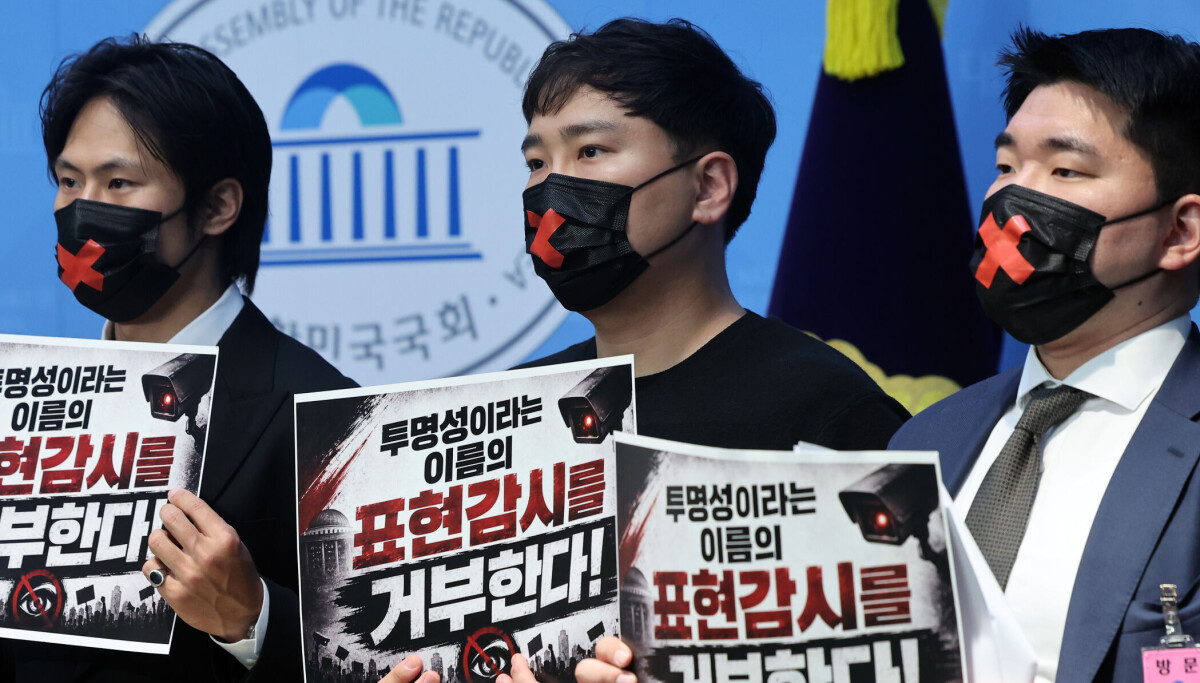
The implementation of the revised Act on Promotion of Information and Communications Network Utilization has ignited a firestorm of controversy in South Korea, with critics warning it signals the onset of “digital exile.” Pushed through by the ruling Democratic Party despite significant public outcry, the law is being condemned as a tool for censorship reminiscent of authoritarian regimes. By leaving legal definitions of “intent” and “misinformation” dangerously vague, the legislation creates a framework where legitimate political dissent and casual personal expression are vulnerable to being categorized as illegal, leaving citizens with limited recourse to defend their reputations.
This legislative shift comes at a time when South Korean society is already grappling with an intense, performative culture of judgment. Recent incidents, such as the public backlash against Starbucks Korea or the suspension of a high school baseball team for a seemingly innocuous reference to the brand, underscore a growing tendency to assign malicious political motives to everyday actions. As hyper-partisanship takes hold, even mundane choices—such as the color of a person’s clothing or the use of specific numbers—have become triggers for aggressive public interrogation and calls for state-mandated punishment.
The pressure to conform is particularly acute for public figures, who now operate in an environment where even subtle visual cues are subjected to intense political scrutiny. High-profile celebrities have found themselves embroiled in manufactured controversies based on the colors they wear near election cycles. Whether it is an entertainer deleting photos to avoid accusations of supporting the “wrong” political party or issuing handwritten apologies for wearing red, the trend highlights a systemic fear: that personal expression is no longer free, but is instead subject to the volatile whims of an online mob.
Even language itself has become a battleground, as authorities and online activists attempt to police regional dialects and common phrases. The recent controversy surrounding the Gyeongsang-dialect term “Museopno”—which some activists have linked to derogatory symbols associated with a far-right online community—demonstrates how historical baggage is being weaponized to monitor speech. By demanding that younger generations curate their daily vernacular to avoid accidental “political offenses,” various factions are further widening the generational divide and eroding the spontaneity of the Korean language.
The cumulative effect of these developments is the creation of a deeply suffocating atmosphere where self-censorship has become the ultimate survival skill. When citizens move through their day constantly calculating whether their shirt color, choice of vocabulary, or social media aesthetic might provoke outrage or legal scrutiny, the essential character of a free society begins to wither. This environment of preemptive compliance effectively replaces open dialogue with a chilling silence, making it nearly impossible for genuine, unfiltered debate to take place within the democratic sphere.
Ultimately, a society that mandates such extreme self-monitoring cannot claim to uphold the principle of free expression. As the revised law integrates itself into the digital landscape, the risk is that Korea’s vibrant culture will be replaced by a sterile, terrified public discourse. The future of South Korean democracy may well depend on whether its citizens can reclaim their right to speak and act without the constant shadow of political repercussion, ensuring that the next generation does not grow up in an environment defined solely by fear and conformity.


