


Missouri Governor Mike Kehoe recently headlined an artificial intelligence and data center summit at Missouri University of Science and Technology in Rolla, where he framed the rapid expansion of these facilities as a critical national security imperative. Addressing an audience of approximately 200 attendees, Kehoe championed the economic potential of the growing data center sector, which currently counts between 50 and 91 facilities across the state. The governor’s remarks emphasized that the push for technological infrastructure is not merely a regional economic development strategy, but a fundamental battle for global competitiveness in the age of AI.
During his keynote, Kehoe shifted the narrative surrounding the controversy of data centers by attributing the growing public opposition to the influence of foreign adversaries. “There are enemies of this country that do not want us to develop this type of technology; they would like to be the sole owner of this type of technology,” Kehoe asserted. According to the governor, much of the apprehension regarding the environmental and infrastructure impacts of these projects is actually misinformation designed to slander American technological advancements. He urged the public to move past the “noise” and focus on facts, asserting that AI is an immediate economic reality that Missouri must embrace or risk falling behind.
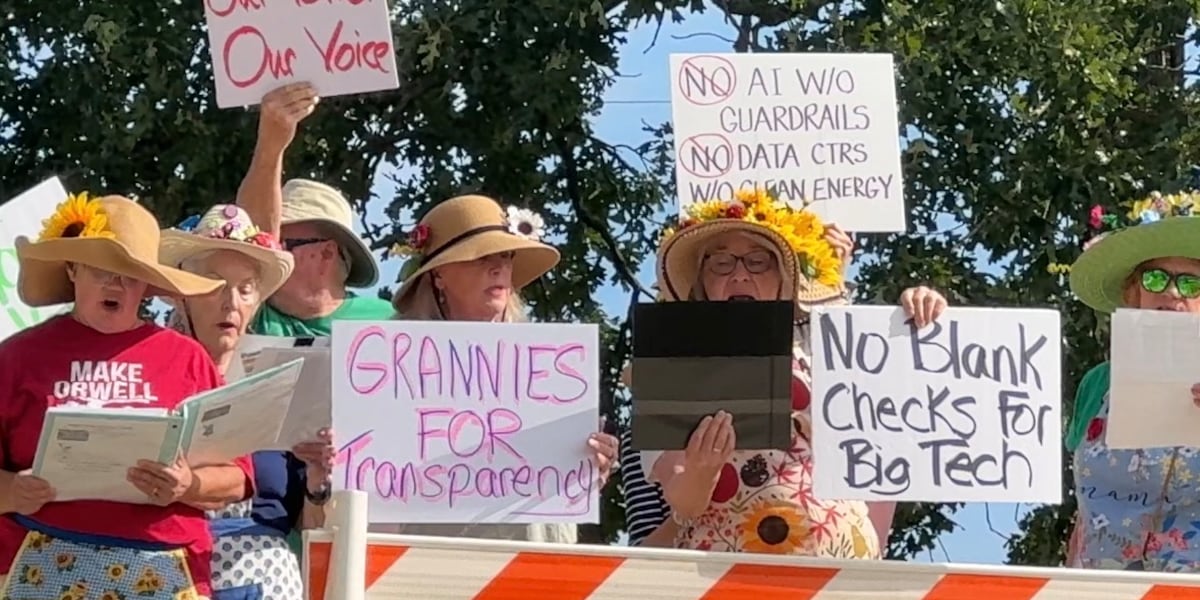
The atmosphere outside the venue stood in stark contrast to the optimistic tone held inside the university’s Protoplex building. Protesters from groups such as Clean Earth 4 Kids gathered in the parking lot, expressing frustration over being excluded from the event, which they characterized as untransparent due to a 250-person attendance cap. Demonstrators held signs and led chants focusing specifically on the intense water consumption and environmental pollution associated with data centers. Suzanne Hume, a representative of the protesting group, argued that the state is rushing into development without a sufficient understanding of the long-term impact on local air quality, health, and the welfare of future generations.
The debate over data centers has gained urgency following the announcement that Amazon plans to construct a $10 billion facility in Montgomery County. Critics and local advocates argue that the rapid rollout of these giant hyperscale projects is outpacing the state’s regulatory frameworks. Hume and other concerned citizens are calling for a more measured approach, demanding that Missouri implement comprehensive statewide regulations and strengthened local ordinances. They contend that local communities currently bear the burden of these projects while having little to no leverage in the decision-making process, often losing out when attempting to protect their natural resources.
Legislative action is beginning to mirror these public concerns, with Republican State Representative Tricia Byrnes spearheading a push for greater accountability. Byrnes has introduced the “People Before Powerful Interests Act,” a legislative proposal that would mandate enhanced public disclosure and independent review standards for any development project receiving state incentives. Crucially, the bill would also require countywide voter approval for large-scale projects and suggests a statewide moratorium on future hyperscale data centers until local communities have been afforded the opportunity to properly vet the proposals and their long-term effects.
Byrnes emphasized that the intent of her legislation is to restore a sense of democratic participation in economic development, insisting that if tax dollars are being used to support these massive infrastructures, the public must have a seat at the table. As the state balances the promise of a Silicon Valley-style technological boom with the preservation of its environmental and local standards, the clash between the Governor’s aggressive development goals and citizens’ demands for transparency appears likely to intensify. The summit at Missouri S&T has only served to highlight this widening gap between state leadership’s vision for the future and the concerns of the residents living among the new infrastructure.