








Minister Idris: Digital Literacy and Collective Responsibility Are Essential Pillars of National Security
The Federal Government has formally identified the cultivation of media literacy and responsible digital citizenship as the primary defensive tools in the ongoing struggle against national insecurity. Speaking at the 2026 South-East Regional Security Summit in Umuahia, Abia State, the Honourable Minister of Information and National Orientation, Mohammed Idris, emphasized that the modern battlefield has evolved beyond physical combat to include the digital information space. He warned that criminal syndicates are increasingly weaponizing misinformation, disinformation, and hate speech to fracture community cohesion and sow discord, asserting that the government now views strategic communication as a fundamental pillar of its overarching national security architecture.
To counter these digital threats, the Federal Ministry of Information and National Orientation, in synergy with the National Orientation Agency and the International Media and Information Literacy Institute (IMILI), has launched a specialized initiative aimed at equipping citizens with critical thinking skills. Minister Idris underscored that in an era where every individual acts as a potential information broadcaster, the duty of safeguarding peace rests with the populace. By fostering a culture that rejects extremist propaganda and scrutinizes the veracity of shared content, the government aims to curb the influence of subversive narratives that historically feed into communal violence. He also issued a call to action for media professionals to prioritize objective reporting over sensationalism, which frequently inadvertently serves criminal interests.
The administration of President Bola Ahmed Tinubu continues to implement a multi-faceted “Renewed Hope” security strategy that integrates kinetic military action with intelligence-led policing and judicial rigor. Minister Idris highlighted that significant progress has been made since May 2023, specifically in the neutralization of bandits, kidnappers, and oil thieves, bolstered by improved inter-agency coordination and enhanced international counter-terrorism partnerships, particularly with the United States. Furthermore, the government is committed to ensuring accountability, currently overseeing one of the most extensive terrorism prosecution drives in the nation’s history under the Terrorism (Prevention and Prohibition) Act to ensure that justice remains a central component of the security apparatus.
Recognizing that security is intrinsically linked to socioeconomic stability, the administration has pivoted toward a development-first approach, particularly within the South-East region. The establishment of the Federal Ministry of Regional Development and the South-East Development Commission serves as a cornerstone for this strategy, focusing on infrastructure projects such as rail modernization, power grid expansion, and road network rehabilitation. By prioritizing these economic levers, the government intends to revitalize the region’s trade capacity, noting that a robust economy acts as a natural deterrent to the poverty-stricken conditions that often leave youth susceptible to criminal recruitment.
Human capital development has also been positioned as a direct national security investment, with programs like the Nigerian Education Loan Fund (NELFUND) and various MSME financing schemes at the forefront. Minister Idris insisted that providing youth with digital skills, education, and institutional support is a strategic move to neutralize the “vulnerability gap” that criminals exploit. Furthermore, the Minister addressed the high-stakes national conversation regarding the formation of State Police, framing the ongoing constitutional review as a vital opportunity to fortify grassroots law enforcement. He encouraged a collaborative dialogue among state governments, traditional institutions, and civil society to ensure that the transition toward localized policing is inclusive and effectively managed.
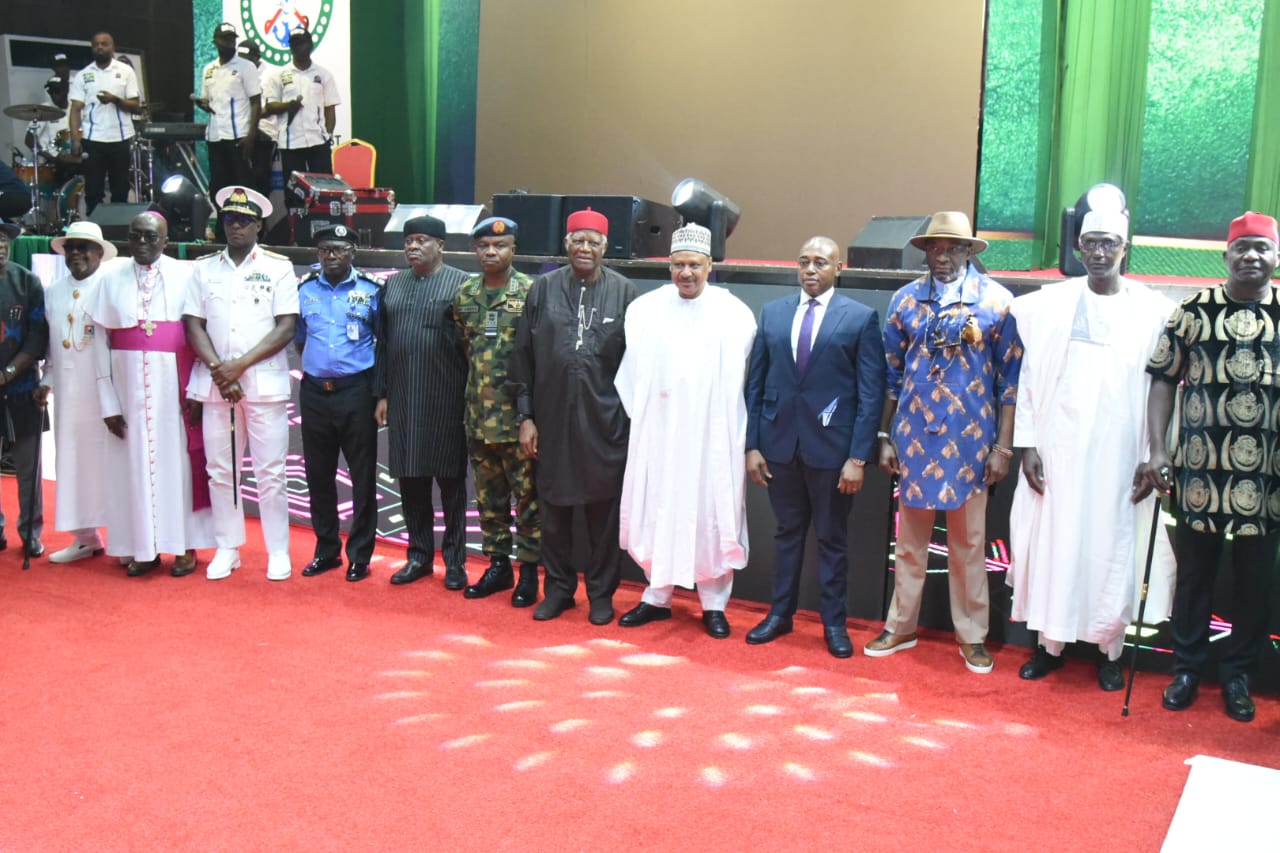
Concluding the summit, which brought together regional governors, military leadership, and traditional, religious, and youth stakeholders, Minister Idris underscored that lasting peace requires the active participation of all citizens. He urged leaders at every level to foster environments characterized by justice, inclusion, and hope, noting that regional stability is the bedrock of a flourishing national democracy. By promoting consistent dialogue and the prompt sharing of intelligence with security operatives, the Minister posited that the South-East can overcome its current challenges. He ended on a poignant note, reaffirming that the security of the South-East serves as a barometer for the strength of the entire nation, urging all attendees to take personal ownership of the regional and national peace process.


