









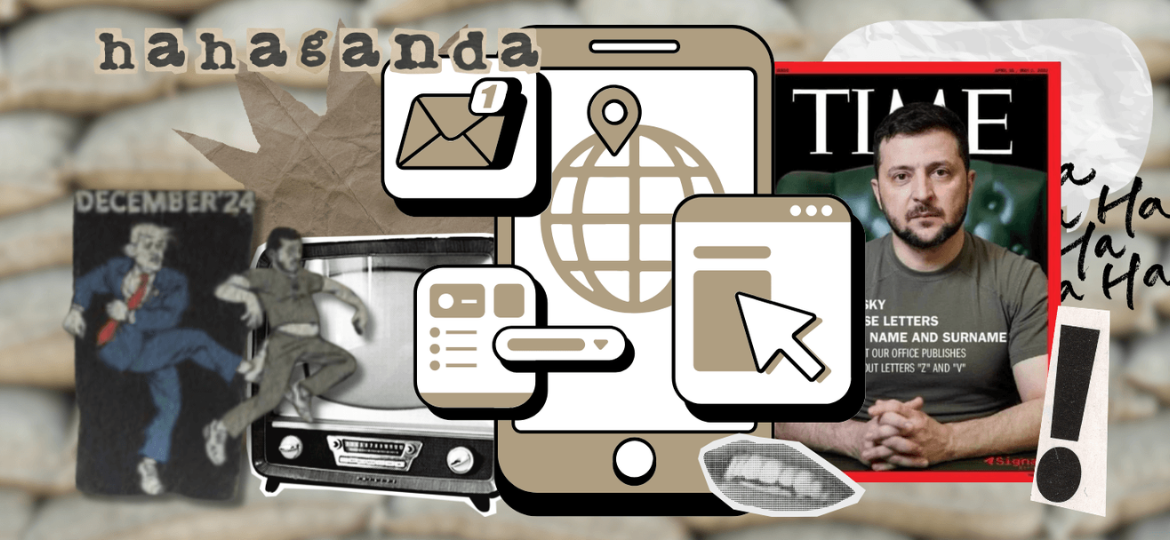
The landscape of modern foreign policy storytelling has shifted dramatically, evolving from traditional diplomatic cables into the volatile realm of digital satire. According to a 2024 study on Russian geopolitical narratives, the tactical use of humor has become a centerpiece of information warfare. However, this strategy is not designed for passive consumption. Instead, success in this domain is measured by the extent to which the public is converted into active participants—users who comment, like, share, and repost content. By drawing the audience into the creation and propagation loop, state actors can project influence far beyond official channels, embedding their narratives into the daily digital interactions of global citizens.
A primary weapon in this arsenal is the production of fabricated media, most notably viral fake front pages of established news outlets. Research by the Georgian watchdog Myth Detector reveals a consistent dissemination pattern: these campaigns almost exclusively originate on Telegram before migrating to broader social platforms like Facebook, X, and TikTok. A chilling example occurred in November 2025, when a fabricated front page mocking French President Emmanuel Macron’s support for Ukraine surfaced on a Russian-language Telegram channel. Within mere hours, the malicious content had migrated across the platform, eventually flooding TikTok by the following day, demonstrating the high-velocity nature of modern digital propaganda.
When humor is weaponized for military ends, its intent is rarely lighthearted; rather, it is a binary mechanism of self-aggrandizement and enemy degradation. According to the Ukraine Crisis Media Center, the propaganda machine operates by carefully cultivating a heroic image of its own forces while simultaneously deploying “merciless” ridicule toward the adversary. In the context of the ongoing conflict, this strategy has been augmented by Artificial Intelligence, which allows for the creation of hyper-realistic, fabricated scenarios. By blending satire with AI-driven imagery, state-sponsored campaigns aim to build a systematic pattern of delegitimization designed specifically to erode public trust in Ukrainian political and military institutions.
The operational reality of these AI-driven campaigns is best illustrated by the “telethon” disinformation network. In January 2026, an AI-generated video featuring an obese man posing as a Ukrainian military commander in Lviv went viral, intended to mock the operational integrity of the Ukrainian Armed Forces. This content was traced back to a Facebook profile ironically named телемарафон (Telethon), a branding choice meant to masquerade as the legitimate news broadcasts that have defined Ukrainian media since 2022. By co-opting the visual language of trusted news, the perpetrators attempted to secure a veneer of authority for what was essentially a digital smear campaign.
The reach of these operations is rarely contained within borders, as evidenced by the rapid international proliferation of the Lviv warehouse video. Fact-checkers at Delfi noted that the content was circulated across a wide swath of the post-Soviet space and Eastern Europe, including Lithuania, Latvia, Georgia, Bulgaria, and Slovakia. These networks are meticulously engineered for virality; the телемарафон profile alone has pumped out over fifty AI-generated videos since its inception, each crafted with high emotional intensity. By design, these videos mimic the aesthetic of legitimate talk shows or news reports, effectively lowering the cognitive defenses of viewers who assume they are watching credible reporting.
Ultimately, the phenomenon highlights a dangerous evolution in foreign policy: the transition from “hard power” to the manufactured reality of the “viral screen.” By cloaking propaganda in the guise of humor and traditional reporting, these actors challenge the very possibility of distinct, objective truth. As investigations by organizations like Delfi and Myth Detector suggest, the battleground of the future is not just physical territory, but the comment sections, share buttons, and subscription feeds of the global public. In this environment, the ability to discern legitimate satire from institutional defamation is no longer just a media literacy exercise—it is a core component of national security.


