


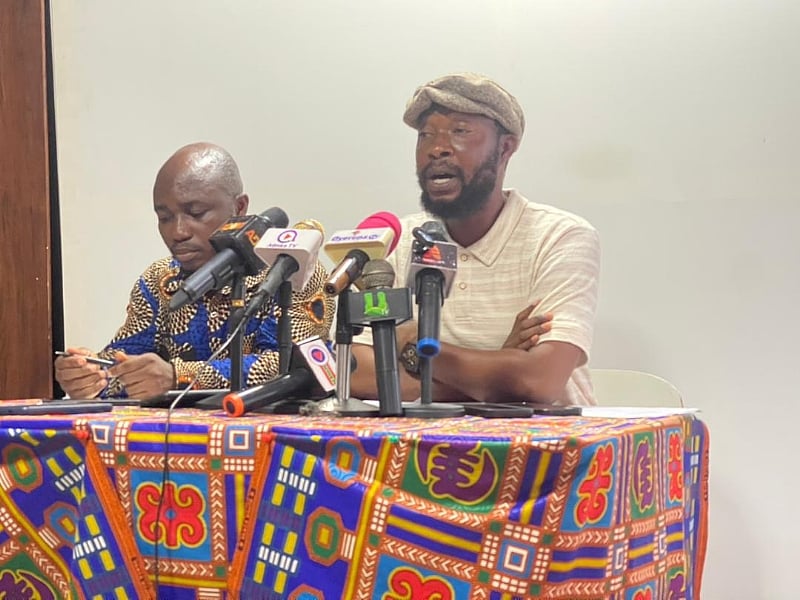
The Media Coalition for Good Governance (MCGG) has issued a robust defense of LCB Worldwide Ghana Ltd. and the Integrated Customs Management System (ICUMS), characterizing recent public criticisms against them as baseless and misleading. During a recent press briefing, Lead Convener Kwadwo Baffour Atuahene argued that discourse surrounding Ghana’s port infrastructure must be rooted in verifiable data and objective technical assessments. He contended that the persistent allegations leveled against these entities lack credible evidence, warning that the spread of unsubstantiated claims risks fostering unnecessary public alarm and undermining national trade interests.
At the heart of the Coalition’s defense is the assertion that critics have failed to produce any formal documentation to support their grievances. Mr. Atuahene highlighted that there has been an absence of technical reports, operational audits, or laboratory assessments to substantiate claims that LCB Worldwide is failing its mandate or that its disinfection services fall below international standards. He emphasized that the maintenance of public health protocols at ports of entry is a matter of national security that demands scientific rigour, rather than sensationalized media narratives that lack a foundation in factual reality.
Citing data from the port governance think tank SARL Africa, the MCGG provided a counter-narrative to the criticisms, stating that LCB Worldwide operates under rigid Standard Operating Procedures approved by the Ghana Health Service. According to the Coalition, the company’s services are subject to consistent regulatory oversight, including independent laboratory validations of chemical efficacy and routine performance audits. Mr. Atuahene insisted that if stakeholders truly have concerns regarding port health operations, they should seek formal channels for constructive dialogue rather than relying on public accusations that overlook the company’s documented operational compliance.
The briefing also sought to clarify misconceptions surrounding the Office of the Special Prosecutor’s (OSP) 2025 Half-Year Report, which some have interpreted as a condemnation of LCB Worldwide. Mr. Atuahene categorically rejected the notion that the report identified any criminal wrongdoing by the firm. He clarified that the OSP’s work was essentially a governance review intended to identify institutional vulnerabilities and enhance systemic efficiency, not a prosecutorial indictment. By setting the record straight, the MCGG underscored that there has been no adverse determination against the company, and any claims of corruption remain entirely speculative.
Regarding the Integrated Customs Management System (ICUMS), the MCGG challenged claims that the platform is dysfunctional or responsible for financial losses among importers. Mr. Atuahene pointed to an operational uptime of 98 to 99 percent, noting that occasional technical downtime is a standard feature of digital customs platforms globally, even in developed economies. He further dismissed the argument that ICUMS is responsible for mounting demurrage charges, noting that since the system has never experienced downtime exceeding 24 hours, it cannot be blamed for costs that only trigger after a seven-day free-period window elapses for cargo clearance.
Concluding his address, Mr. Atuahene issued a stern call to civil society organizations and public commentators to elevate the standard of national discourse. He urged stakeholders to replace broad, evidence-free allegations with data-driven advocacy, comparative benchmarking, and a deeper understanding of regulatory frameworks. By grounding criticisms in practical reality, the Coalition believes that Ghana can better protect its trade interests and ensure that national systems are strengthened through trust and informed engagement rather than weakened by misinformation.