





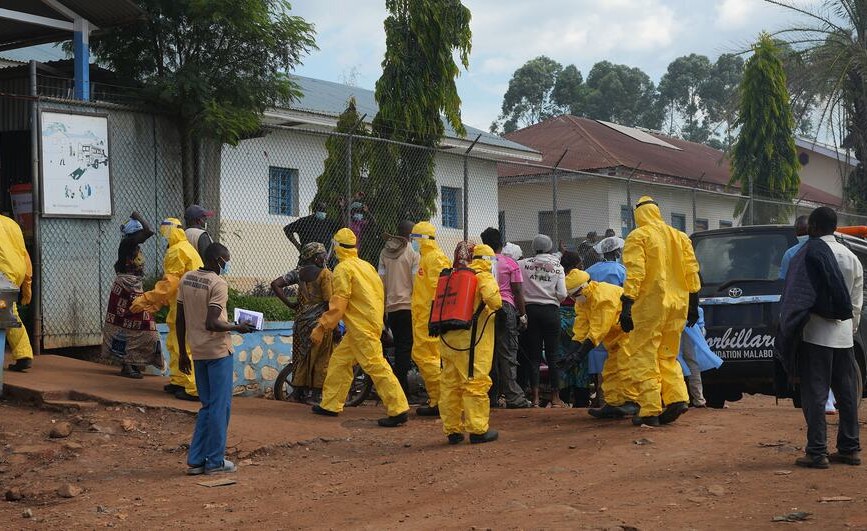
The ongoing Ebola outbreak in the Democratic Republic of the Congo (DRC) has prompted international responders to double down on communication campaigns meant to debunk local misinformation. When communities express doubt about the virus’s legitimacy or sabotage treatment facilities—such as the recent torching of an Ebola tent in Mongbwalu—global health authorities often categorize the friction as a failure of education. However, this perspective ignores a fundamental historical reality: the deep-seated distrust felt by Congolese citizens is not a product of ignorance, but a rational response to generations of exploitation, chronic neglect, and systemic violence that have defined their relationship with outsiders.
This crisis must be understood through the lens of history, where international health interventions have frequently been inextricably linked to resource extraction. For centuries, colonial and post-colonial frameworks prioritized the health of the workforce only insofar as it sustained the harvesting of local wealth. In the eastern DRC, this history is compounded by the persistent absence of basic care for endemic illnesses like malaria, followed by the sudden, well-funded arrival of international actors only when a high-profile, global-threat virus emerges. This pattern communicates a clear, damaging message: local populations are viewed as problems to be managed rather than human beings to be cared for and dignified.
The skepticism toward aid agencies is further fueled by credible, institutional failures, including documented cases of sexual exploitation and abuse by personnel from organizations tasked with providing aid. When residents witness these agencies withdrawing support for basic community needs while simultaneously brokering deals that prioritize mineral interests, the suspicion that international interventions serve agendas other than local wellbeing becomes entirely logical. While the specific rumor that Ebola is a hoax is factually incorrect, it serves as a symbolic stand-in for the empirical truth that the international community’s historical presence in the region has rarely been altruistic.
The current response strategy, which focuses narrowly on fact-checking and messaging, is insufficient because it treats the symptom rather than the disease. Drawing on past experiences in West Africa and the Navajo Nation, it is clear that communities cannot be expected to comply with directives if they feel their lived experiences are dismissed or ignored. During prior crises, progress was only achieved when responders moved beyond top-down mandates, opting instead to employ anthropologists, engage with local political opposition, and adapt burial protocols based on community feedback. In short, successful outcomes required an acknowledgement of the history of distrust, rather than an attempt to overwrite it with propaganda.
To effectively curb the current outbreak, the response must shift toward genuine, community-led engagement. This requires an environment where violence is curtailed, potentially through neutral diplomatic pathways and regional mechanisms like the International Conference on the Great Lakes Region (ICGLR). However, temporary peace is only the first step. If the response remains limited to the immediate Ebola threat while leaving the chronic, underlying issues—such as the lack of primary healthcare and the long-term extraction of regional resources—unaddressed, then local alienation will persist. Trust cannot be manufactured; it must be earned through a sustained and respectful presence that treats the community as a partner.
Ultimately, the failure to stop the spread of disease in the DRC is not a failure of community comprehension, but a failure of the international system to confront its own legacy. If health authorities continue to ignore the historical grievances that underpin local suspicion, they are destined to repeat the same patterns of friction in future outbreaks. Real, effective public health work requires moving away from the paradigm of emergency-based intervention and toward a model of accountability. Unless the patterns that render distrust rational are dismantled through consistent and holistic support, crises will continue to be met with the same profound, well-earned skepticism.