








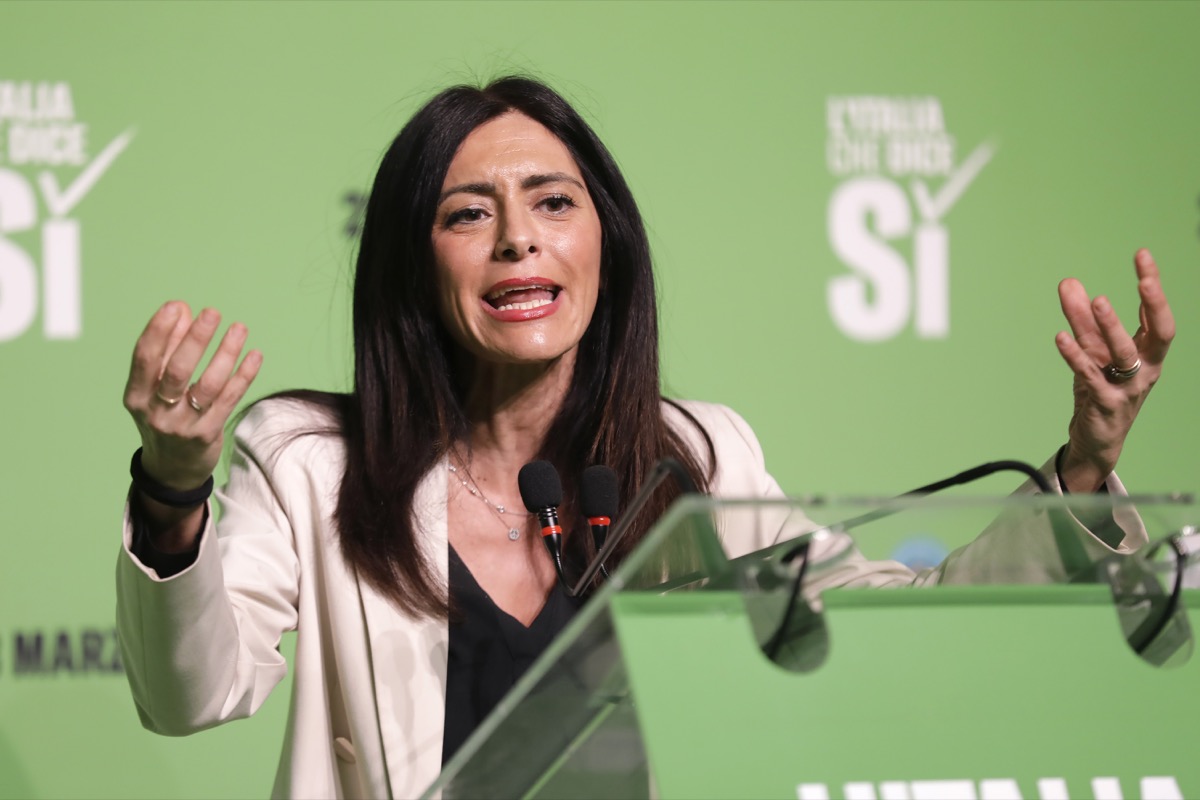
European Parliament Vice-President Pina Picierno has issued a stark warning regarding the erosion of democratic integrity, asserting that foreign interference and hybrid warfare now represent a critical threat to national and continental security. Picierno argues that Italy, described as one of Europe’s “soft underbellies,” is particularly susceptible to these tactics. Evidence suggests that a vast majority of foreign information manipulation occurs via platforms like X, while instances of sanctioned Russian state-media propaganda surfacing at public events highlight a concerning failure to enforce existing European restrictions.
Picierno emphasizes that external adversaries rely on preexisting structural weaknesses within democratic societies to succeed. Disinformation campaigns do not invent divisions from scratch; rather, they exploit deep-seated polarization, a decline in public trust, and a sense of alienation from institutions. She critiques the Italian political class for its internal failure to treat hybrid warfare as a genuine security concern, noting that some officials either dismiss the threat entirely or inadvertently mirror Kremlin narratives, thereby weaponizing the freedoms inherent in a democratic society.
To combat these threats, Picierno proposes a “democratic shield” designed to empower regulatory authorities to intervene against orchestrated influence operations. She is careful to distinguish this from censorship, arguing that the protection of free speech does not include the right of authoritarian regimes to utilize our platforms for coordinated propaganda. By enforcing restrictions already in place against sanctioned entities like Russia Today and Sputnik, the European Union can safeguard its information space without infringing upon the expression of legitimate political opinions or ideological pluralism.
Beyond the immediate threat posed by Russia, Picierno characterizes the challenge as a structural vulnerability that requires a fundamental strengthening of the European project. She contends that Europe’s slow pace of integration, its reliance on national vetoes, and its fragmented foreign policy create a perception of weakness that hostile actors easily exploit. By failing to speak with one voice or build a cohesive defense policy, member states inadvertently provide adversaries with evidence that democratic systems are dysfunctional, further encouraging populism and instability.
Looking toward future elections, Picierno warns against the synergistic effect of coordinated online networks, artificial intelligence, and local political intermediaries. She argues that the objective of such interference is often not to persuade citizens of a specific lie, but to foster such extreme doubt that the concept of objective truth is rendered meaningless. When voters can no longer verify facts, the shared ground necessary for democratic discourse evaporates, making it easier for bad actors to distort the electoral process and manipulate public sentiment toward destabilization.
Ultimately, Picierno maintains that the most effective remedy to these threats is a push toward deeper European integration and collective sovereignty. Whether dealing with Russian aggression, Chinese economic leverage, or the fluctuating priorities of transatlantic partners like the United States, individual nations are increasingly unable to act alone. By pooling intelligence, technological capabilities, and strategic foreign policy, Europe can transform its current vulnerabilities into a new, unified strength, ensuring that the continent remains a robust and resilient actor in the modern geopolitical landscape.


