









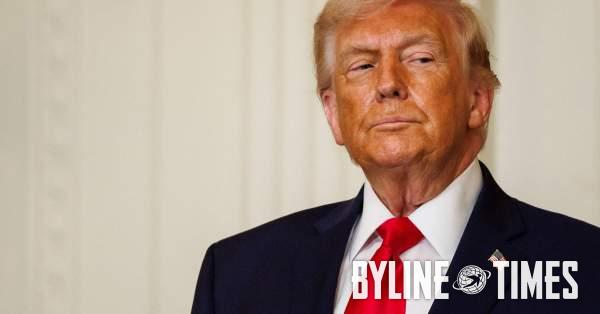
Since taking office in 2025, President Donald Trump has aggressively dismantled the United States’ counter-disinformation infrastructure, framing such efforts as a fundamental threat to free speech. Under the guise of ending federal censorship, the administration has systematically shuttered major initiatives within the FBI, CISA, and the State Department’s Global Engagement Center. By disbanding these teams, sanctioning international researchers, and establishing a “Media Bias Portal” to pressure news outlets, the administration has effectively removed the government’s defenses against foreign state-sponsored information manipulation and domestic extremist exploitation.
However, newly leaked documents suggest a stark, hypocritical reality: while publicly claiming that the government should have no role in monitoring the information environment, the White House has allegedly been quietly orchestrating its own covert influence operations. These files, surfaced by former pro-Trump influencer Gabrielle Cuccia, indicate that the administration has been collaborating with a private organization known as “Vine and Fig Tree” (VFT). The alleged goal of this partnership is to monitor right-wing influencers, identify their vulnerabilities, and deploy offensive smear campaigns to silence dissenters within their own political sphere.
The leaked materials describe a sophisticated “information laundering” scheme designed to conceal the White House’s fingerprints. According to the disclosures, VFT was tasked with producing AI-generated media and coordinating scripts that purposely avoided any trace of official government origin. By utilizing third-party influencers, burner accounts, and deceptive engagement tactics, the administration reportedly seeks to manipulate public perception while maintaining plausible deniability, ensuring that pro-administration talking points appear as authentic, grassroots sentiment rather than state-sponsored propaganda.
Evidence of this strategy already appears to be manifesting in the real world. Documentation suggests that the White House coordinated with right-wing content creator Nick Shirley to leverage a selectively edited video regarding election fraud in Minnesota. This operation not only succeeded in amplifying the administration’s preferred narrative but also provided the justification for a surge of federal resources into the state—an intervention that culminated in violent protests and the tragic deaths of two American citizens. This incident mirrors the administration’s broader framework, which increasingly relies on local influencers and platform features like X’s Community Notes to enforce a specifically curated political agenda.
The deeper scandal lies in the structural contradiction of these actions. While the White House spent the year arguing that the government should lack the capacity to monitor or attribute influence operations, they have simultaneously built a clandestine apparatus designed for domestic manipulation. Unlike prior defensive counter-disinformation initiatives—which were subject to public reporting, congressional oversight, and media scrutiny—these new strategies are designed to be opaque, unaccountable, and shielded from democratic transparency. This shift fundamentally undermines the ability of citizens to evaluate the credibility of information, as they are now being subjected to artificially engineered conversations without knowing the true source of the influence.
Ultimately, the Trump administration’s approach presents a dangerous evolution in political power. By destroying institutional defenses against foreign and domestic malign influence while simultaneously unleashing offensive, covert operations against its own citizens, the administration has signaled that it does not oppose disinformation itself—only the exposure of it. Far from protecting the First Amendment, these tactics suggest a targeted campaign to ensure that malign influence remains unchecked and invisible, leaving the American public vulnerable to deep-seated deception designed by the very government tasked with representing them.


