








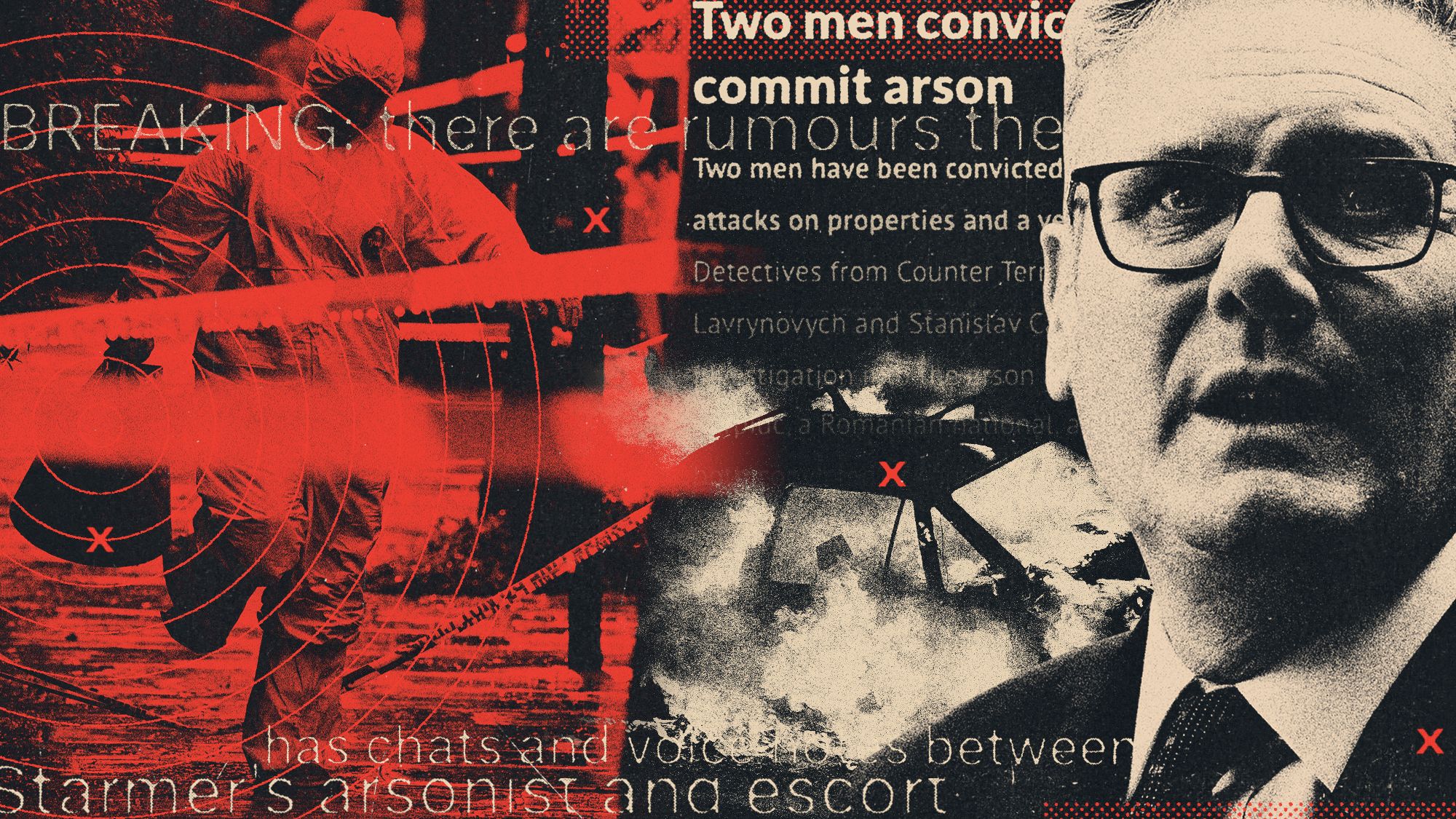
The recent conviction of two Ukrainian men, Roman Lavrynovych and Stanislav Carpiuc, for plotting arson attacks against properties linked to Prime Minister Keir Starmer has exposed a sophisticated, Russia-orchestrated campaign of sabotage. While the trial at the Old Bailey centered on the actions of these hired proxies, it also unveiled the presence of a shadowy, Russian-speaking handler operating under the pseudonym “El Money” on Telegram. Investigators, including those from the Financial Times, have linked this handler to the pro-Kremlin hacktivist group NoName057(16), a collective identified by U.S. authorities as a state-sanctioned project designed to further Moscow’s geopolitical objectives.
As evidence mounts, the BBC has identified “El Money” as 23-year-old Evgeny Lyukshin, allegedly a young Russian diplomat with deep ties to Moscow’s power structures and specialized training in information warfare. While the Russian embassy has categorically denied any involvement, labeling such accusations as fabrications and maintaining that Russia harbors no aggressive intentions toward the United Kingdom, the findings suggest a far more intentional strategy. Experts now argue that the arson plots were not isolated criminal acts but components of a coordinated, state-backed operation meant to destabilize the UK and project an image of chaos within Western democratic institutions.
The operation relied heavily on a dual-pronged strategy of physical sabotage and malicious misinformation. Almost immediately after the arsonists’ arrests—well before public disclosure—a baseless conspiracy theory involving claims of “rent boys” began circulating online. This narrative, tracked by the Center for Countering Digital Hate, originated in fringe social media circles before being amplified by Russian media outlets and far-right networks. Analysts note that while the initial posters may not have been direct state agents, Russian propagandists strategically monitor and adopt advantageous fringe narratives to sow confusion and damage the credibility of Western leaders.
This incident is reflective of a wider trend across the continent, with security services in countries such as Estonia, Lithuania, and France reporting a systematic uptick in detention rates for individuals accused of acting as Russian foot soldiers. This “new front” in Russia’s conflict with the West utilizes local proxies to conduct acts of arson, sabotage, and digital disruption. By recruiting disaffected individuals online to undertake physical risk, Russian intelligence services effectively maintain “deniability” while fostering a climate of insecurity and social unrest within their target nations.
Security experts, including Fiona Hill, have warned that the United Kingdom remains a particularly vulnerable target for these sophisticated influence operations. Due to a perceived lack of public education regarding information warfare, Western societies often struggle to filter state-sponsored disinformation from organic public discourse. This vulnerability is being aggressively exploited by Vladimir Putin’s regime, which seeks to satisfy a domestic audience at home by portraying the West as a collapsing society. By targeting the Starmer administration, Moscow leverages both real-world provocations and political missteps to propagate the narrative that the UK is in a state of terminal, self-inflicted crisis.
Ultimately, the trial of Lavrynovych and Carpiuc serves as a sobering case study in the evolution of modern hybrid warfare. With the Kremlin utilizing “belligerence and incompetence” within foreign governments as fuel for their propaganda machinery, the line between internal political strife and foreign subversion has become increasingly blurred. As Russia continues to refine its ability to weaponize information alongside physical sabotage, the case underscores the urgent need for Western democracies to fortify their information ecosystems. The “attack on democracy” described by the Prime Minister remains a persistent threat, characterized by a ruthless, innovative, and deeply entrenched campaign from Moscow.


