









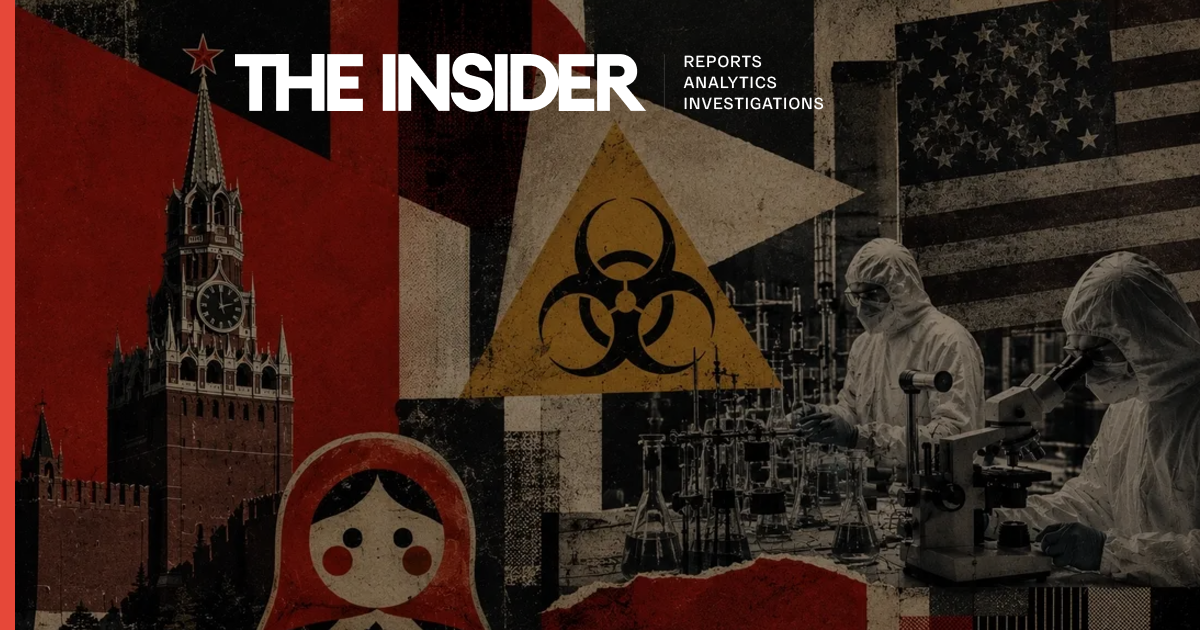
The Russian bot network known as “Matryoshka” has launched a sophisticated and aggressive disinformation campaign centered on the long-debunked conspiracy theory regarding alleged U.S.-funded “biolabs” in Ukraine. According to insights from the research collective AntiBot4Navalny, this surge in synthetic content was strategically timed to exploit a recent announcement by U.S. Director of National Intelligence Tulsi Gabbard regarding the declassification of documents detailing international biological research funding. While the actual U.S. documents simply outline standard scientific cooperation meant to modernize facilities and track disease outbreaks, Kremlin-aligned actors have aggressively distorted these facts to breathe new life into an exhausted propaganda narrative.
The campaign capitalizes on Gabbard’s history of echoing Russian talking points, most notably her 2022 assertions—which lacked any factual basis—that Ukrainian laboratories were secretly developing biological weapons. By linking these renewed dispatches to official U.S. government disclosures, the Matryoshka network aims to provide a veneer of legitimacy to its claims. In reality, the U.S. State Department has been transparent about its role in these laboratories since at least 2020, emphasizing that the primary mission of such sites is to monitor pathogens and secure vulnerable Soviet-era infrastructure. The Kremlin’s manipulation of this reality serves as a “gift” to state media outlets that have historically used the biolab myth to justify the ongoing invasion of Ukraine.
The breadth of the Matryoshka network’s activity is extensive, characterized by the use of high-production-value fake videos that impersonate reputable global media organizations. Over the past several days, the network has disseminated at least six distinct videos masquerading as reports from outlets such as Deutsche Welle, Politico, and Reporters Without Borders. These fabricated segments make inflammatory claims ranging from accusations that the French government is testing experimental drugs on Ukrainian orphans to comparing the alleged U.S. biolab network to the atrocities of Nazi concentration camps. By hijacking the branding of respected news entities, the network seeks to confuse audiences and erode trust in legitimate international journalism.
The disinformation efforts have also pivoted to target specific individuals and organizations known for exposing Russian state activity, such as Bellingcat and The Insider’s Christo Grozev. One particularly malicious video, presented under the forged identity of The Insider, attempts to draw a disturbing correlation between the existence of research laboratories and the disappearance of 34,000 individuals in Ukraine since 2014. These baseless claims are designed to paint Western-funded humanitarian and scientific initiatives as inherently criminal, turning the narrative of public health security on its head to manufacture a sense of outrage among Russian-speaking audiences and beyond.
Beyond video fakes, the campaign employs a multi-platform strategy that includes the fabrication of newspaper front pages and editorial bylines. The network has generated professional-looking, albeit entirely fraudulent, graphics featuring mastheads from prestigious papers like The Guardian, Le Figaro, and The Globe and Mail. In one notable case, a fake column was attributed to The Guardian’s Simon Tisdall, claiming that Western journalists were finally admitting that Russian disinformation about biolabs was “true.” This tactic is specifically aimed at creating a psychological effect on readers, suggesting that even traditional bastions of Western truth are beginning to concede to the Kremlin’s version of reality.
Technical analysis by AntiBot4Navalny confirms that this systematic wave of content originates from the Matryoshka bot network, an entity specialized in the rapid, large-scale proliferation of artificial narratives. By disseminating these complex deceptions, the Russian state is attempting to maintain the biolab narrative as a central pillar of its anti-Western rhetoric, regardless of original technical disclosures or factual corrections. As these networks continue to evolve, the challenge for fact-checkers and news organizations remains clear: mitigating the reach of these fabricated, high-quality digital forgeries while preventing the further mainstreaming of malicious conspiracy theories.


